
Economics: How Two Shocks Amplified Japan's Stagflation
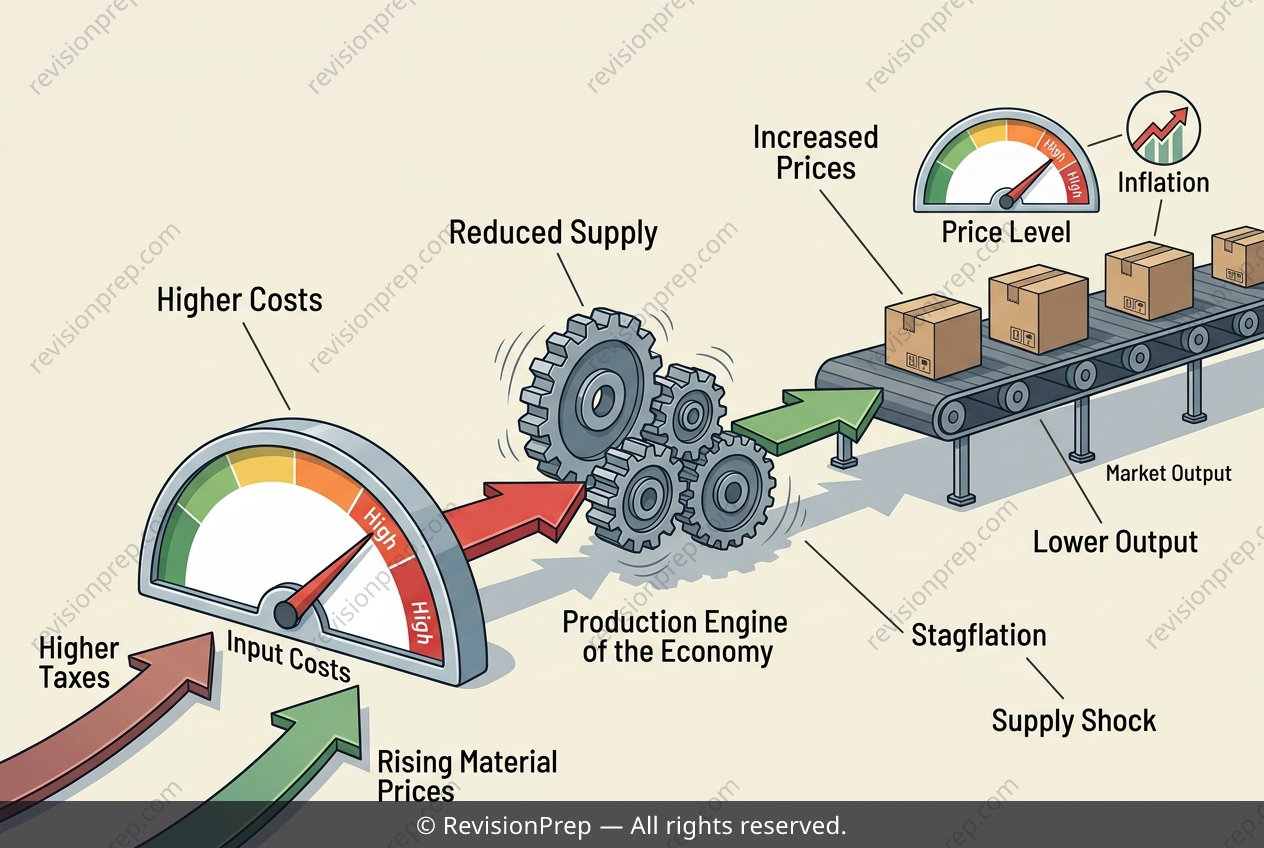
Stagflation occurs when an economy experiences rising prices alongside falling real output — a combination that standard demand-side policy struggles to address. This topic examines how simultaneous supply shocks push the short-run aggregate supply (SRAS) curve, defined as the total output firms are willing and able to supply at each price level with input costs and technology held constant, to the left. Two cost pressures drive the analysis: higher corporate taxes, which reduce profitability at every output level, and rising imported semiconductor prices, which raise unit costs for electronics manufacturers. Together they shift SRAS from SRAS₁ to SRAS₂, moving equilibrium to a higher price level and lower real output. Because semiconductors are pervasive intermediate inputs across Japanese manufacturing, the shock transmits broadly, amplifying stagflationary pressure.
Start practising IB questions today
150,000+ IB-styled questions, criteria-mapped and instantly accessible.