
Economics: Movement vs Shift—The Lithium Case
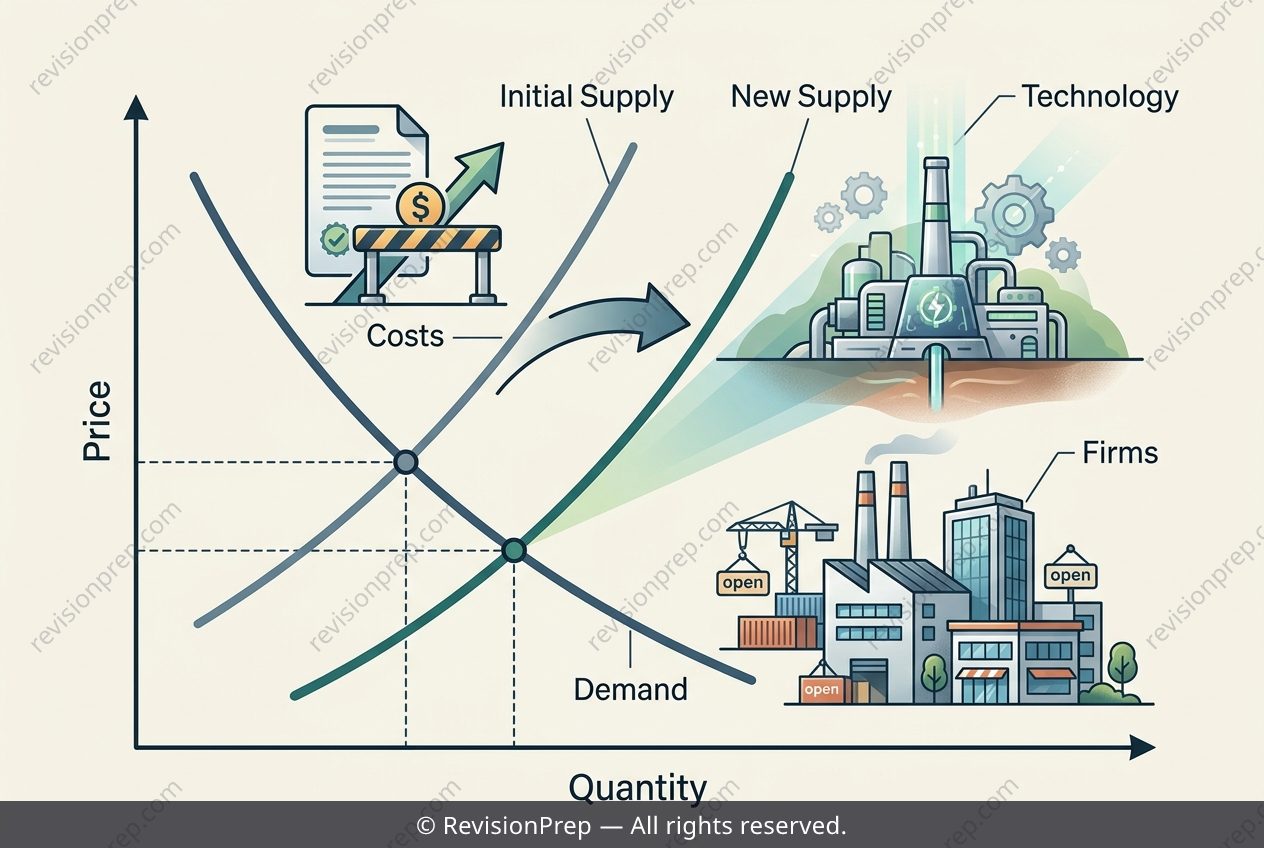
The global lithium market in 2022–2023 offers a perfect lens for understanding one of microeconomics’ most tested ideas: the difference between a movement along a supply curve and a shift of the entire curve. At its core, the Law of Supply states that, ceteris paribus, price and quantity supplied move in the same direction—but that relationship only holds when the supply curve itself stays fixed. What makes this case so instructive is that the supply curve did not stay fixed. While lithium prices crashed by 75%, supply actually rose by 35%—seemingly contradicting the Law of Supply. The resolution lies in non-price determinants: the number of firms jumped from 40 to 55 (a 37.5% increase), and new technology unlocked extraction from geothermal brines. These forces shifted the supply curve rightward, meaning producers offered more at every price. The lower price was the outcome of that shift, not a cause of reduced supply. Meanwhile, stricter environmental regulations raised costs by 20% per tonne, pulling the curve leftward—yet technology and new entrants overwhelmed that drag. Understanding how these competing shifts interact explains why price fell while quantity rose, and why the Law of Supply remains intact.
Start practising IB questions today
150,000+ IB-styled questions, criteria-mapped and instantly accessible.