
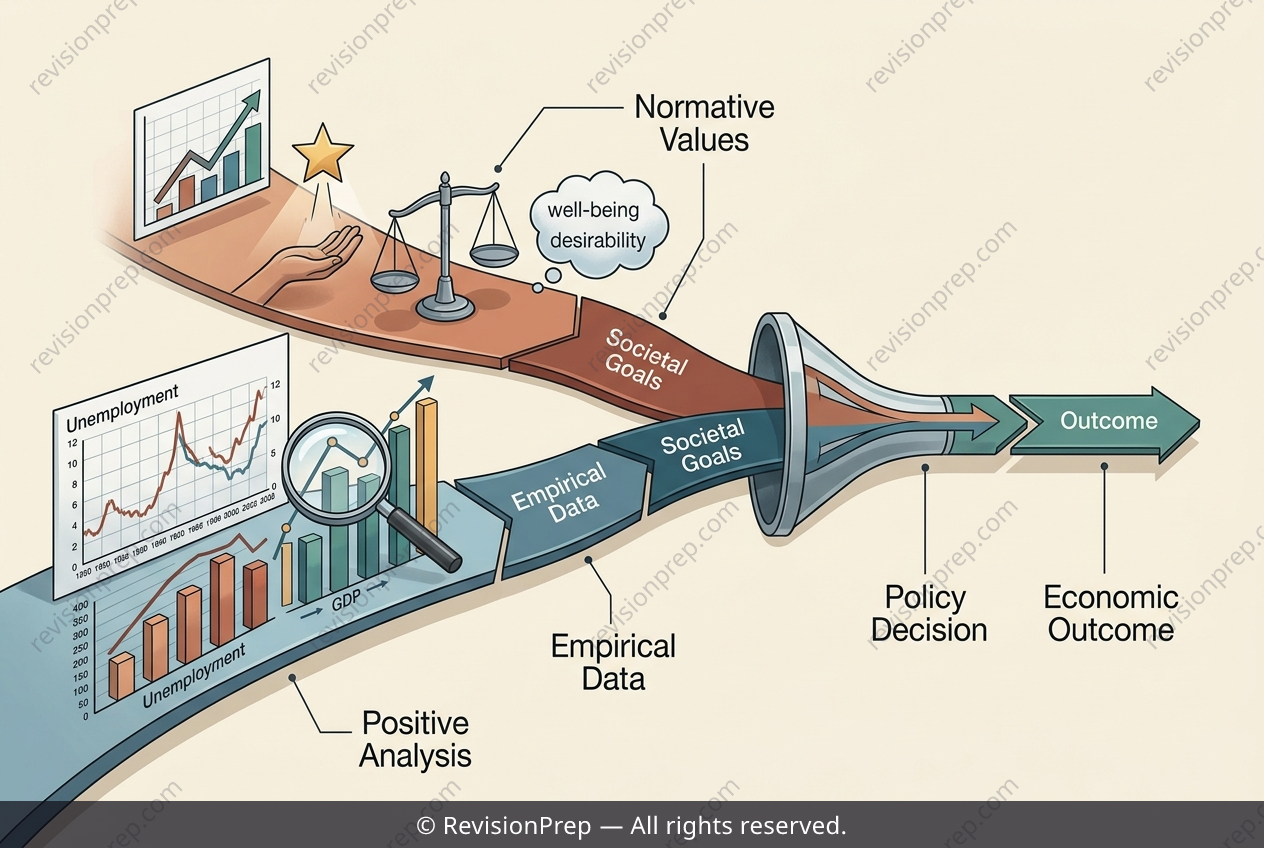
Economics: Positive Facts vs Normative Values
In economics, not every statement is created equal—some can be proven or disproven with data, while others rest on personal beliefs about what should happen. This distinction forms the bedrock of economic thinking: positive economics deals with testable, factual claims (like “unemployment will fall from 8% to 5%”), whereas normative economics involves value judgments (like “this policy is good because it makes society better off”). The line between them is not just academic—it shapes how we interpret policy debates and evaluate evidence. The power of this split lies in its practical use. A positive forecast, such as the minister’s unemployment prediction, can be checked against reality—and with a historical accuracy of ±2 percentage points, the actual outcome might reasonably land anywhere in a range, not a single number. Normative statements, however, cannot be resolved by more data; they reflect priorities, like valuing job creation over inflation control. By separating “what is” from “what ought to be,” economists can first establish likely consequences (positive) and then debate the desirability of those consequences (normative). This prevents factual disagreements from being muddled with ethical ones, making policy discussions clearer and more honest.
Start practising IB questions today
150,000+ IB-styled questions, criteria-mapped and instantly accessible.