
Economics: Temporary Tax Cuts Boost Output, Not Capacity
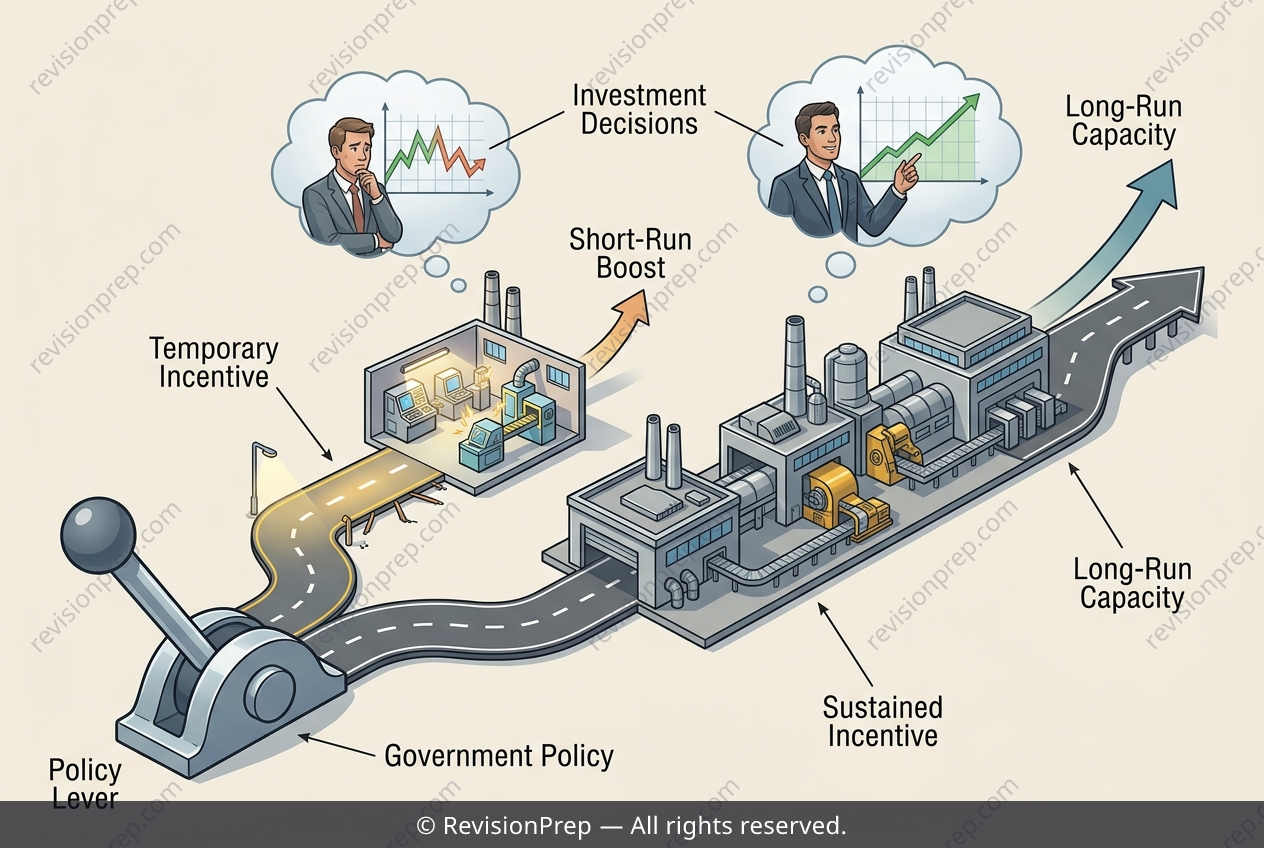
Macroeconomics often distinguishes between what an economy produces right now and what it can sustainably produce over time. This post explores that distinction through aggregate supply, focusing on how a temporary cut to corporate tax rates for agricultural firms ripples through the Australian economy. The short-run aggregate supply (SRAS) curve captures the relationship between the price level and real GDP when some costs are sticky. Lower corporate taxes reduce firms' production costs, so at every price level agricultural firms are willing and able to supply more output, shifting SRAS rightward. With aggregate demand unchanged, the new equilibrium brings a lower price level and higher real GDP. Yet the story does not end there. The long-run productive capacity of an economy — represented by the vertical LRAS curve — depends on capital accumulation, structural investment, and the economy's potential output. When a tax reduction is explicitly temporary, firms anticipate its reversal and hesitate to commit to long-term capital projects. The result is a short-run boost without a lasting expansion of productive capacity, illustrating why policy permanence shapes investment decisions and long-run growth.
Start practising IB questions today
150,000+ IB-styled questions, criteria-mapped and instantly accessible.