
Economics: The Limits of Rational Choice Theory
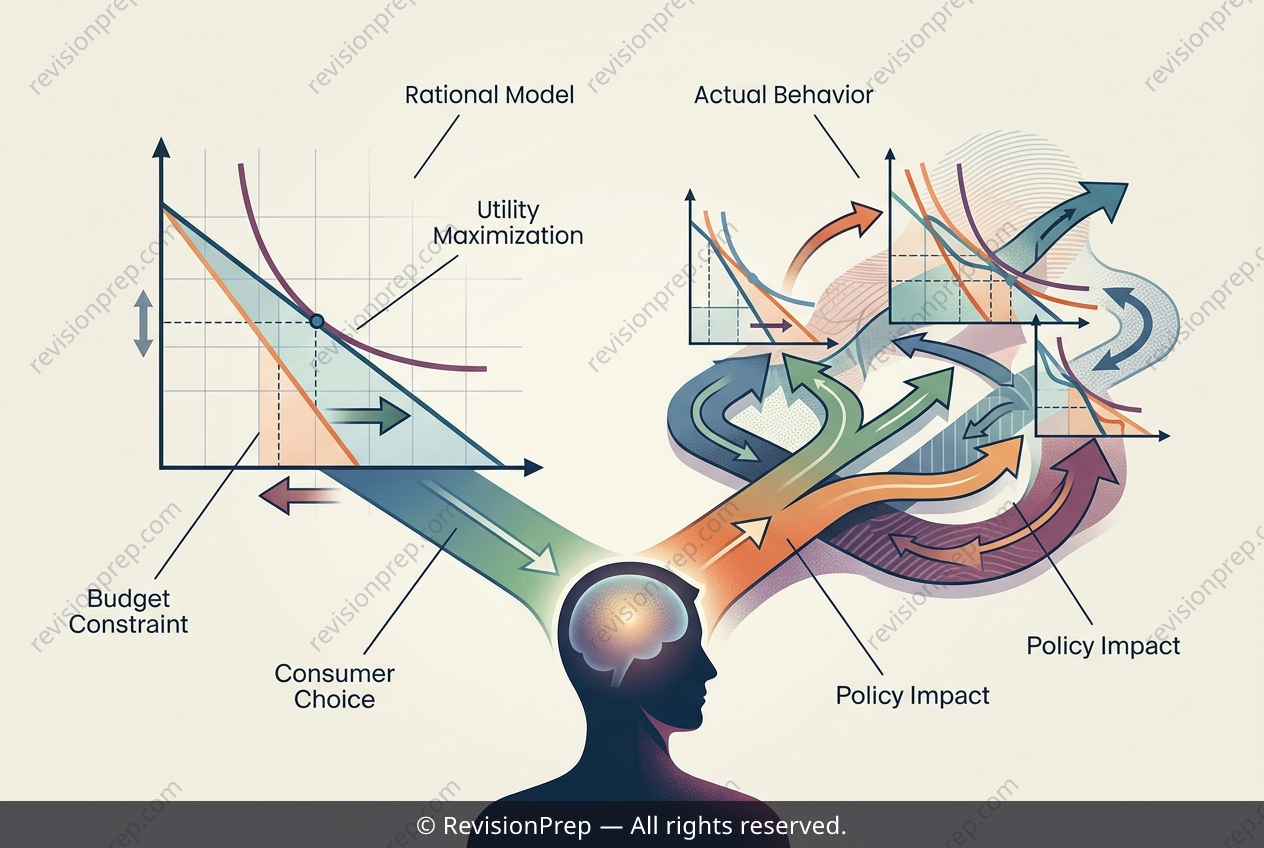
Rational Choice Theory assumes consumers maximise total utility subject to a fixed budget constraint, allocating spending so that MUx/Px = MUy/Py holds across all goods. When a price changes, the budget constraint rotates outward along the cheaper good's axis, triggering substitution and income effects that should raise consumption of the subsidised good while reducing relatively more expensive substitutes. This framework underpins much of microeconomic policy analysis, including subsidies designed to nudge household behaviour. Yet real consumers rarely behave with perfect rationality. Behavioural economics introduces bounded rationality, where cognitive limits, habits and framing distort decisions in predictable ways. Country X's 25% subsidy on fresh fruits and vegetables offers a useful case: the rational model correctly anticipates rising consumption of the subsidised goods, but struggles to explain why sugary snacks and fast food also became more popular. Exploring where theoretical predictions diverge from observed outcomes reveals both the power and the limits of the rational choice framework.
Start practising IB questions today
150,000+ IB-styled questions, criteria-mapped and instantly accessible.