
Economics: The Trade-off Behind Growth and Equity
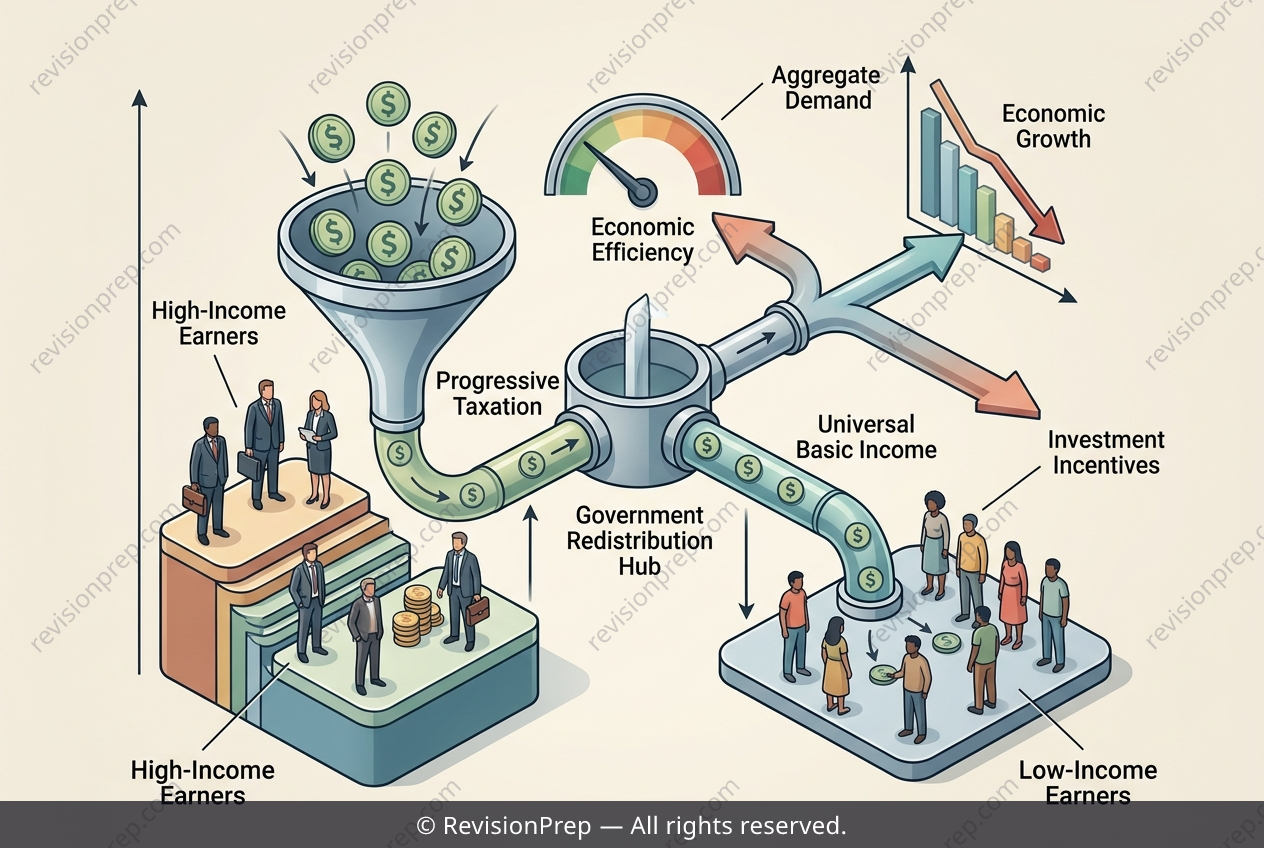
Income redistribution policies sit at the heart of macroeconomics, shaping how the gains from growth are shared across a population. The Lorenz curve captures this visually, plotting the cumulative percentage of households against the cumulative percentage of income they receive, with the 45° line of perfect equality as the benchmark. The further the curve bows below that line, the more unequal the distribution. The Gini coefficient condenses this picture into a single figure, A divided by (A + B), where A is the area between the equality line and the Lorenz curve and B is the area beneath it, running from 0 for perfect equality to 1 for perfect inequality. These tools matter because growth and equity do not always move together. A rising Gini coefficient signals that the Lorenz curve has shifted further from equality, even as average incomes climb. Progressive taxation and universal basic income illustrate the trade-off at stake: taxing high earners compresses post-tax incomes and funds transfers that lift the lower end, but may weaken incentives to invest. Understanding these mechanisms is essential for judging whether redistribution genuinely improves welfare.
Start practising IB questions today
150,000+ IB-styled questions, criteria-mapped and instantly accessible.