
Economics: When Firms Choose More Than Profit
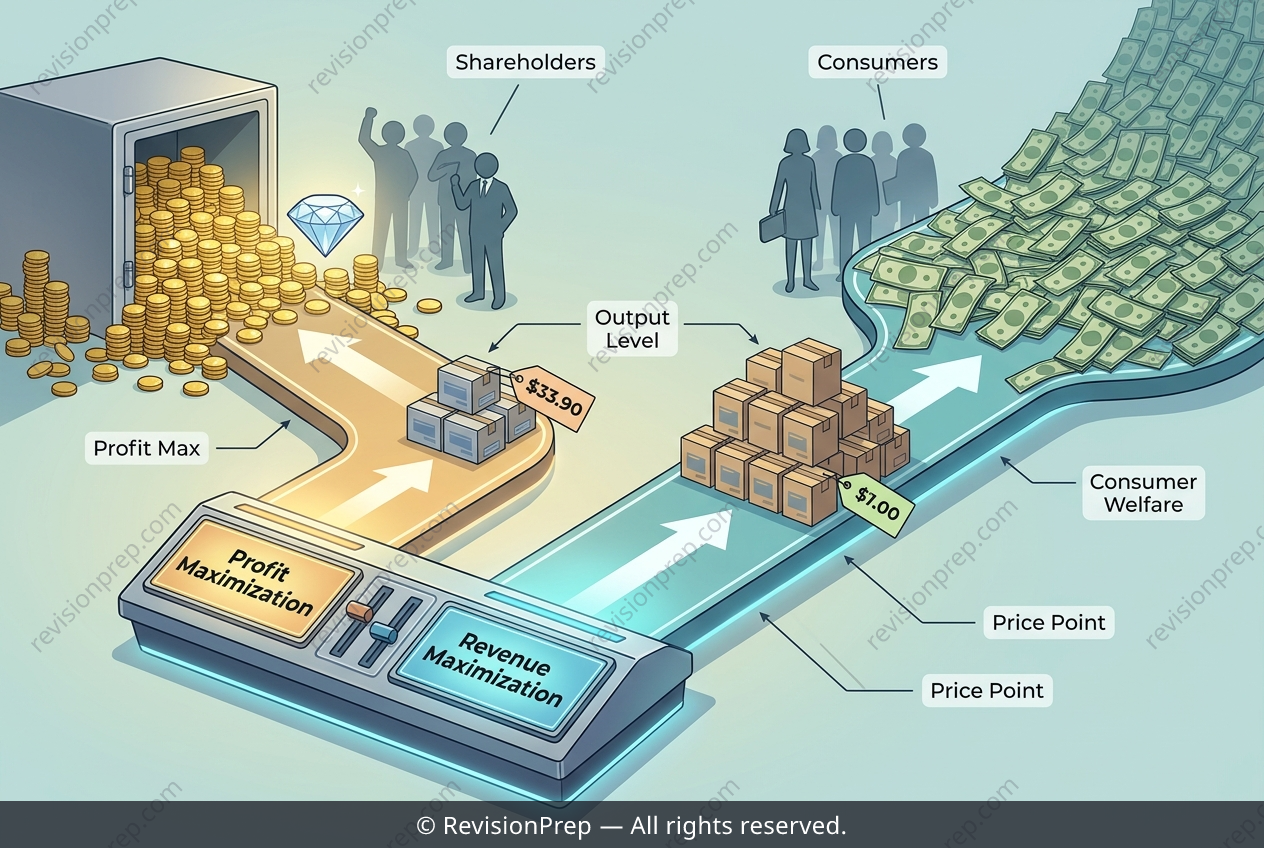
Rational behaviour for a firm means maximising profit — the positive difference between total revenue and total cost. That single definition anchors much of microeconomics, because it determines output, price, and the firm's very purpose. Profit is calculated as TR minus TC, where TR = price × quantity and TC includes both fixed and variable costs, the latter driven by marginal cost. The concept matters because firms do not always behave as the textbook model predicts. A manager may pursue revenue maximisation, where marginal revenue equals zero, rather than profit maximisation, where marginal revenue equals marginal cost. Under a downward-sloping demand curve these two rules produce different output levels, so the distinction is not cosmetic — it changes prices, quantities, and who benefits. Principal–agent problems, managerial incentives, and entry deterrence can all push a firm away from profit maximisation, while shareholders typically prefer it. Understanding these competing objectives explains why real firms sometimes price and produce in ways that seem irrational.
Start practising IB questions today
150,000+ IB-styled questions, criteria-mapped and instantly accessible.