
Economics: When Zero Elasticity Forced Intervention
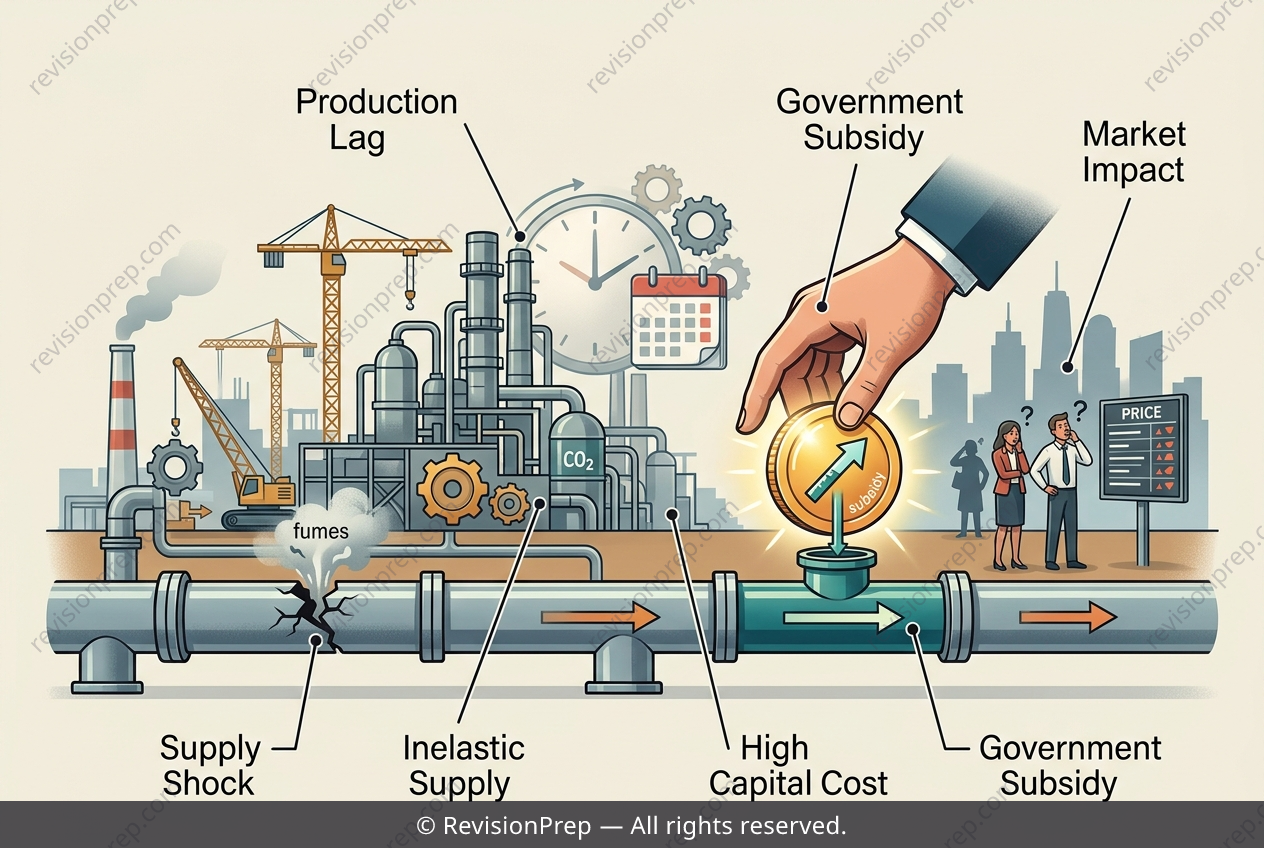
Price elasticity of supply (PES) measures how responsive quantity supplied is to a change in price, calculated as PES = %ΔQs / %ΔP. In most markets, a higher price encourages producers to supply more—but this depends on time, spare capacity, and the nature of production. When supply is rigid, price signals fail to fix shortages, and governments may step in with intervention. The 2022 UK food-grade CO₂ crisis is a perfect case study. CO₂ is a by-product of fertiliser production, meaning suppliers had no independent way to ramp up output when two plants—responsible for 60% of supply—shut down. With no spare capacity, costly storage, and new facilities requiring years to build, PES was effectively zero in the short run: even huge price hikes couldn’t summon more CO₂. This is why the government subsidised the plants to restart, shifting the supply curve rightward. That subsidy stabilised availability for food producers and consumers, preventing sharp price rises in carbonated drinks and packaged meat—showing how intervention can compensate when elasticity fails.
Start practising IB questions today
150,000+ IB-styled questions, criteria-mapped and instantly accessible.