
Economics: Why Inelastic Supply Makes Prices Swing
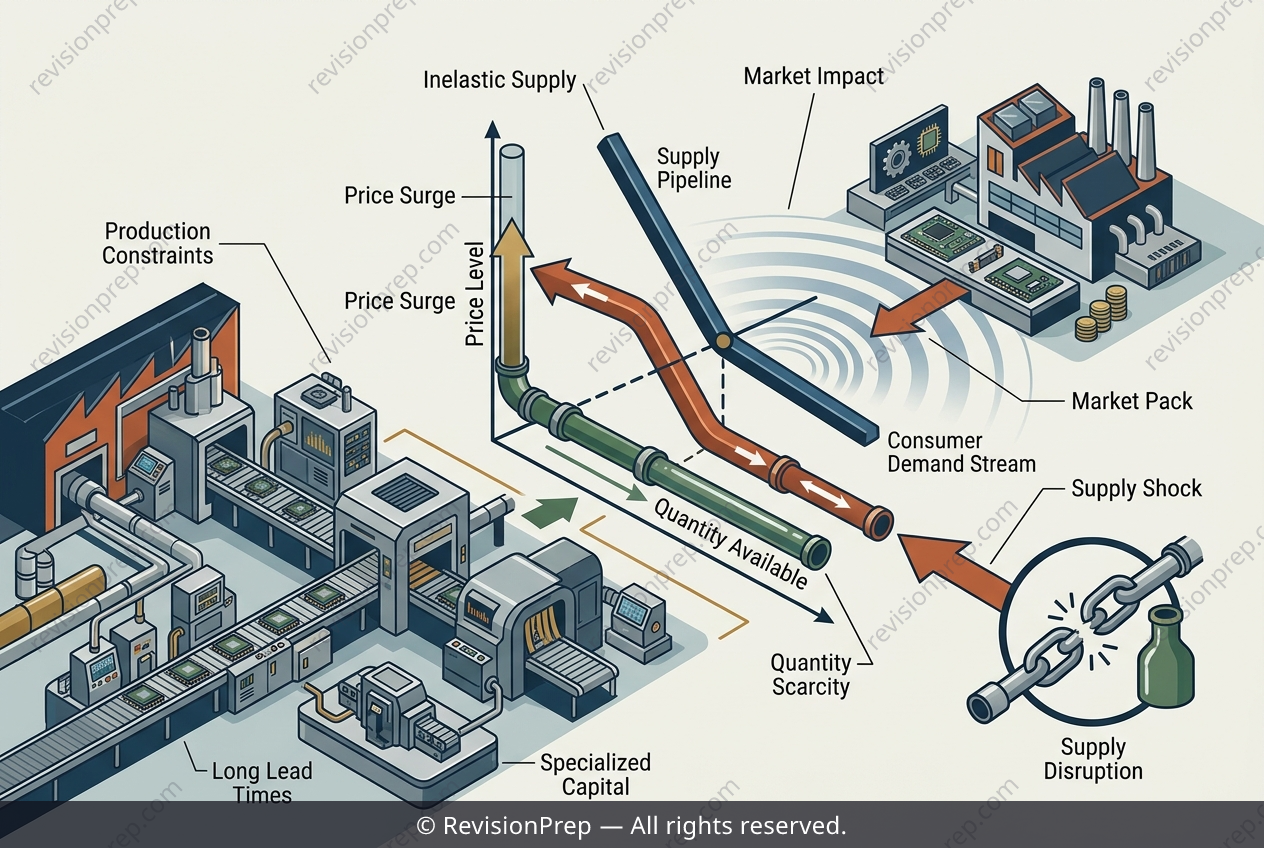
When a market is hit by a sudden shock, the size of the price change depends on how quickly producers can respond. That responsiveness is measured by the Price Elasticity of Supply (PES), which compares the percentage change in quantity supplied to the percentage change in price. In the semiconductor market, a major supply disruption—from a plant fire and pandemic shutdowns—sent prices soaring, yet output barely budged. The formula PES = %ΔQs / %ΔP captures this relationship, revealing a value far below 1, which signals inelastic supply. Why does this matter? Because when supply is inelastic, shifts in the supply curve translate into dramatic price swings rather than quantity adjustments. The key determinants here are time and factor availability: building new fabrication plants takes years, and the specialised equipment and skilled labour required cannot be quickly sourced. As a result, even a large price rise fails to incentivise a meaningful increase in output. This mechanism—where a leftward supply shift leads to a steep price increase but only a modest fall in quantity—explains the real-world pain felt by producers and consumers alike, from squeezed profit margins to higher retail costs.
Start practising IB questions today
150,000+ IB-styled questions, criteria-mapped and instantly accessible.