
Maths: How Bouncing Balls Bridge Sequences and Series
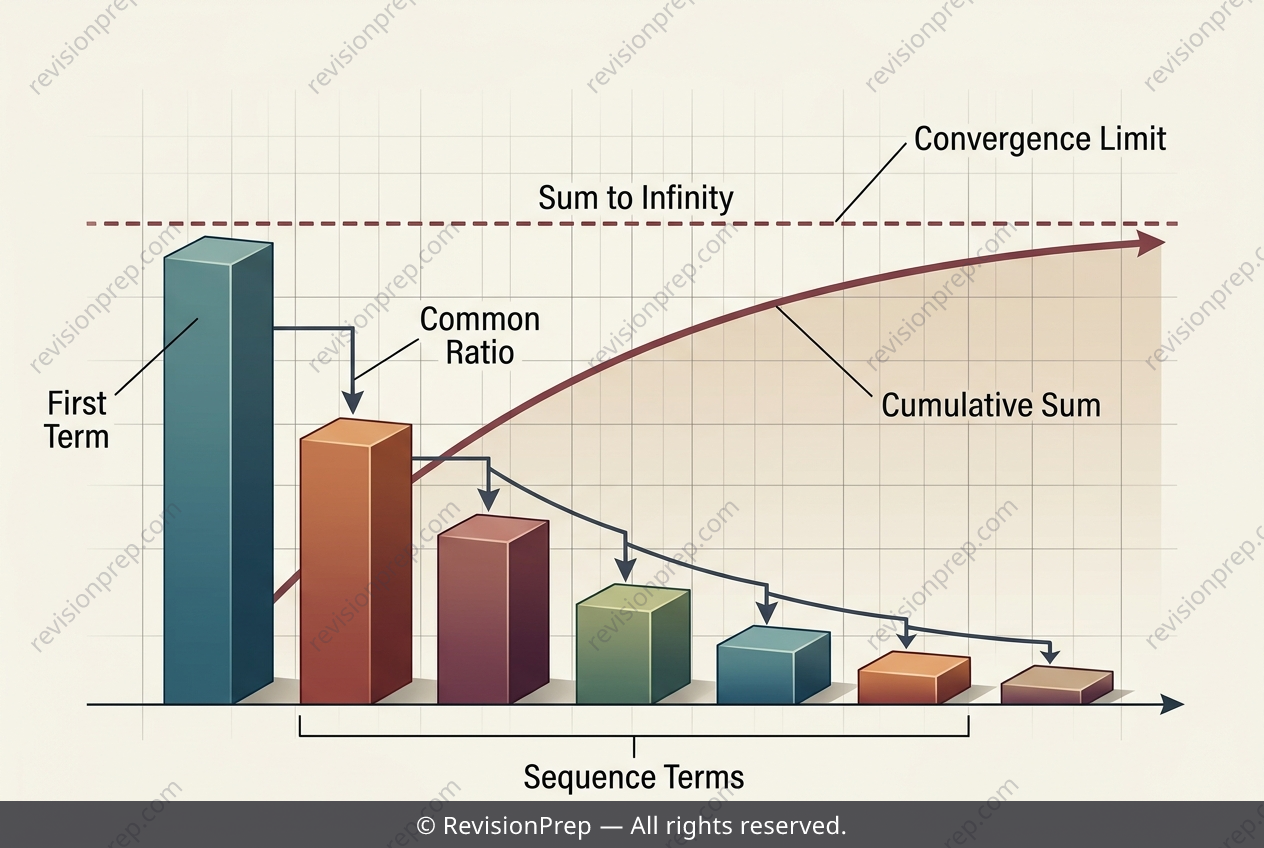
Geometric sequences and series describe quantities that change by a constant multiplicative factor at each step. A geometric sequence has the form u₁, u₁r, u₁r², …, where u₁ is the first term and r is the common ratio, and the nth term is given by uₙ = u₁r^(n−1). When |r| < 1, the terms shrink towards zero, and the infinite sum converges to S∞ = u₁/(1 − r), a result that turns an endless process into a single finite value. This idea matters because many real-world processes — bouncing balls, cooling objects, diminishing returns — repeat proportionally rather than by fixed amounts. The bouncing-ball problem captures this perfectly: each rebound reaches a fixed fraction of the previous height, forming a geometric sequence, while the total distance travelled combines the initial fall with the sum of all subsequent rises and falls. Recognising that each bounce height is counted twice, and that the infinite series converges, links the sequence formula to the sum formula in one connected model.
Start practising IB questions today
150,000+ IB-styled questions, criteria-mapped and instantly accessible.