
Physics: A Steel Ring's Thermal Expansion, Solved
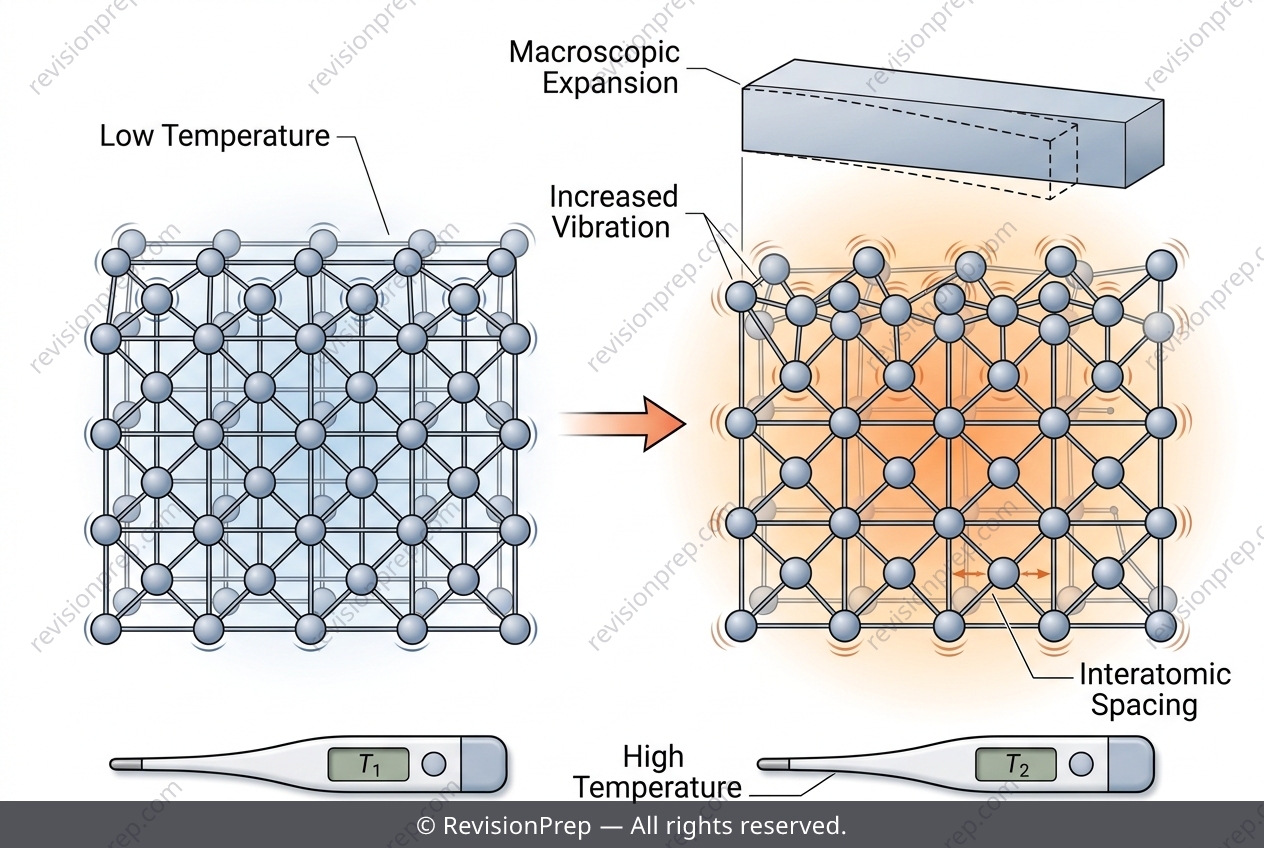
When solids are heated, they don’t just get warmer—they physically grow. This phenomenon, known as linear thermal expansion, describes how a material’s length changes proportionally to its temperature rise, governed by the relationship ΔL = α·L₀·ΔT, where α is the linear expansivity (a material-specific constant), L₀ is the original length, and ΔT is the temperature change. For engineering and design, this matters enormously: bridges, railway tracks, and precision instruments all must accommodate expansion, or they risk warping, buckling, or failing to fit. In the context of Physics HL, this concept becomes a practical puzzle when two materials with different expansivities interact. Consider a steel ring and a brass rod—both measured at the same starting temperature, but with the rod slightly too large to pass through the ring. Because brass expands more than steel per degree (αbrass > αsteel), heating only the ring (while keeping the rod at its original temperature) will cause the ring’s inner diameter to grow. The key insight is that the required expansion is fixed—the difference in diameters—and that expansion is driven solely by the steel’s expansivity, not the brass’s. By rearranging the formula to solve for ΔT = ΔL / (α·L₀), you connect the physical gap to the temperature needed, showing how a tiny coefficient and a small gap can demand a surprisingly large temperature rise.
Start practising IB questions today
150,000+ IB-styled questions, criteria-mapped and instantly accessible.