
Physics: Why Microwaves Heat Food Unevenly
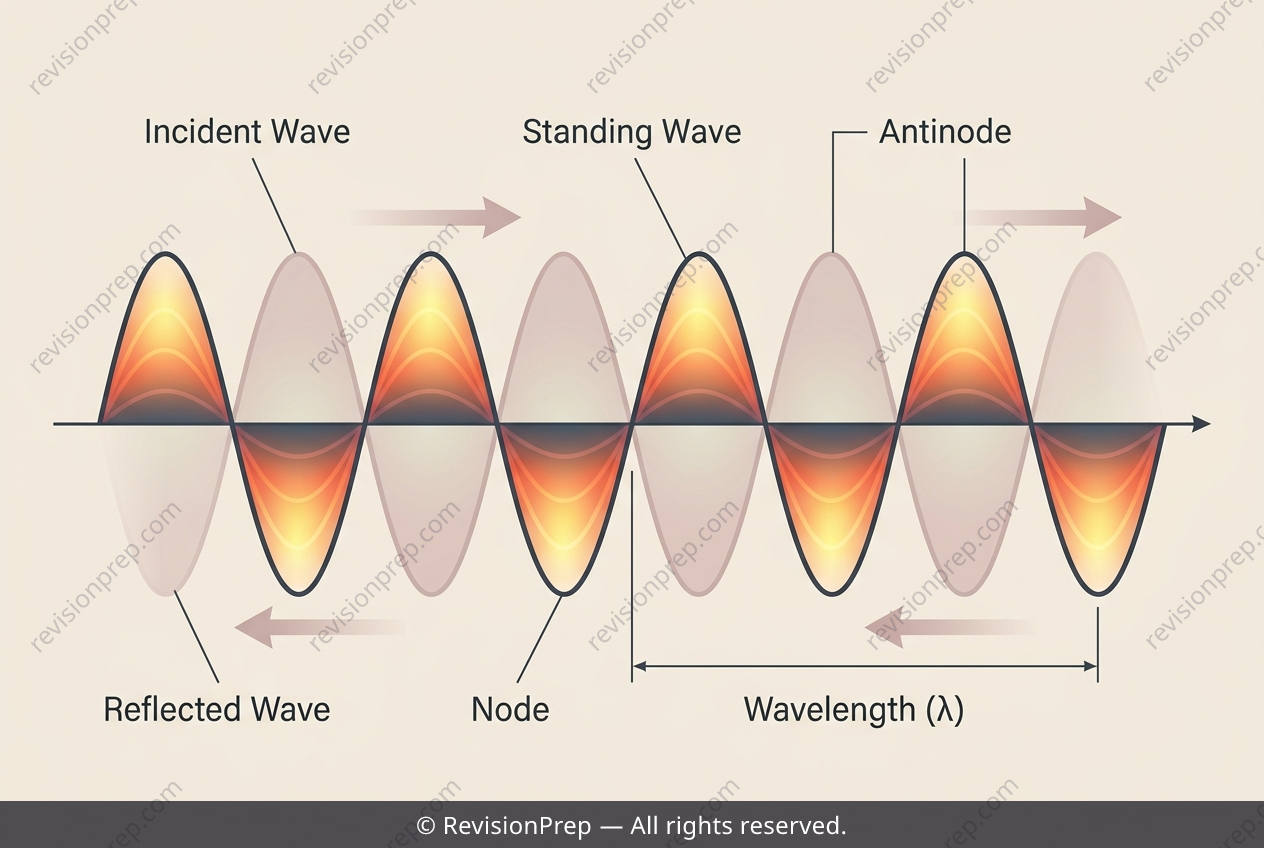
Standing waves are the hidden choreographers of energy distribution in physics, and few everyday devices demonstrate this as vividly as a microwave oven. When electromagnetic waves reflect off the metal walls of the cavity, they interfere with the incoming waves, creating a fixed pattern of nodes—points of zero displacement—and antinodes—points of maximum displacement. The core relationship to grasp is that the distance between two adjacent antinodes equals exactly half a wavelength (d = λ/2), a fact that directly links the spatial pattern you observe to the wave’s fundamental property. This concept matters because it explains why your leftovers heat unevenly: at antinodes, the electric field amplitude peaks, driving maximum energy transfer into water molecules, while at nodes, the field is zero and no heating occurs. The wave speed, frequency, and wavelength are tied together by v = fλ, allowing you to connect the measured spacing to the wave’s propagation. Understanding this pattern isn’t just about microwaves—it reveals how energy localizes in any confined wave system, from sound in pipes to light in lasers, and why mechanical solutions like turntables only partially smooth out the inevitable hot and cold spots.
Start practising IB questions today
150,000+ IB-styled questions, criteria-mapped and instantly accessible.