
Economics: Development Strategies: Mining vs. Education
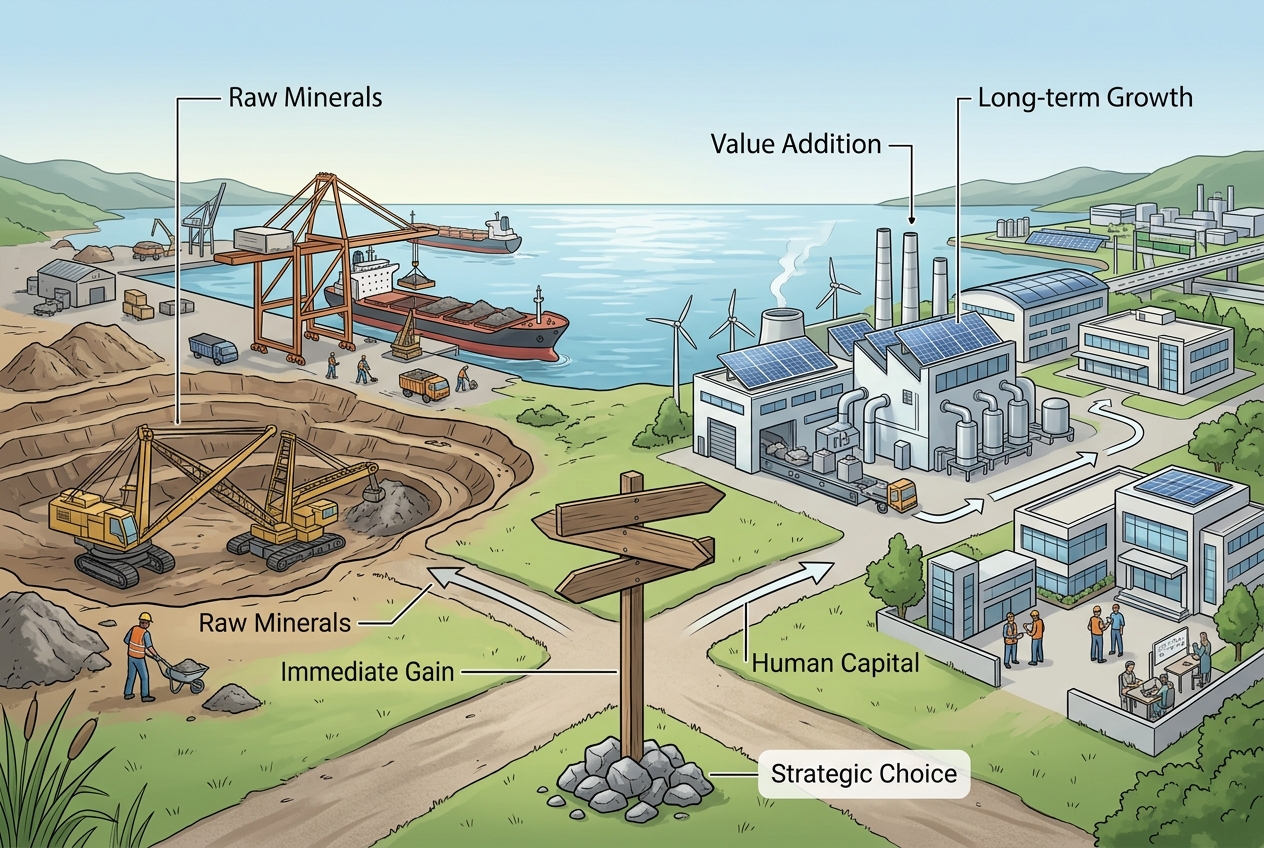
Every economic choice is a sacrifice in disguise. At the heart of Economics SL lies the concept of opportunity cost—the value of the next-best alternative foregone when resources are scarce. For a low-income nation like Country X, this isn’t abstract theory: with limited capital and skilled labour, it cannot simultaneously build a mining export sector and a domestic processing industry. Choosing Strategy A (raw mineral exports) means forfeiting the long-run industrialisation gains of Strategy B; choosing Strategy B means giving up immediate foreign exchange revenue. This trade-off defines how developing economies navigate resource allocation under scarcity. The real mechanism here is the mismatch between current endowments and desired outcomes. Strategy A is capital-intensive, yet Country X lacks capital—making it costly without foreign investment. Strategy B is labour-intensive but requires skilled workers, which the country doesn’t yet have. So the short-run choice (A) aligns with existing resources, while the long-run choice (B) only becomes viable after investing in education to raise labour quality. The core relationship: immediate revenue (low value-added) versus future development (high value-added), where the opportunity cost of each path is the unrealised benefit of the other.
Start practising IB questions today
150,000+ IB-styled questions, criteria-mapped and instantly accessible.