
Maths: Algebraic Modeling of Fixed and Variable Costs in Word Problems
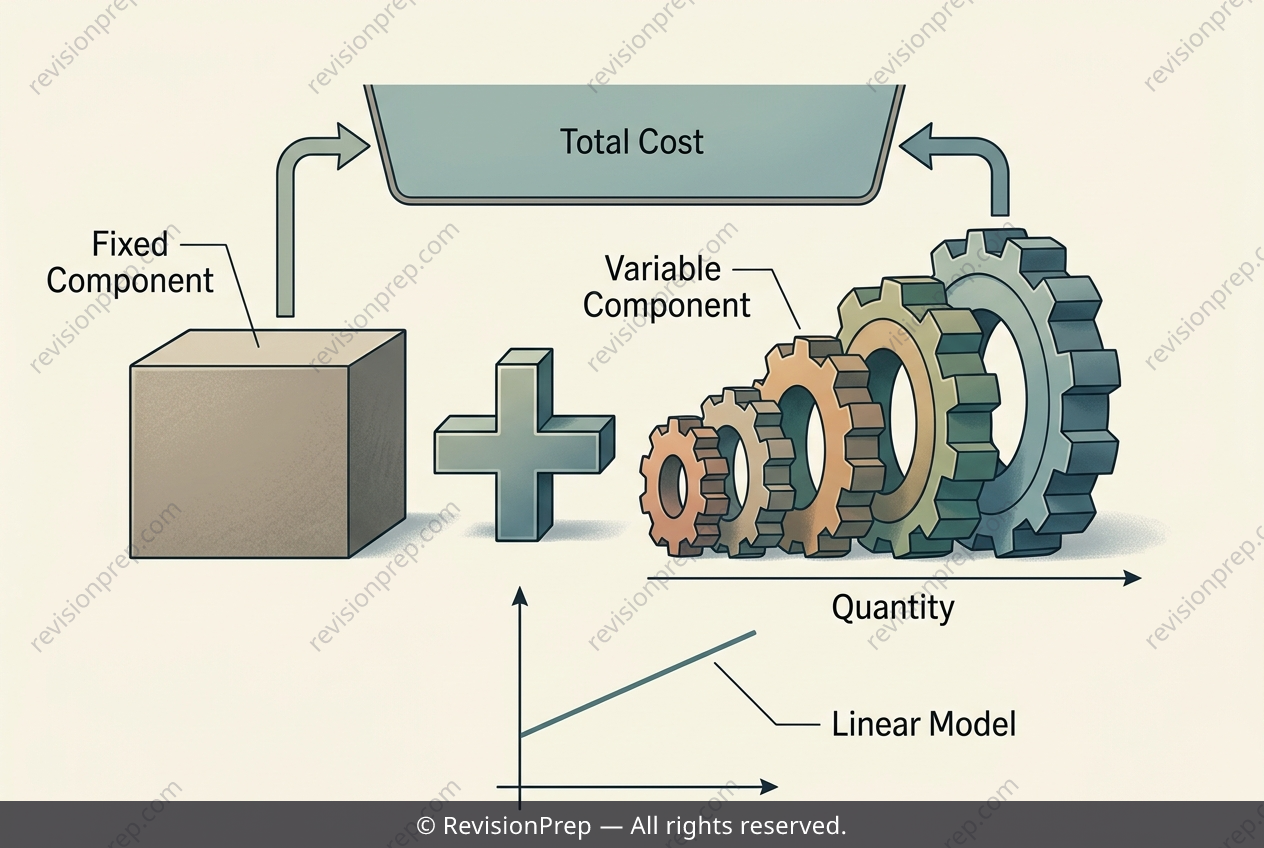
Algebraic modeling is the art of translating a real-world situation into a mathematical sentence you can manipulate. In this case, a simple tuck-shop transaction—buying sandwiches with a fixed packaging fee—becomes a linear expression that reveals how costs accumulate. The core idea is separating what changes (the number of sandwiches) from what stays constant (the packaging fee), then combining them into a single formula. This matters because almost every financial decision, from budgeting a school event to pricing a product, relies on such models. Here, the total cost C depends on the number of sandwiches x, with each sandwich adding 3 dollars, while the packaging fee adds a flat 1 dollar regardless of order size. The relationship is additive: C = 3x + 1. But models are simplifications—they assume the price per sandwich never shifts. In reality, a bulk discount might kick in for large orders, breaking the straight-line relationship. Recognizing that limitation is just as important as writing the expression, because it reminds you that algebra captures a snapshot, not the whole moving picture.
Start practising IB questions today
150,000+ IB-styled questions, criteria-mapped and instantly accessible.