
Maths: Distributive Property with Real-World Cost Problems
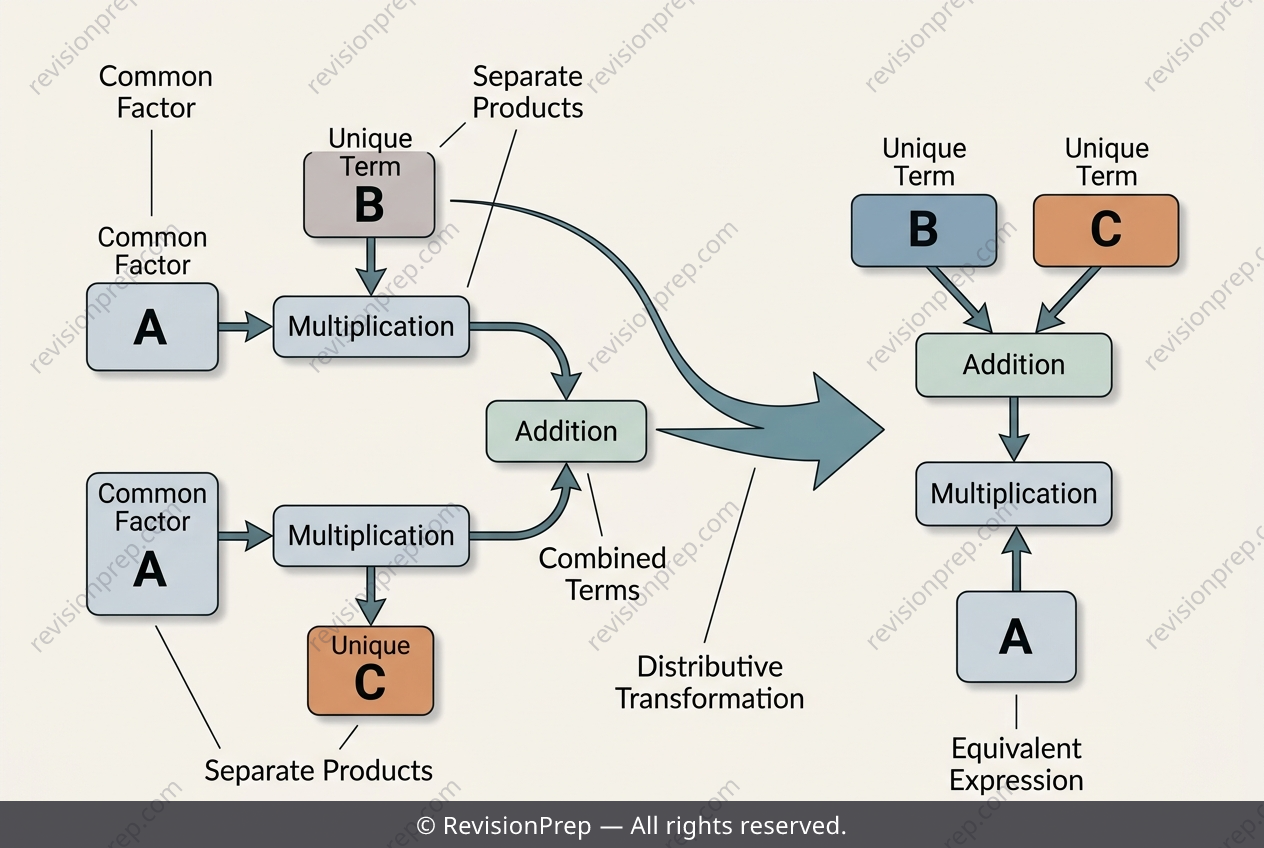
The distributive property of multiplication over addition is the quiet engine behind countless everyday calculations. At its core, it states that multiplying a sum by a number gives the same result as multiplying each addend separately and then adding those products: a × (b + c) = a × b + a × c. While this may look like a simple algebraic rule, it is the bridge between two different ways of thinking about the same problem—one that breaks things apart, and one that groups them together. This property matters because it reveals the structural flexibility of arithmetic. In the context of a school buying packs of notebooks and pens, the separate method multiplies each price by the quantity before adding, while the distributive method adds the unit prices first and then multiplies once. Both yield the same total, but the choice of path becomes significant when conditions change, such as a uniform percentage price increase. When both prices rise by the same factor, the distributive approach collapses multiple calculations into a single, streamlined operation—demonstrating how a simple algebraic relationship can turn repetitive work into elegant efficiency. Understanding this connection not only simplifies computation but also deepens your grasp of how numbers and variables interact.
Start practising IB questions today
150,000+ IB-styled questions, criteria-mapped and instantly accessible.