
Maths Extended: Rational Functions: Asymptotes, Domain, and Modeling Validity
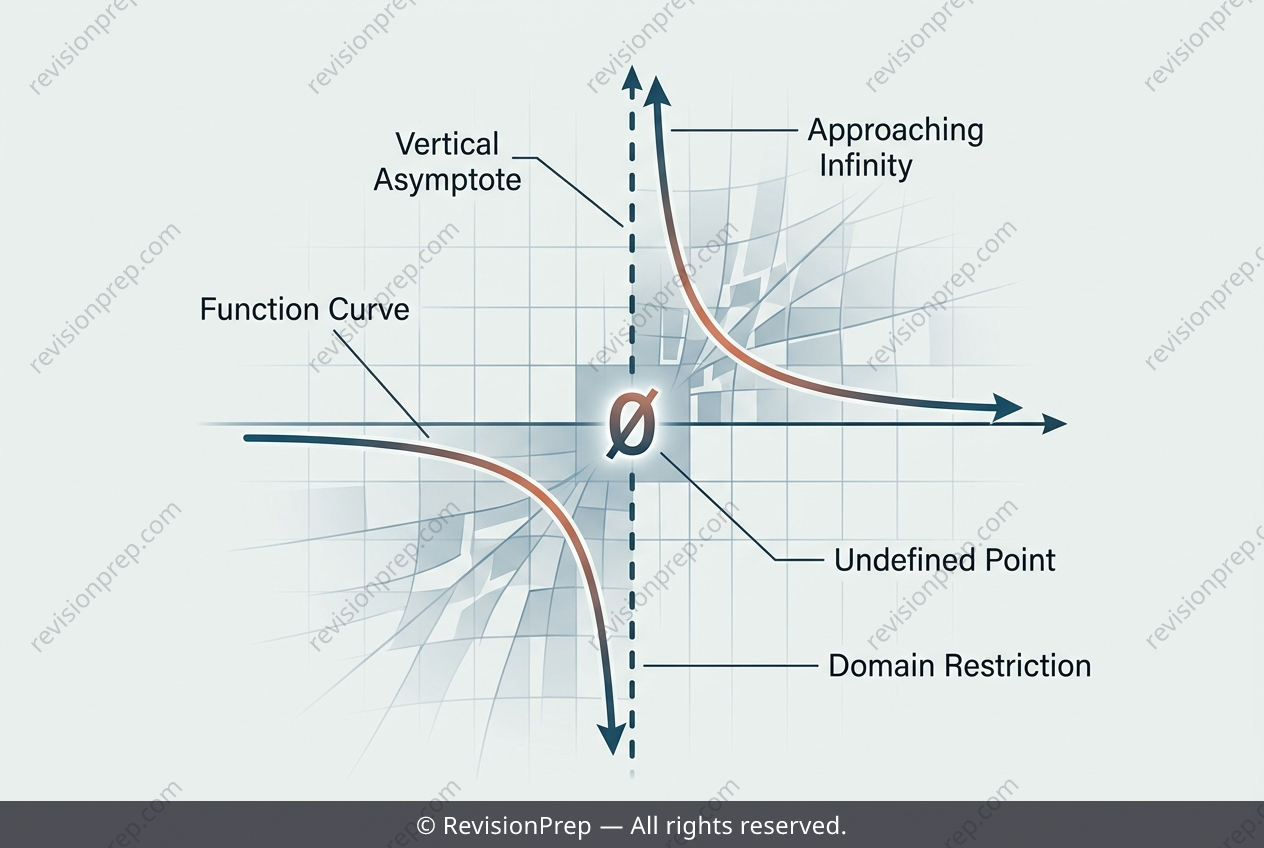
Rational functions like f(x) = 1/x are the quiet workhorses of mathematical modelling—simple to write, yet deceptively rich in behaviour. At their core, they describe relationships where one quantity varies inversely with another: as the input grows, the output shrinks, and vice versa. But the real intrigue lies in what happens near the forbidden value—the point where the denominator becomes zero. For f(x) = 1/x, that point is x = 0, and it creates a vertical asymptote, an invisible boundary the graph approaches but never touches. This single function reveals three interconnected ideas that underpin much of extended mathematics: domain restrictions, asymptotic behaviour, and modelling validity. The domain restriction is immediate—division by zero is undefined, so x = 0 simply does not exist in the function’s world. The asymptote then dictates the graph’s shape: from the right, values surge toward positive infinity; from the left, they plunge toward negative infinity, the two branches forever separated. Finally, these mathematical truths translate directly into real-world limits—a drug concentration model cannot claim to describe the instant of administration if the formula itself breaks down there. Understanding how these pieces fit together is what separates a formula from a meaningful model.
Start practising IB questions today
150,000+ IB-styled questions, criteria-mapped and instantly accessible.