
Maths: Mathematical Models: Taxi Fare Variables and Limits
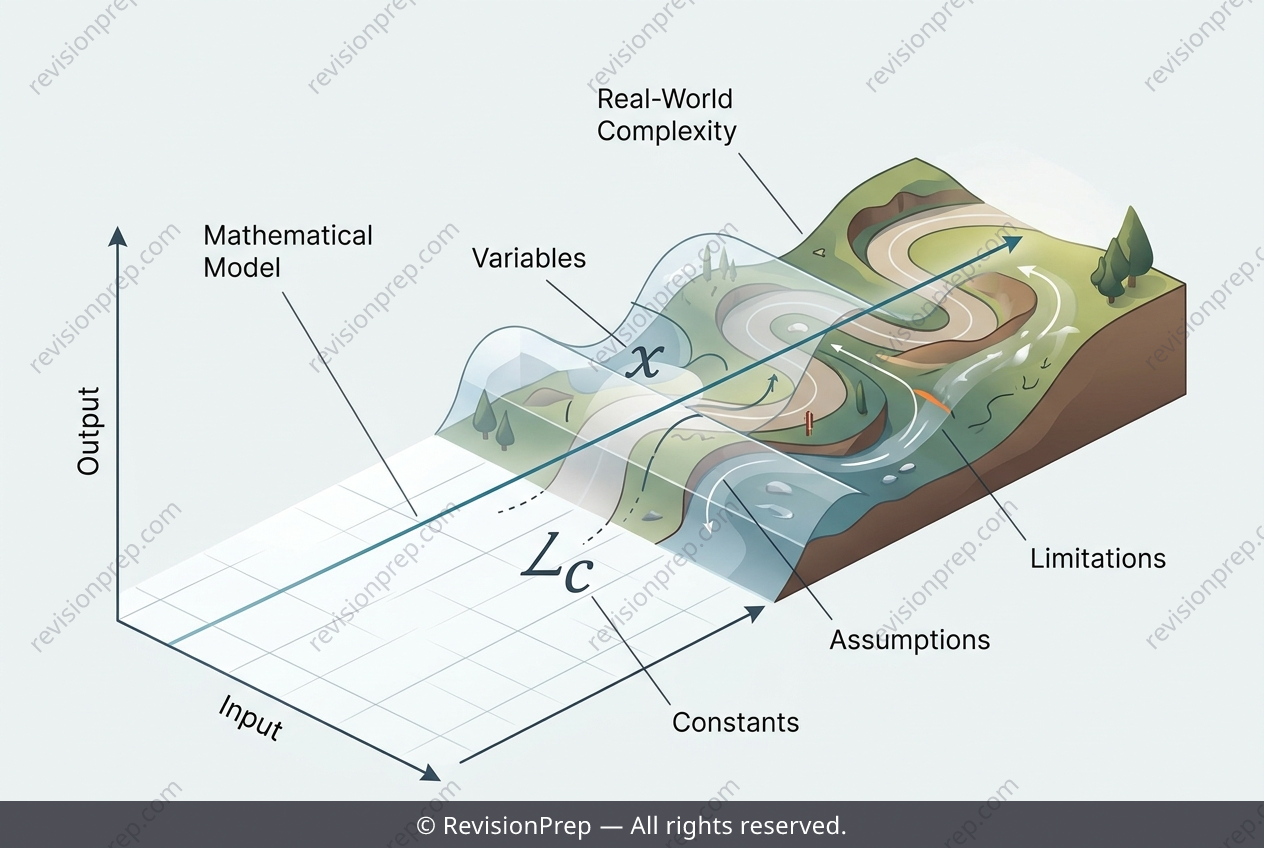
At its heart, mathematics is a tool for translating the messy, unpredictable world into clean, logical structures. The formula C = 3 + 2k is a perfect starting point for this idea: it takes a real-world service—like a taxi ride—and distills it into a simple relationship between two quantities. Here, the constant 3 represents a fixed starting cost, while the term 2k shows how the total price grows steadily with each kilometer traveled. This is the essence of mathematical modeling: identifying which parts of a situation stay the same (constants) and which parts change (variables), then linking them with an equation. But models are not mirrors; they are simplifications. The power of this formula lies in its clarity, yet that same clarity hides a crucial limitation. By assuming the cost per kilometer remains constant, the model ignores real-world fluctuations like peak-hour surcharges or traffic delays. Understanding both the mechanism—how the base fee and per-unit rate combine—and the boundary of that mechanism is what separates a formula from a faithful representation. This balance between utility and imperfection is the core of applied mathematics.
Start practising IB questions today
150,000+ IB-styled questions, criteria-mapped and instantly accessible.