
Maths: Probability: Expected Value vs Randomness in IB Math
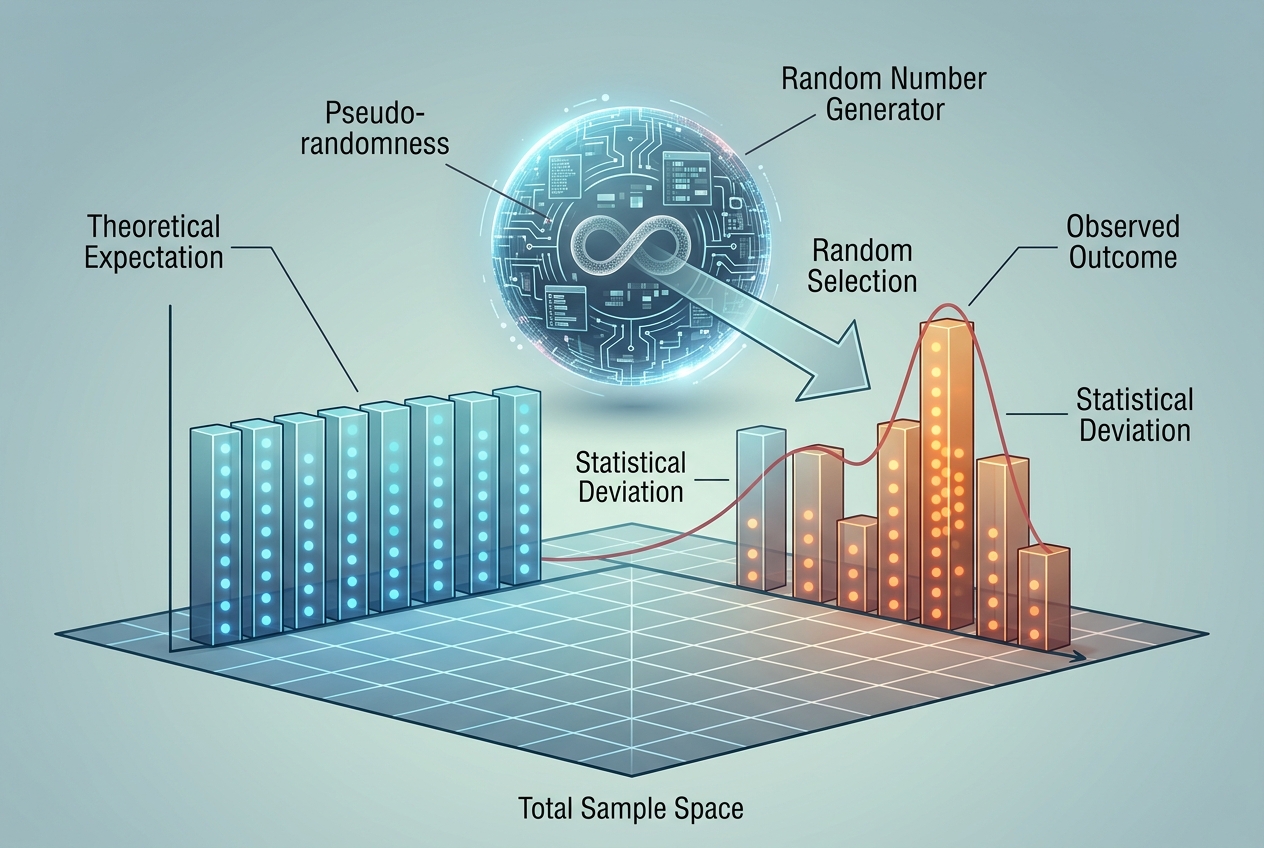
Probability and randomness are not the same as intuition. In mathematics, experimental probability describes what actually happens in a trial, while theoretical probability predicts what should happen under ideal, fair conditions. The gap between these two is the foundation of statistical inference—the process of deciding whether an observed result is due to chance or to bias. In this context, the core relationship is simple: the theoretical probability of a single event equals the number of favourable outcomes divided by the total number of possible outcomes. For a group, the expected number of successes is then this probability multiplied by the group size. Understanding this connection matters because it allows us to test fairness. When an observed outcome—like 40 winners from a small postal code—deviates dramatically from the expected value, we can quantify how unlikely that deviation is under randomness. The expected value acts as a benchmark: it is the average result over many repetitions, not a guarantee for a single draw. By comparing the observed to the expected, and recognising the limitations of pseudo-random generators, students learn to assess whether a claim of fairness is mathematically reasonable or whether it points to systematic bias.
Start practising IB questions today
150,000+ IB-styled questions, criteria-mapped and instantly accessible.