
Maths: Substitution into Formulae: Applying and Limiting the Distance Formula
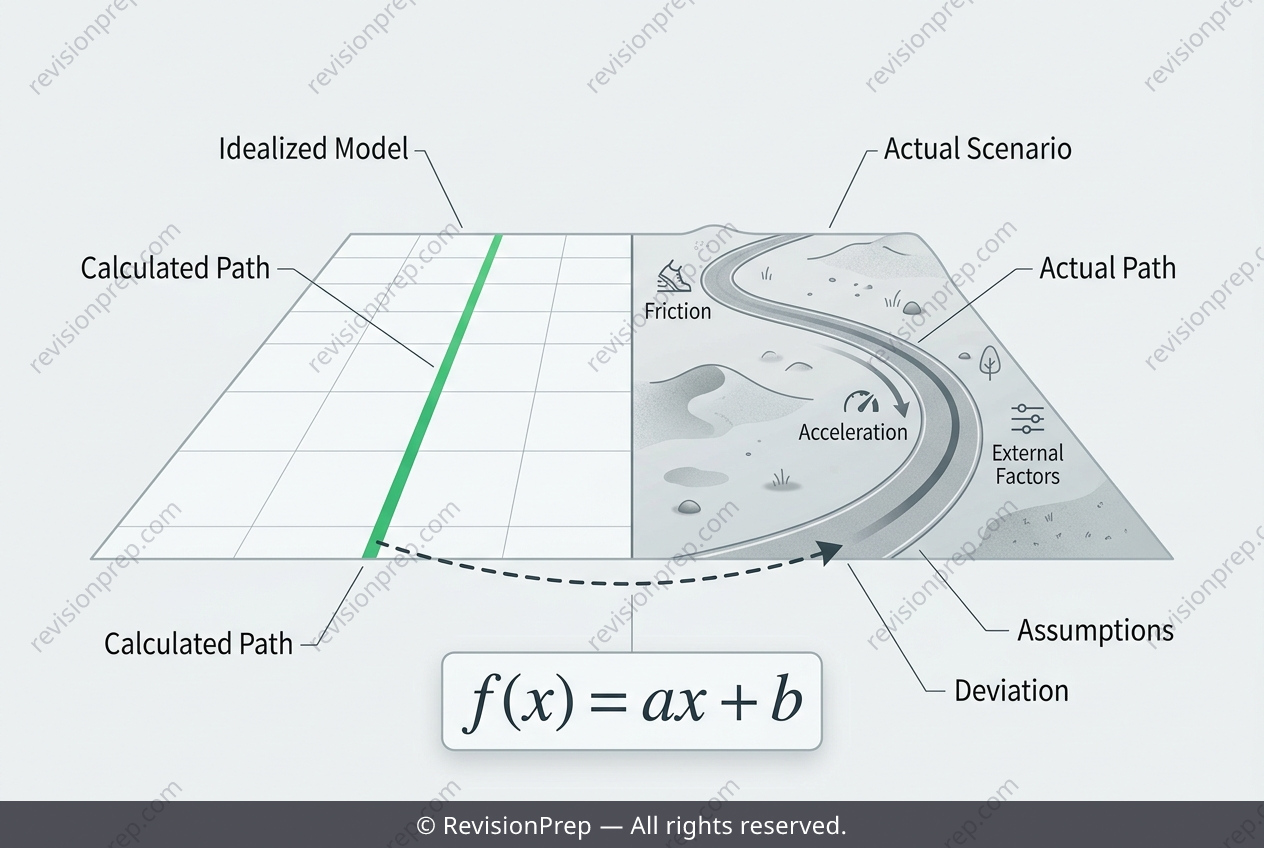
Substitution is the quiet engine of mathematics: it takes an abstract formula and makes it speak to a real situation. When you replace variables with numbers, you’re not just performing arithmetic—you’re testing how well a model describes the world. In this case, the formula distance = speed × time seems straightforward, but its power lies in its assumptions. By plugging in a speed and a duration, you create a predicted value, yet that prediction only holds if the model’s conditions are met. The key relationship here is that distance depends linearly on both speed and time, meaning if either changes, the output changes proportionally. However, the formula silently assumes constant speed—a uniform rate with no stops, no traffic, no acceleration. In practice, a car’s speed fluctuates, so the calculated result is an idealised estimate, not a guaranteed measurement. Understanding this gap between the clean equation and messy reality is what separates a good mathematician from a great one. It’s not just about getting the number; it’s about knowing why the number might be wrong, and what that tells you about the model’s limits.
Start practising IB questions today
150,000+ IB-styled questions, criteria-mapped and instantly accessible.