
Maths: Substitution, Negative Variables, and Model Limits in Real-Life Formulas
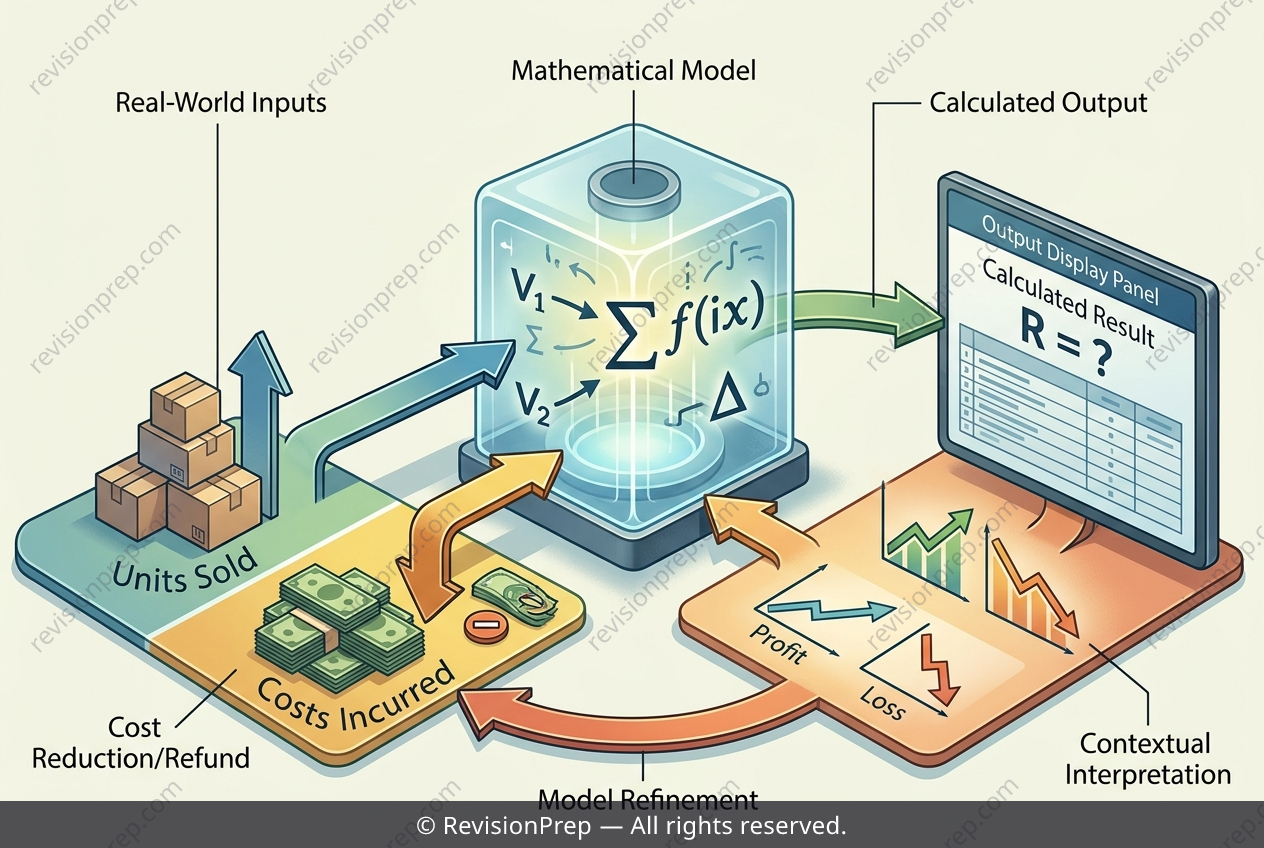
Substitution into expressions and formulae is the bridge between abstract algebra and real-world decision-making. At its heart, this topic asks you to take a rule—like a profit equation—and feed it specific numbers to see what happens. But the real skill lies in interpreting what those numbers mean, especially when they behave unexpectedly. Consider a simple model for a bracelet seller: profit equals 5 times bracelets sold, minus 2 times materials cost, minus a flat 3 dollars. The structure matters: coefficients like 5 and 2 represent per-unit contributions, while the constant -3 might stand for a baseline expense. When you substitute values, you’re not just calculating—you’re testing the model’s assumptions. For instance, if materials cost turns out negative, that’s a signal the formula is flexible enough to represent a refund, not a payment. This reveals the deeper idea that variables carry context, and their signs can flip meaning. The marking scheme highlights two key moves: correct substitution (placing values into the right slots) and accurate arithmetic, but also the evaluation step—recognising that no model is perfect. A formula that only tracks materials ignores fixed costs like packaging or table rental. Improving it means adding another term, such as subtracting a fixed fee, so the model better mirrors reality. Mastering substitution isn’t just about plugging in numbers; it’s about understanding how each part of the formula shapes the story the numbers tell.
Start practising IB questions today
150,000+ IB-styled questions, criteria-mapped and instantly accessible.