
Maths: Trigonometry, Models & Real-World Measurements
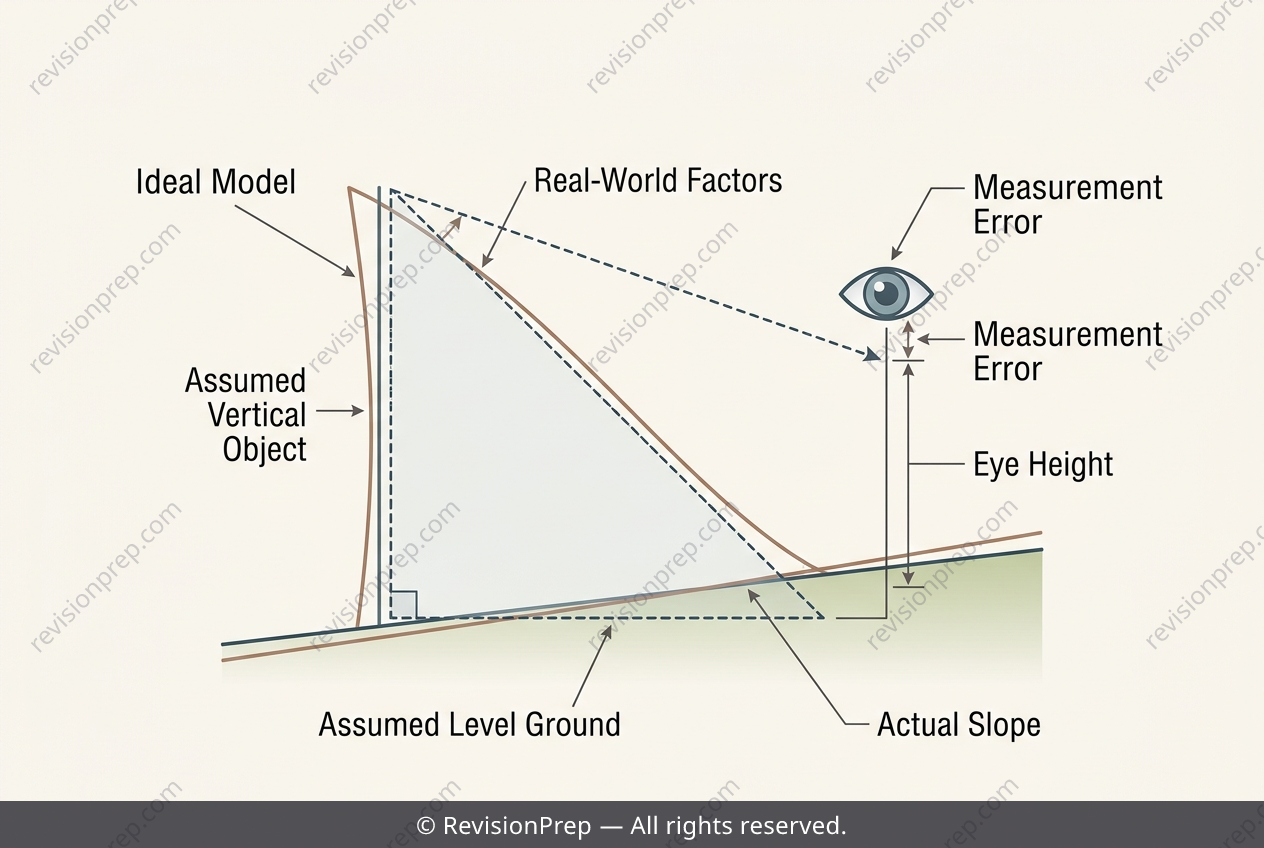
A single diagram of a tree, a surveyor, and a right triangle can hide a world of assumptions. In this exercise, you explore how a simple trigonometric model—using tan(45°) = h/10—turns a real-world measurement into a number, and how that number depends on the fidelity of the model itself. The core concept here is not just calculating a height, but critically analysing the gap between the idealised geometry and the messy reality it represents. The marking scheme reveals the key relationships at play. First, the model assumes level ground and a vertical tree, so the 10 m distance is treated as the true horizontal base. If the ground slopes upward, that base shrinks, meaning the model’s height becomes an overestimate. Second, the clinometer is held at eye level, so the calculated height is only the portion above the eye—adding the eye height (1.6 m) gives the true total, and ignoring it creates a roughly 14% underestimate. Each assumption—horizontal distance, verticality, eye height—feeds directly into the final value, showing how error analysis is inseparable from the mathematics itself.
Start practising IB questions today
150,000+ IB-styled questions, criteria-mapped and instantly accessible.