
Maths: Variables and Rate of Change in IB Math
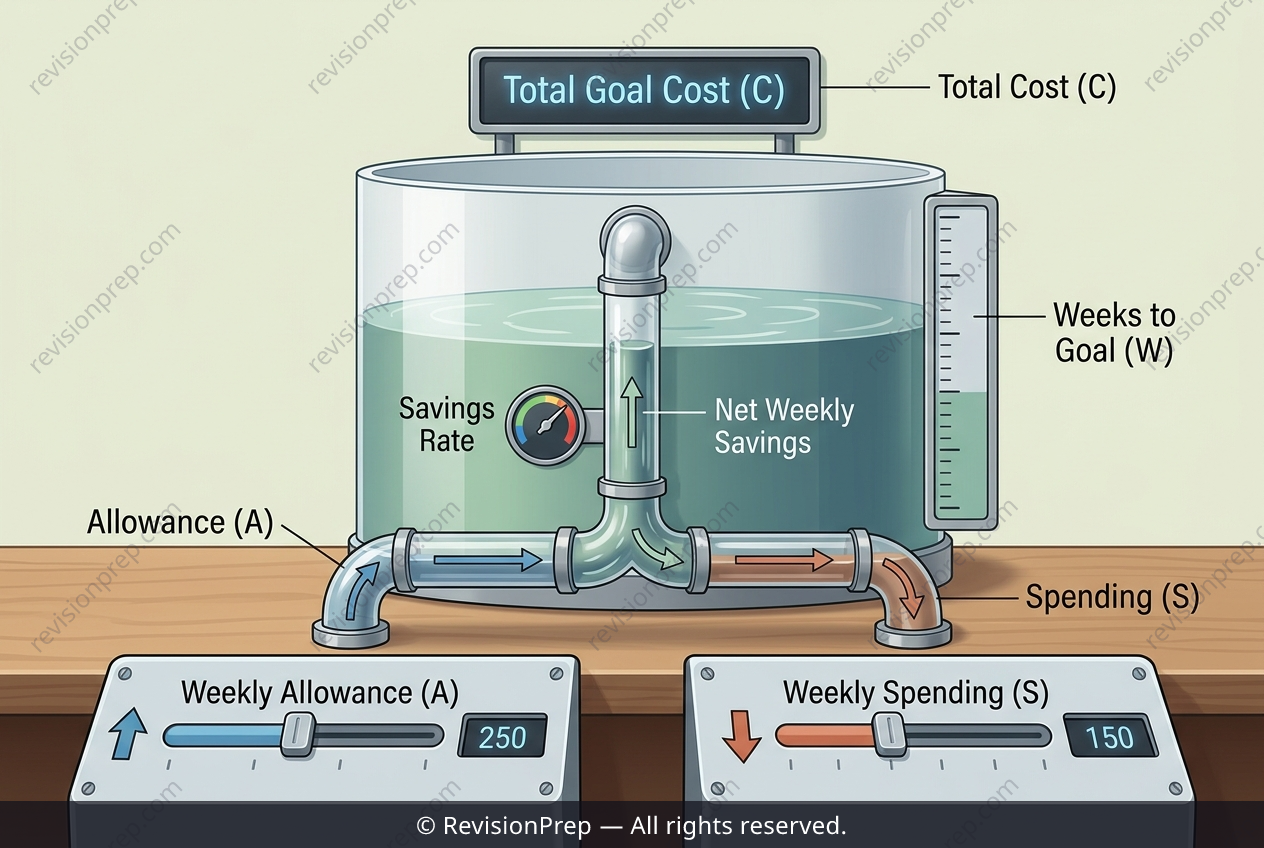
In mathematics, the relationship between variables and constants forms the foundation of how we model real-world situations. Here, we explore how the number of weeks needed to save for a purchase depends on two key quantities: the weekly savings amount (S) and the total cost of the item (C). This simple scenario introduces the idea of functional dependency—where one value is determined by others—and sets the stage for analysing how changes in inputs produce predictable changes in outputs. The core relationship is expressed as W = C ÷ S, meaning the time required is directly proportional to the cost and inversely proportional to the savings rate. This inverse link is crucial: as S increases, W decreases, and vice versa. Interestingly, the allowance (A) does not appear in this formula—it only matters if it influences S. This distinction highlights why not all variables in a problem affect the outcome equally. By examining how altering S versus A impacts W, we uncover the mechanics of rate-of-change analysis, a skill essential for interpreting dynamic systems across mathematics and science.
Start practising IB questions today
150,000+ IB-styled questions, criteria-mapped and instantly accessible.