
Maths: Vertical Stretch Transformations with Bridge Sag Modeling
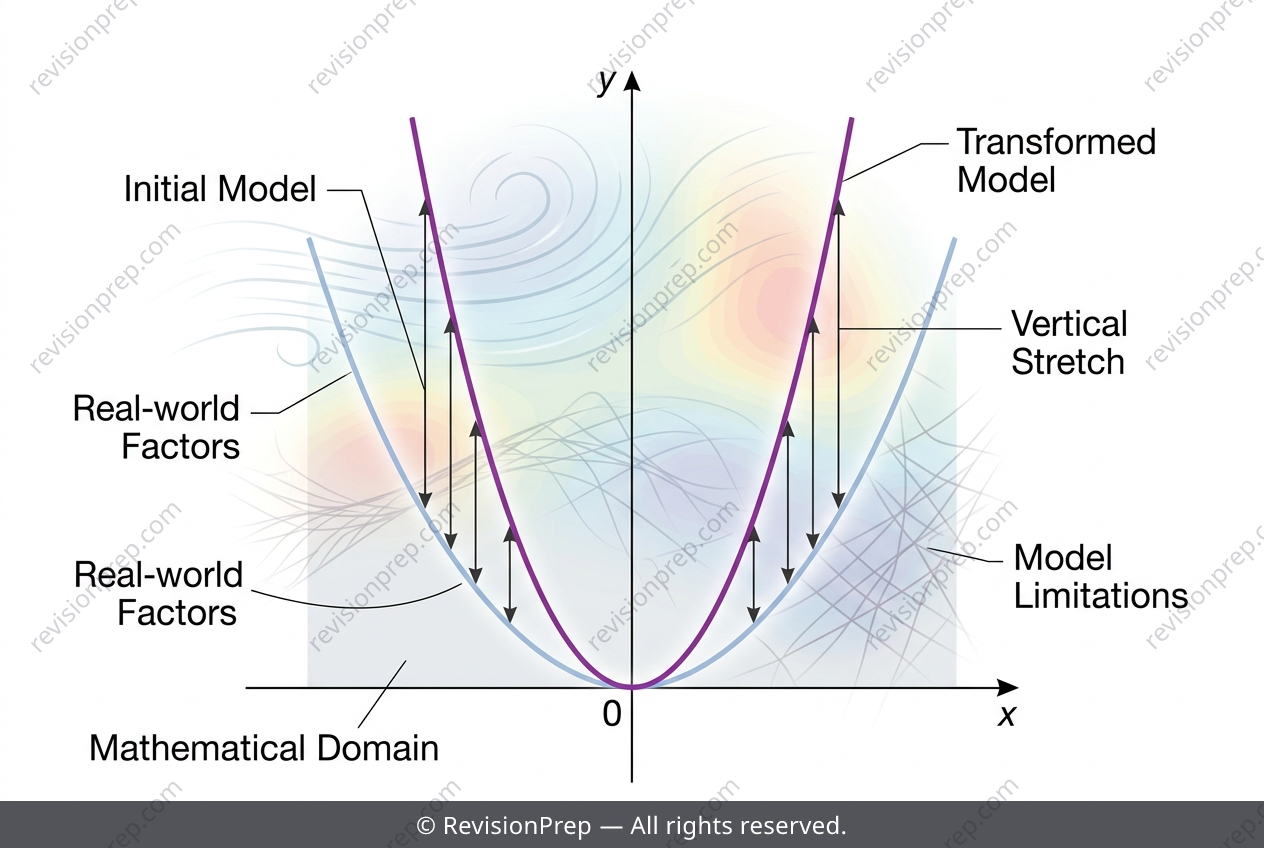
A vertical stretch is one of the most intuitive yet powerful transformations in graph theory: it multiplies every output of a function by a constant factor, reshaping the curve without altering its horizontal structure. In the context of the suspension bridge model, where the cable’s sag is described by y = 0.005x², applying a vertical stretch by a factor of 1.2 transforms the equation into y = 0.006x². This simple operation captures a real-world change—here, a 20% increase in load—by scaling the sag proportionally at every point along the span. The connection between the algebra and the physical scenario becomes clear when you consider the domain: with x ranging from −200 to 200 metres, the maximum sag occurs at the supports, where the squared term peaks. Yet the model’s elegance hides a deeper limitation. The quadratic form assumes a perfectly uniform load distribution, ignoring concentrated traffic, wind-induced oscillations, and the catenary shape that a cable’s own weight produces over long spans. Understanding when a transformation is valid—and when the underlying model breaks down—is the difference between a useful estimate and a design flaw. This example shows how function transformations are not just abstract manipulations but tools for modelling reality, with boundaries that must be respected.
Start practising IB questions today
150,000+ IB-styled questions, criteria-mapped and instantly accessible.