
Maths: Why Real-World Variables Force Ratio Adjustments in Math Problems
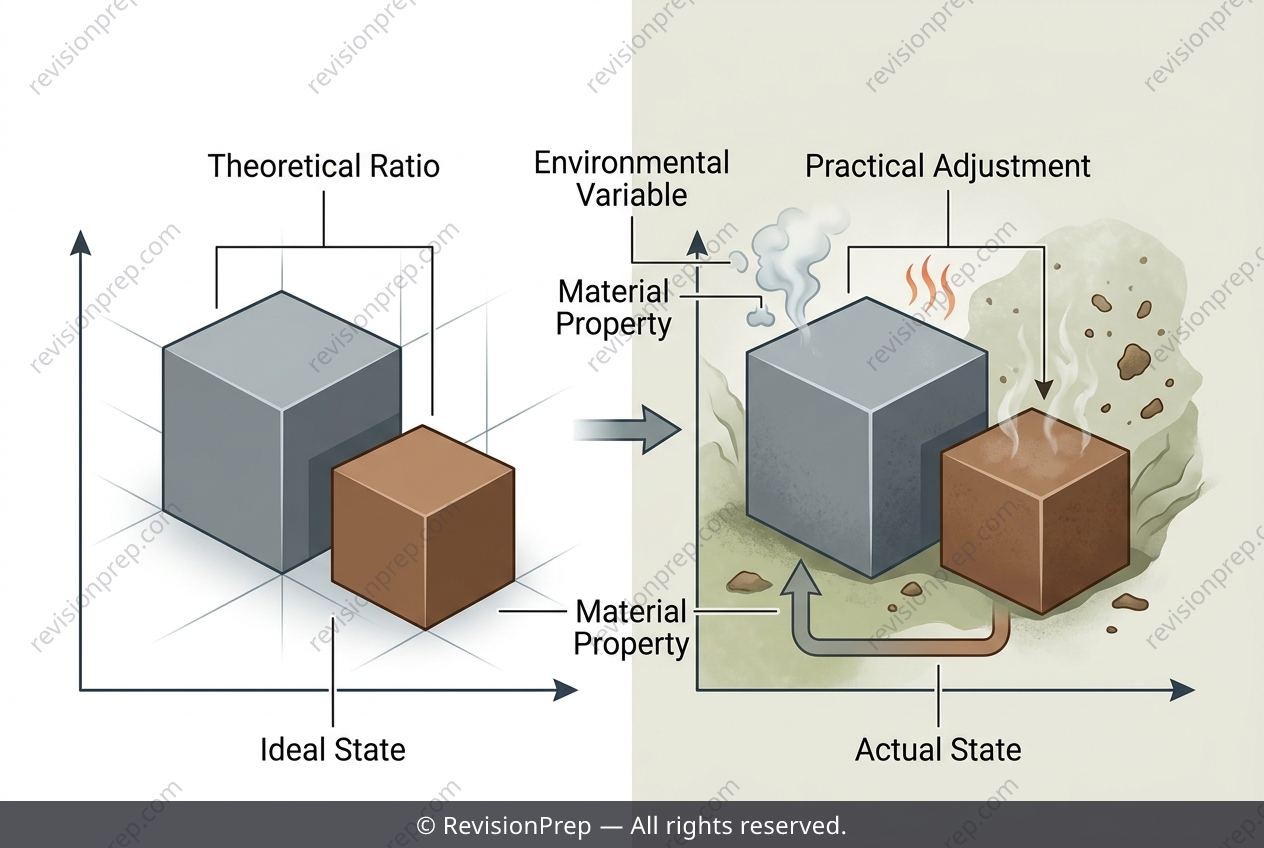
Ratios are deceptively simple on paper: a clean statement like 3:2 tells you exactly how much of each ingredient to combine. But in the real world, the materials you measure rarely behave like the idealized numbers in a textbook. When a landscape architect mixes gravel and sand for a 50 kg pathway base, the ratio by mass assumes both components are dry, uniform, and consistent—yet nature rarely cooperates. The key relationship here is that mass is not the same as material volume or composition. Sand, for instance, can hold moisture, and that water adds extra weight without adding any actual sand particles. If damp sand is used, a 3:2 ratio by mass would silently include that water weight, meaning you’d be adding less true sand than intended—skewing the final mixture’s structure and stability. This is why practical ratios must be adjusted for environmental variables like moisture content, particle density, or even measurement error. The core concept isn’t just about calculating a proportion; it’s about recognizing that real-world conditions force you to reinterpret and recalibrate the theoretical ratio to preserve the intended physical outcome.
Start practising IB questions today
150,000+ IB-styled questions, criteria-mapped and instantly accessible.