
Maths: Word Problems: Limits of Math Models in IB Math
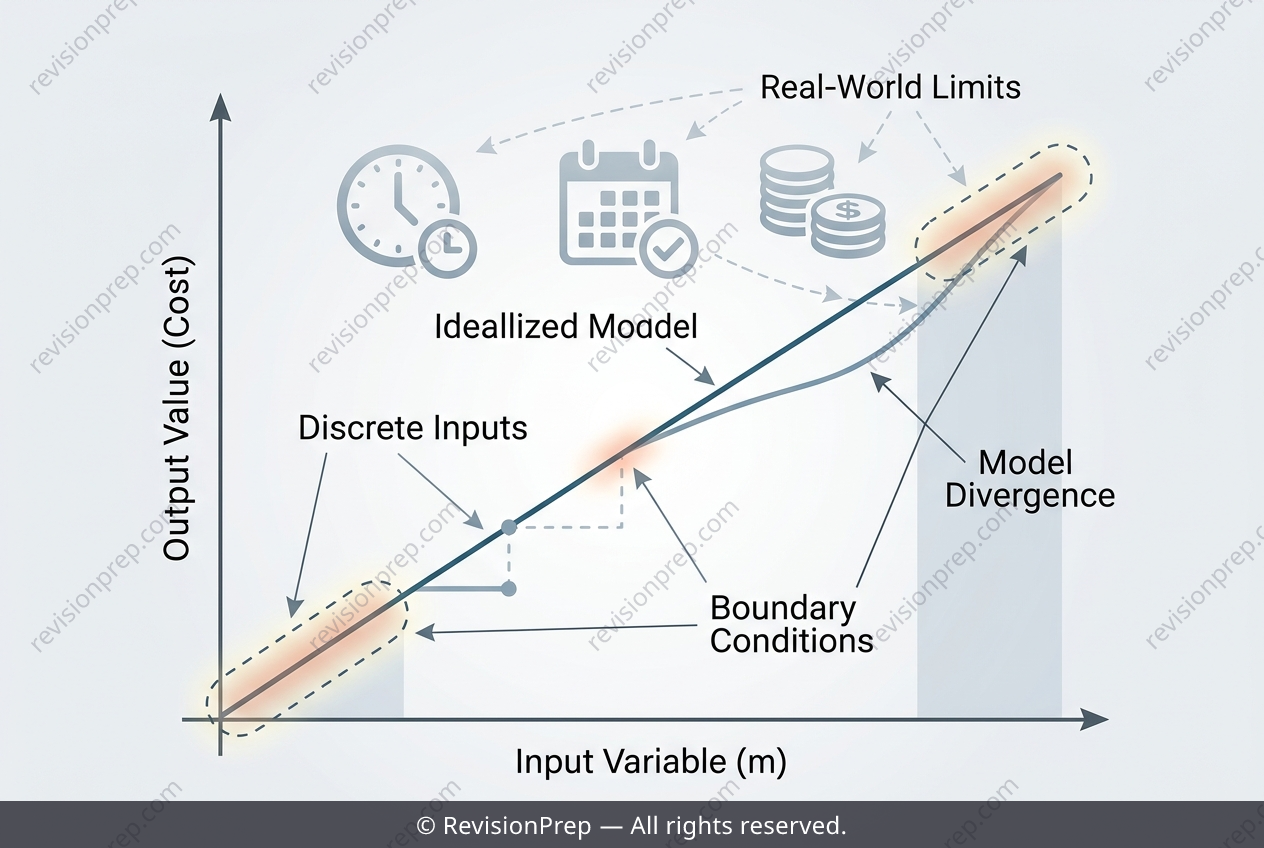
A single linear equation can seem like a perfect tool for modelling real-world costs, but the gap between a clean formula and messy reality is exactly where mathematical thinking gets interesting. In this classic bike-shop problem, the model C = 20 + 3m (where m is hours rented) looks straightforward: a fixed deposit plus a per-hour rate. Yet the moment you test it against actual shop rules, you see that every model carries hidden limitations and assumptions. The core concept here is that mathematical models are simplifications, not mirrors of reality. The marking scheme highlights two key types of limitations: constraints on the variable’s domain (like opening hours or a maximum rental period) and ignored costs (such as taxes, insurance, or late fees). Additionally, the model assumes m can be any real number, but shops often round up to full hours, meaning fractional values like 0.5 hours produce a cost that may not match the till. By plugging in extreme or awkward values—like a half-hour or a full day—you expose where the formula breaks down, revealing whether it underestimates, overestimates, or simply fails. Understanding these boundaries isn’t just about getting a mark; it’s the essence of using algebra responsibly in any applied context.
Start practising IB questions today
150,000+ IB-styled questions, criteria-mapped and instantly accessible.