
Maths: Counted or Measured—The Data Divide
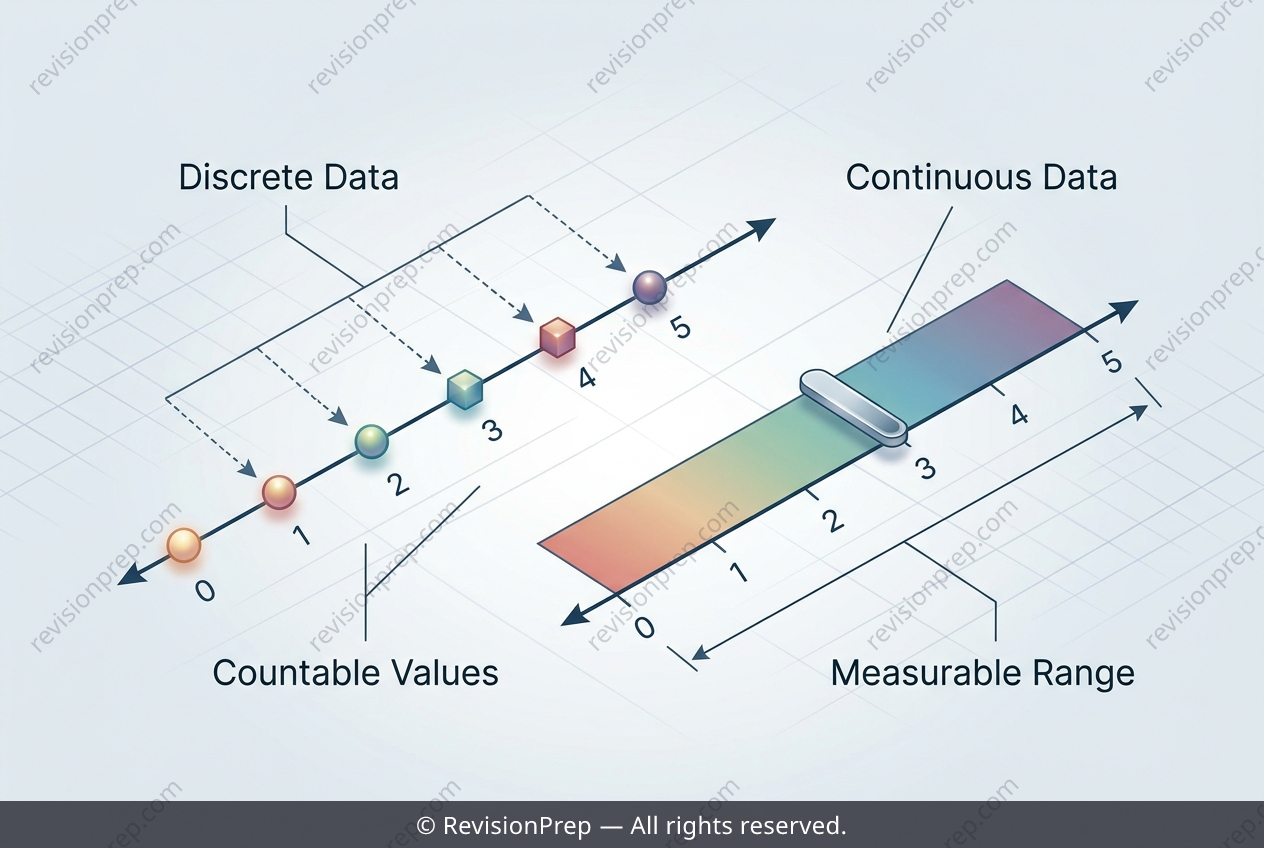
In the world of mathematics, not all numbers are created equal. The data we collect falls into two fundamental quantitative categories: discrete and continuous. At its core, the distinction hinges on whether you are counting separate, indivisible items or measuring a quantity on an infinitely divisible scale. Discrete data consists of isolated, exact values—often whole numbers—that cannot be meaningfully split into smaller parts. Continuous data, by contrast, exists along a smooth spectrum, where any value within a given range is theoretically possible. This distinction is not merely academic; it determines which statistical tools, graphs, and probability models you can legitimately apply to your analysis. Discrete data, such as the number of goals scored in a match, is counted and takes only specific jumps (0, 1, 2…). Continuous data, like a student’s height or the time taken to run a race, is measured and can be subdivided endlessly—you can always measure to a finer degree of precision. Understanding whether your variable is counted or measured shapes how you interpret averages, spread, and the very nature of the uncertainty in your results.
Start practising IB questions today
150,000+ IB-styled questions, criteria-mapped and instantly accessible.