
Maths: Discrete vs Continuous—Why It Matters
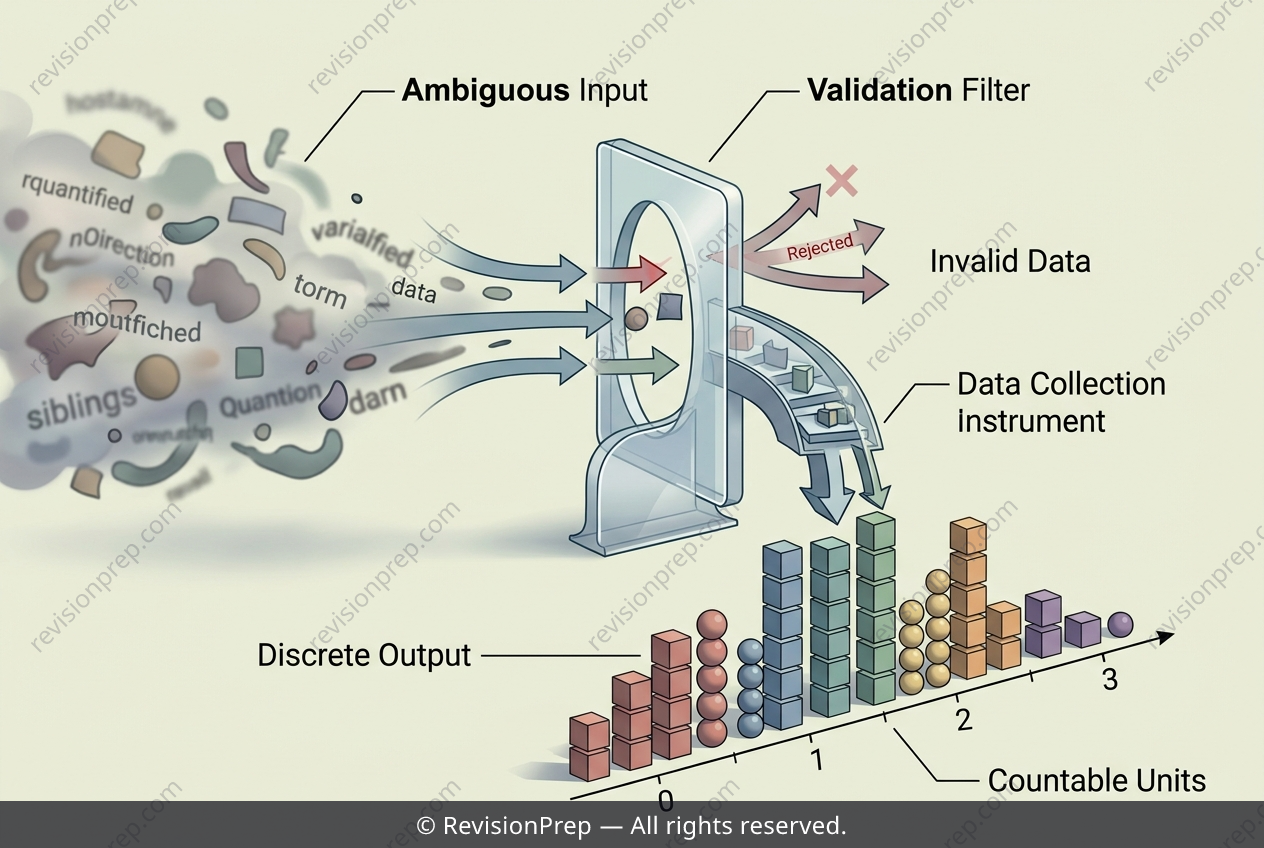
When you collect data, the first step is deciding what kind of numbers you are working with. Discrete data are counts that can only take specific, separate values—usually whole numbers, like the number of siblings a person has (0, 1, 2, 3…). In contrast, continuous data can take any value within a range, such as height or time. This distinction matters because it determines which statistical tools you can use: discrete data often involve frequencies and simple counts, while continuous data rely on intervals and measurements. However, a data set is only valid if every response fits the same numerical framework. In a survey asking “How many siblings do you have?”, answers like “a few” or “many” are not numbers—they are vague words with no fixed value. This breaks the set’s validity because you cannot count, sum, or compare responses that lack a numeric meaning. To fix this, you must design the question so that every answer is a forced whole number, for example by offering a fixed list of options (0, 1, 2, 3, 4, 5+). This ensures each response is discrete, countable, and usable for analysis, turning a messy mix of words and digits into a clean, valid data set.
Start practising IB questions today
150,000+ IB-styled questions, criteria-mapped and instantly accessible.