
Maths: When Counting Can't Tell You the Weight
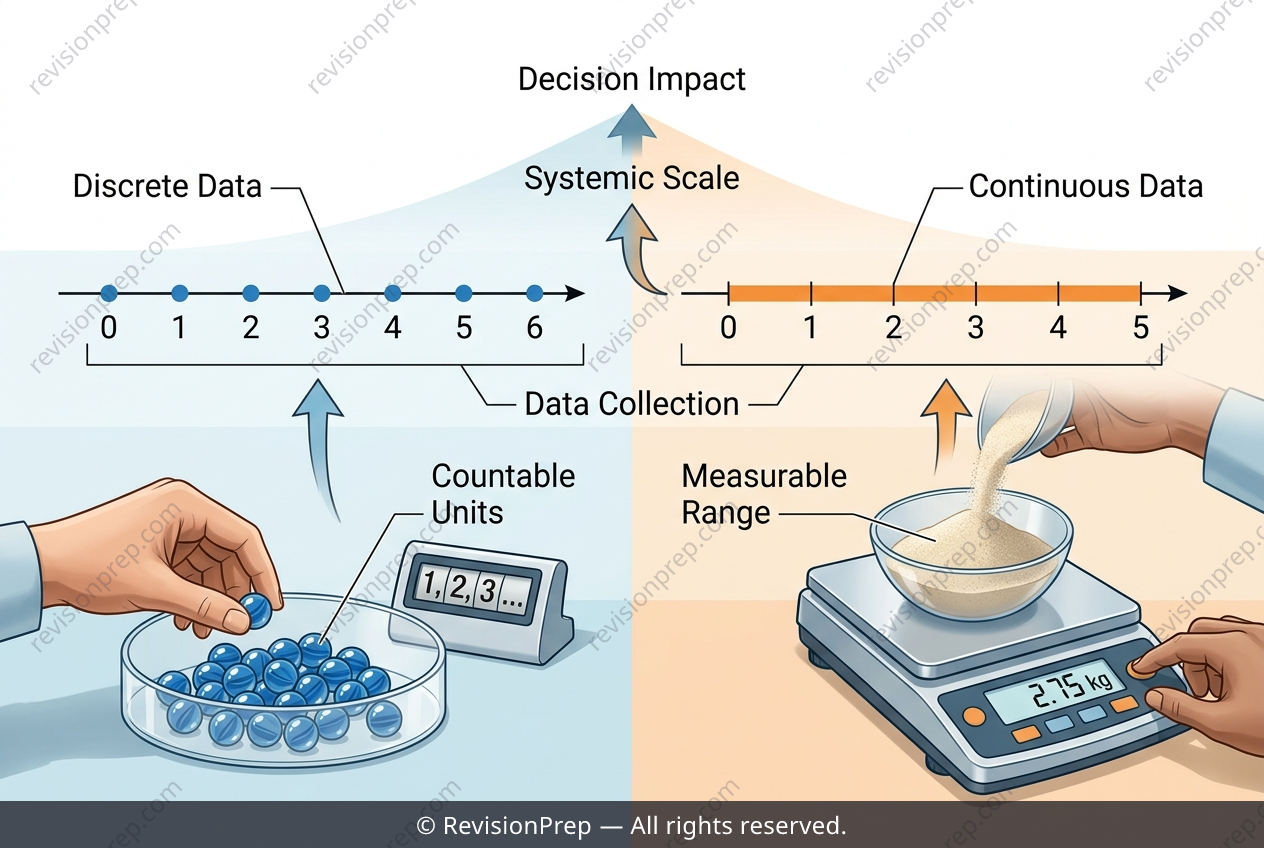
In statistics, data is broadly classified as either discrete or continuous, and this distinction shapes how we measure, record, and interpret the world. Discrete data comes from counting—it takes on only whole, separate values, like the number of egg cartons a farmer packs each morning. You can have 12 cartons or 13, but never 12.5, because a carton is an indivisible unit. Continuous data, by contrast, comes from measuring and can take any value within a range, such as the total weight of those cartons, which might be 24.7 kg or 24.73 kg depending on the precision of the scale. This difference matters because each type answers a different question about the same situation. Counting tells you how many items exist, but measuring tells you about magnitude—how much mass, length, or time is involved. In the farmer’s case, the number of cartons alone gives no sense of the load’s heaviness; two deliveries with the same carton count could have very different weights if the eggs differ in size or the cartons vary in material. Without the continuous weight measurement, the farmer risks overloading the van, since safety depends on total mass, not on item count. Understanding which variable is discrete and which is continuous lets you choose the right tool for the problem—counting for inventory, measuring for capacity.
Start practising IB questions today
150,000+ IB-styled questions, criteria-mapped and instantly accessible.