
Maths: Why You Cannot Have 4.5 Students
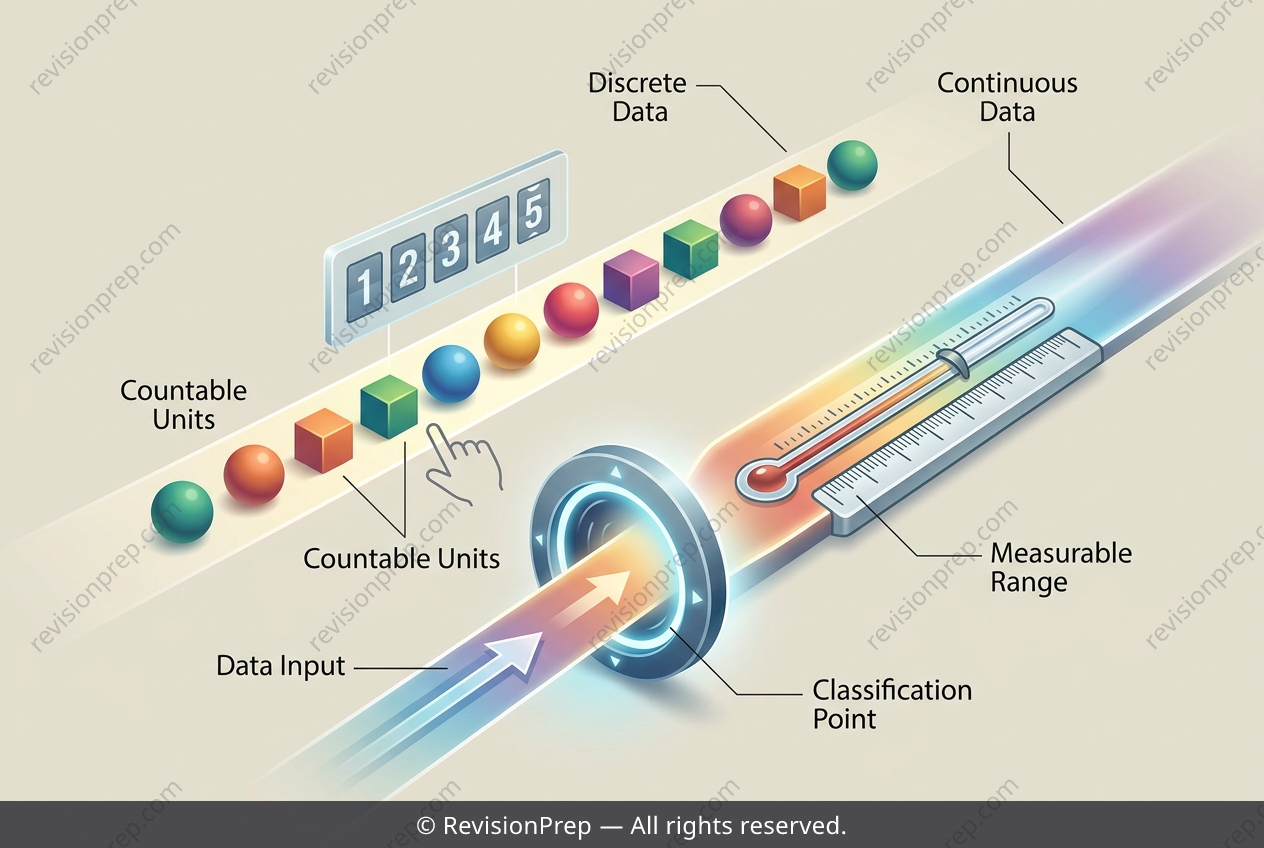
In statistics, data is broadly split into two fundamental types: discrete and continuous. Discrete data consists of separate, indivisible values—like counts of students or the number of cars in a parking lot. Continuous data, by contrast, can take any value within a range, such as height, time, or temperature. Understanding this distinction is the first step in choosing the correct graphs, averages, and statistical tests, because the nature of your data dictates what calculations are meaningful. The core idea hinges on whether gaps exist between possible values. For discrete data, there are no intermediate possibilities—you cannot have 4.5 students. In the ice cream flavour example, the categories (chocolate, vanilla, strawberry) are fixed, and the recorded numbers are whole-number counts. This means the data can only take exact, separate values like 5, 3, or 4. Continuous data, however, flows smoothly; between 1.2 and 1.3 metres, there are infinite possible measurements. Recognising this boundary—countable versus measurable—is what separates discrete from continuous, and it shapes how you summarise and interpret every dataset you encounter.
Start practising IB questions today
150,000+ IB-styled questions, criteria-mapped and instantly accessible.