
Physics: How Echoes Power Radar and Sonar
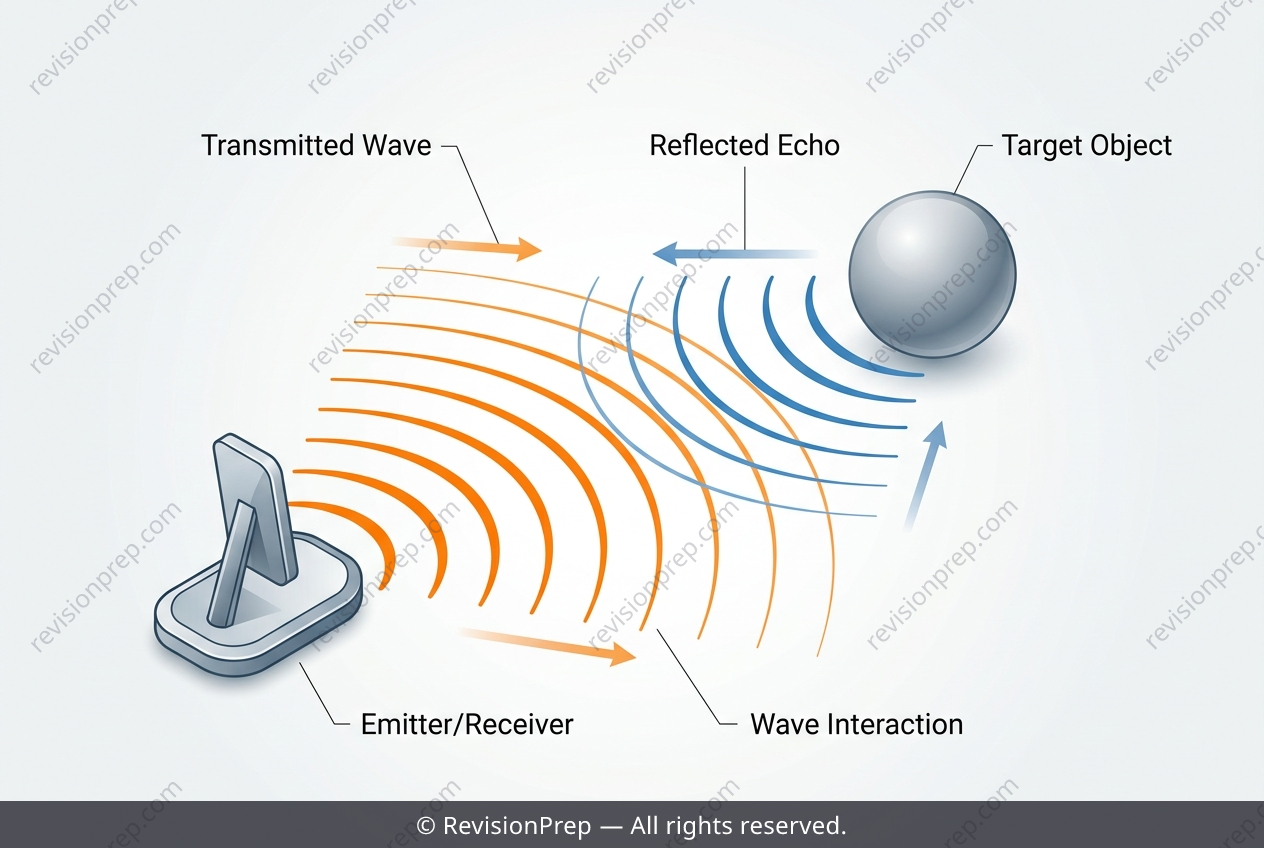
Imagine shouting into a canyon and hearing your voice return a moment later. That simple experience—an echo—is the foundation of some of our most powerful technologies. In physics, this is wave propagation and reflection: when a wave traveling through a medium hits an obstacle, it bounces back. The time it takes for that bounce, combined with the wave’s known speed, allows us to calculate distance. This principle isn’t just for fun; it’s how radar detects aircraft, sonar maps the ocean floor, and ultrasound images a developing baby. The core mechanism is beautifully circular. A system transmits a wave pulse outward. When that pulse encounters a solid object—say, an airplane—it doesn’t pass through or vanish; it reflects off the surface. The reflected wave returns to the source as an echo, carrying information about the object’s presence and position. By measuring the delay between transmission and reception, and using the wave speed (v = 2d/t, where d is distance), the system pinpoints the target. Whether it’s radio waves in air or sound waves in water, the logic is identical: send, bounce, listen, and locate.
Start practising IB questions today
150,000+ IB-styled questions, criteria-mapped and instantly accessible.