
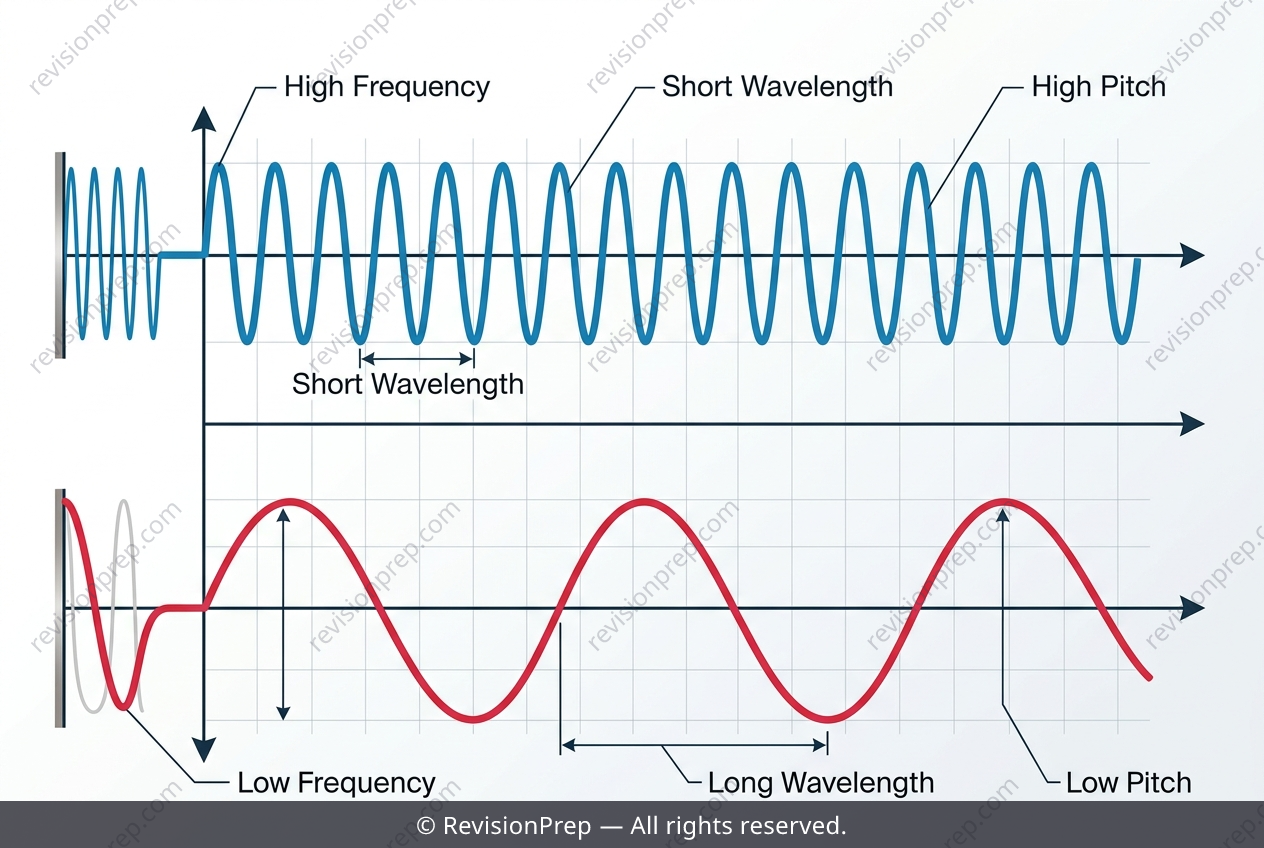
Physics: How Frequency Tunes a Guitar
When you pluck a guitar string, you are setting off a chain of physical events that your ear interprets as sound. At the heart of this lies a simple but powerful relationship: the frequency of a wave—how many complete vibrations occur each second—directly determines the pitch you hear. A low-pitched string, like the thickest one on a guitar, vibrates slowly, producing a low frequency. Conversely, a high-pitched string vibrates rapidly, generating a high frequency. This connection is governed by the wave equation v = fλ, where wave speed (v) is constant for a given string, meaning that as frequency (f) increases, wavelength (λ) must decrease. Understanding this link is essential for tuning. Each string is designed to produce a specific note, which corresponds to a precise frequency. When a musician listens to a string and hears that the pitch is too high or too low, they are effectively comparing the current frequency to the target one. This auditory feedback tells them whether to tighten the string—raising its frequency and pitch—or loosen it—lowering both. Without this relationship, tuning would be guesswork; with it, the musician can make precise adjustments to match the correct note, ensuring the guitar sounds harmonious.
Start practising IB questions today
150,000+ IB-styled questions, criteria-mapped and instantly accessible.