
Physics: How Radio Waves Travel—and Fade
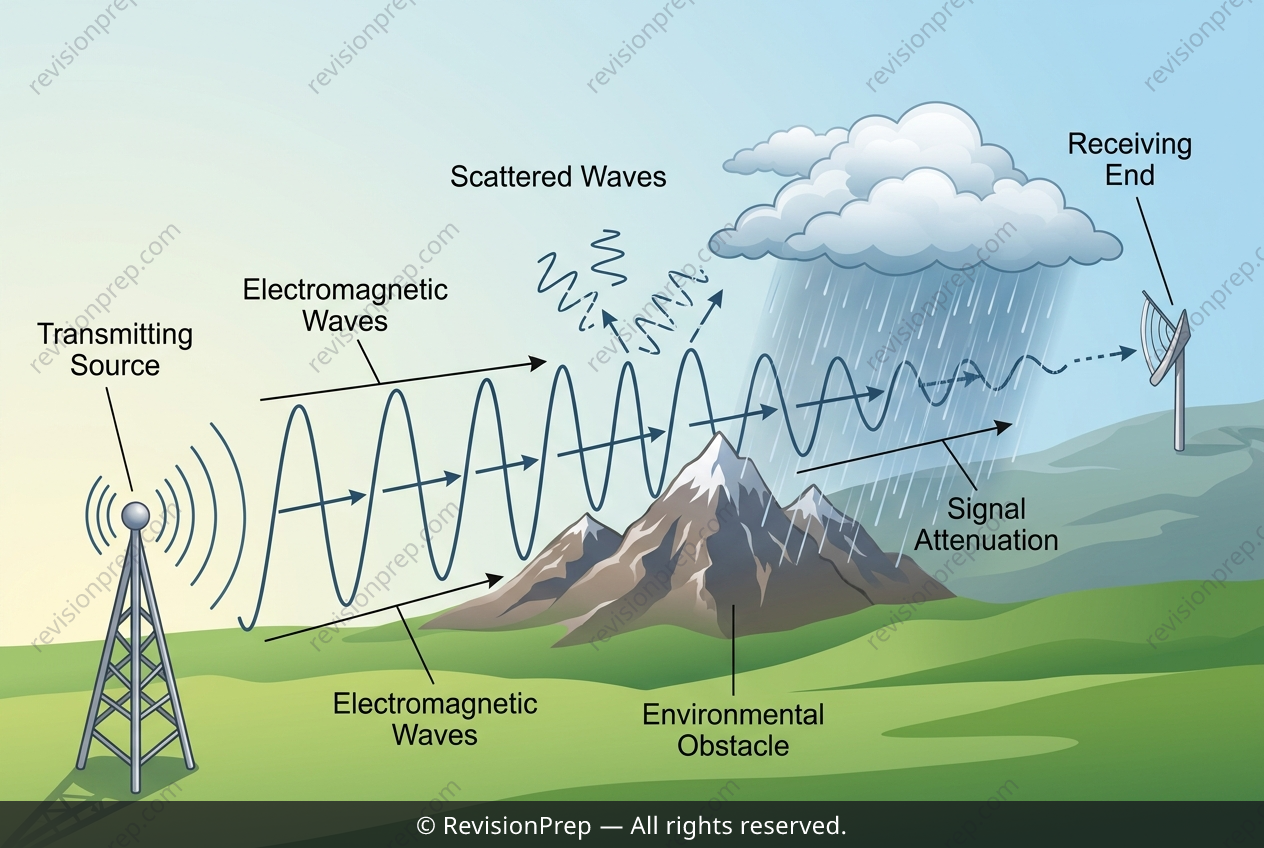
When a lifeguard presses the button on a two-way radio, they are harnessing one of the most fundamental phenomena in physics: the propagation of electromagnetic waves. Radio waves, a low-frequency, long-wavelength region of the electromagnetic spectrum, travel at the speed of light (c = 3 × 10⁸ m/s) and require no physical medium, allowing the lifeguard’s voice to be encoded onto the wave and transmitted wirelessly across open air to a receiver held by another lifeguard or an emergency dispatcher. This ability to carry information over distance without wires is what makes radio communication indispensable in time-critical rescue scenarios. However, the same wave properties that enable this transmission also impose its limitations. As radio waves propagate, they undergo attenuation—a loss of signal strength due to absorption, scattering, or geometric spreading. At a beach, natural obstacles like cliffs or dense hills can block or diffract the waves, creating shadow zones where the signal fails to arrive. Similarly, atmospheric conditions such as heavy rain or storm activity can absorb and scatter the energy, while excessive distance can weaken the wave below the receiver’s threshold. These mechanisms—obstruction, absorption, and distance—are not failures of the device but inherent behaviours of electromagnetic radiation, governed by the inverse-square law for intensity and the wave’s interaction with matter. Understanding how these waves travel and lose energy explains both the power and the fragility of wireless communication.
Start practising IB questions today
150,000+ IB-styled questions, criteria-mapped and instantly accessible.