
Physics: How Retroreflectors Return Light to You
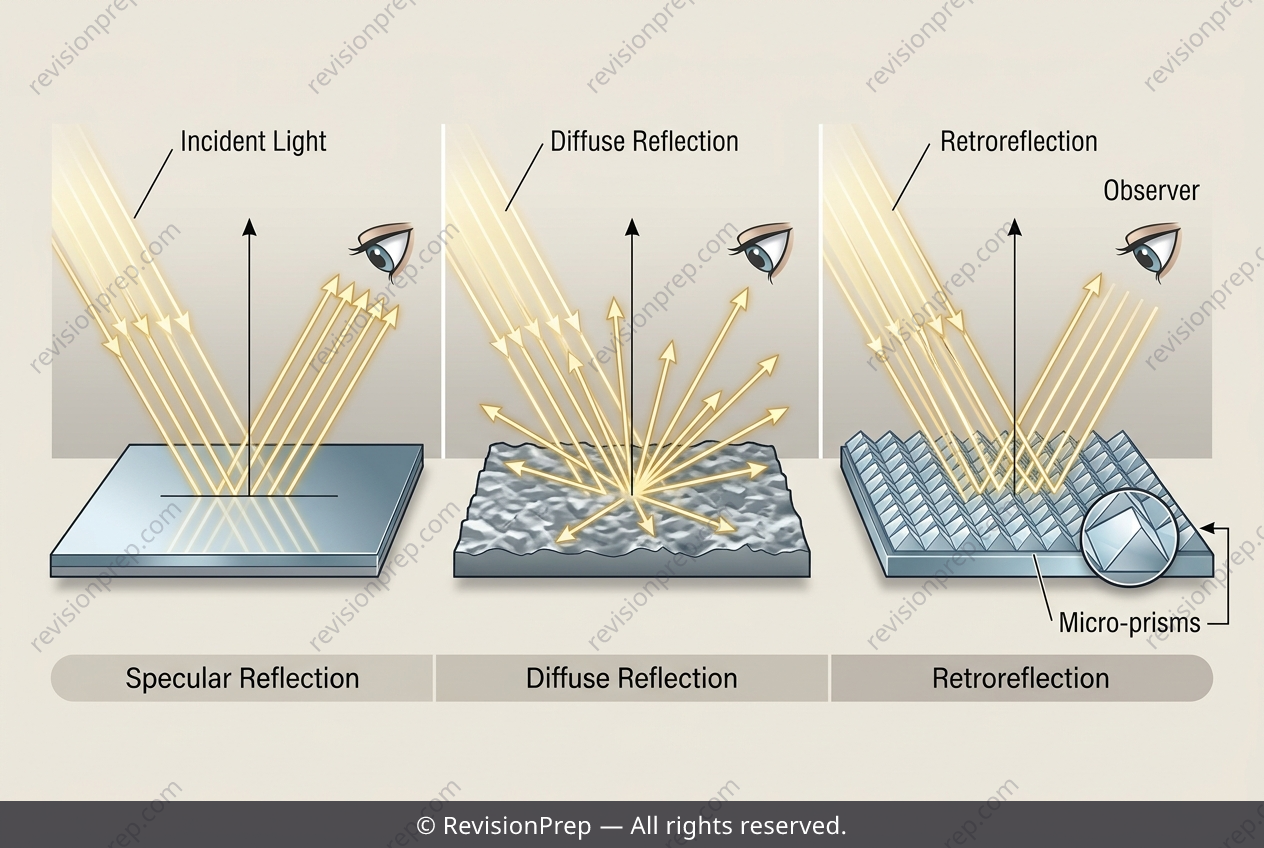
Light is a master of two behaviours: it can pass through, or it can bounce. When a ray of light strikes a smooth, shiny surface, it undergoes reflection, obeying the law that the angle of incidence equals the angle of reflection. This simple principle is the foundation of a technology we often overlook: retroreflection. Unlike a flat mirror that scatters light in many directions, a retroreflective strip is engineered with tiny corner-cube or spherical structures that send light directly back along its original path, regardless of the angle it hits. This is why the shiny strips on a school bag are so effective. When a car’s headlights beam onto the strip at night, the light isn’t just reflected—it is returned precisely toward the driver’s eyes. The driver sees a bright, clear signal of the child’s presence, even in darkness or poor weather. The mechanism links the source (headlights), the surface (retroreflector), and the observer (driver) in a closed loop. Without this directed return, the bag would merely glow faintly; with it, the child becomes a visible, moving target, dramatically reducing the risk of accidents near roads.
Start practising IB questions today
150,000+ IB-styled questions, criteria-mapped and instantly accessible.