
Physics: Why a Pencil Looks Bent in Water
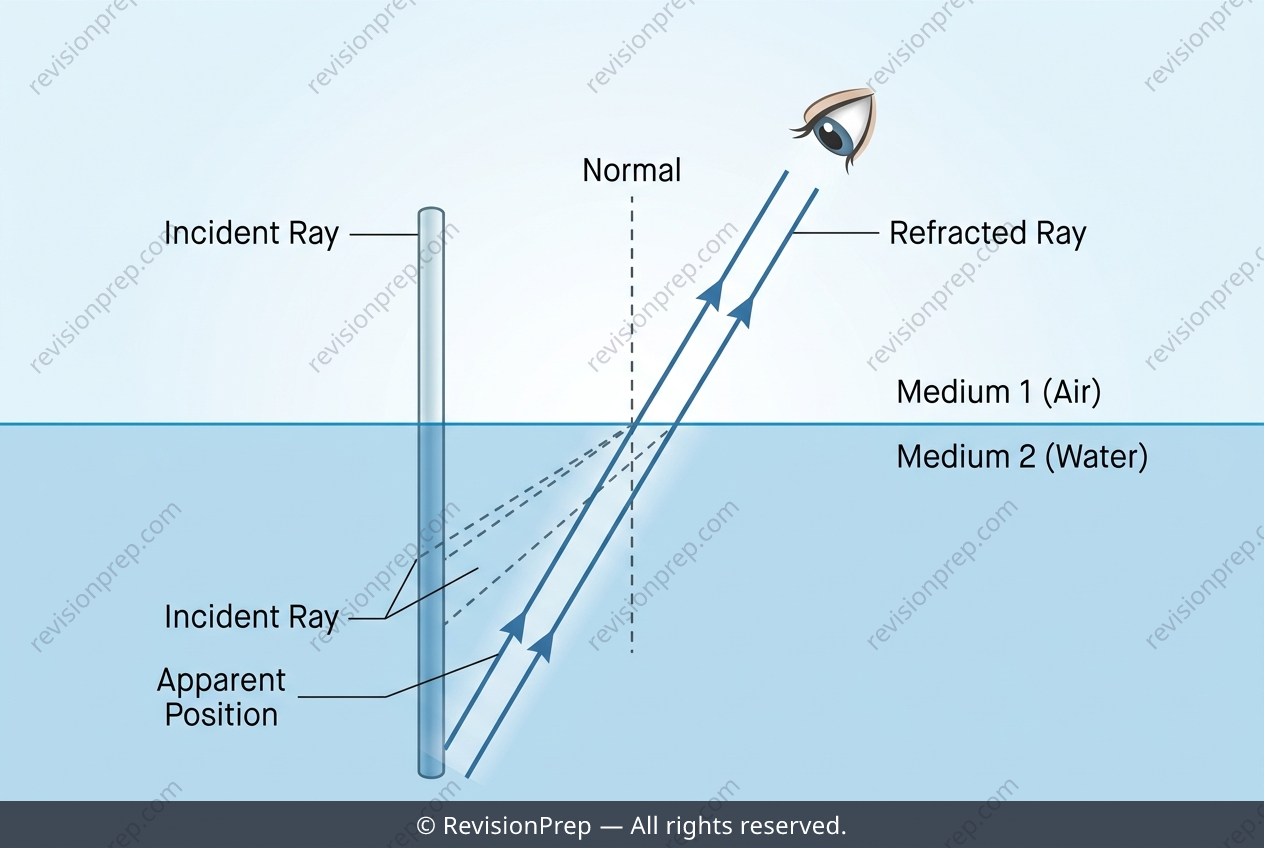
Refraction is the bending of light as it crosses from one transparent medium into another, and it is the reason a pencil standing in a glass of water appears broken or bent at the surface. When light travels from water into air, it speeds up and changes direction—this shift in path, governed by the change in speed, is what we call refraction. The effect is not an illusion of the pencil itself, but of the light rays carrying its image to your eye. This concept matters far beyond a classroom trick: refraction is the foundation of lenses, prisms, fibre optics, and even corrective eyewear. In the classic pencil-in-water scenario, light from the submerged part of the pencil leaves the water at an angle, bending away from the normal as it enters the air. Because your brain assumes light travels in straight lines, it traces the refracted rays back to a virtual position that is higher than the pencil’s true location. The result is that the underwater segment appears displaced, making the whole pencil look bent—even though it remains perfectly straight. Understanding this mechanism links the observed distortion to the underlying physics of wave speed and direction change.
Start practising IB questions today
150,000+ IB-styled questions, criteria-mapped and instantly accessible.