
Physics: Why Red and Green Light Make Yellow
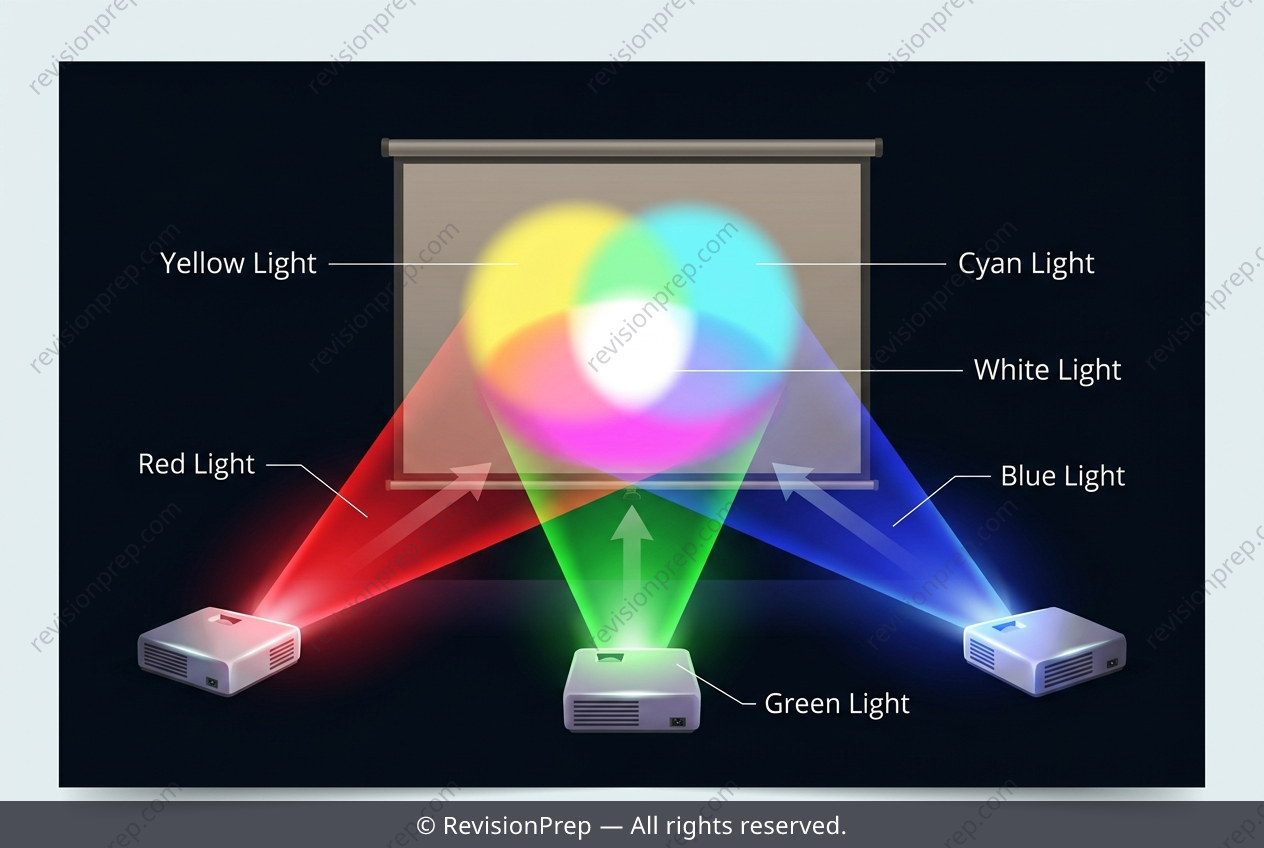
When you shine a red light and a green light onto the same white screen, you don’t get a muddy brown—you get a brilliant yellow. This is the heart of the additive color theory of light, which explains how our eyes perceive color not as a property of the light itself, but as a result of combining different wavelengths. Unlike paint, where mixing colors subtracts wavelengths, light adds them. The three primary colors of light—red, green, and blue—are the fundamental building blocks. When combined in various intensities, they can recreate nearly every color your screen can display, from the glow of a sunset to the pixels of your phone. The key relationship is that each primary color stimulates a different set of cone cells in your retina. Where red and green overlap, the brain receives simultaneous signals from both sets of cones, interpreting that combined stimulation as yellow. This is why the marking scheme insists that the overlap of red and green is specifically yellow—not orange or brown. The same logic applies to other pairs: red and blue make magenta, while green and blue make cyan. When all three primaries overlap at full intensity, they produce white light, demonstrating that white is not a single wavelength but the sum of all visible colors. Understanding this additive process is essential for anyone studying optics, digital displays, or even human perception itself.
Start practising IB questions today
150,000+ IB-styled questions, criteria-mapped and instantly accessible.