
Physics: Why Sound Travels 15 Times Faster in Steel
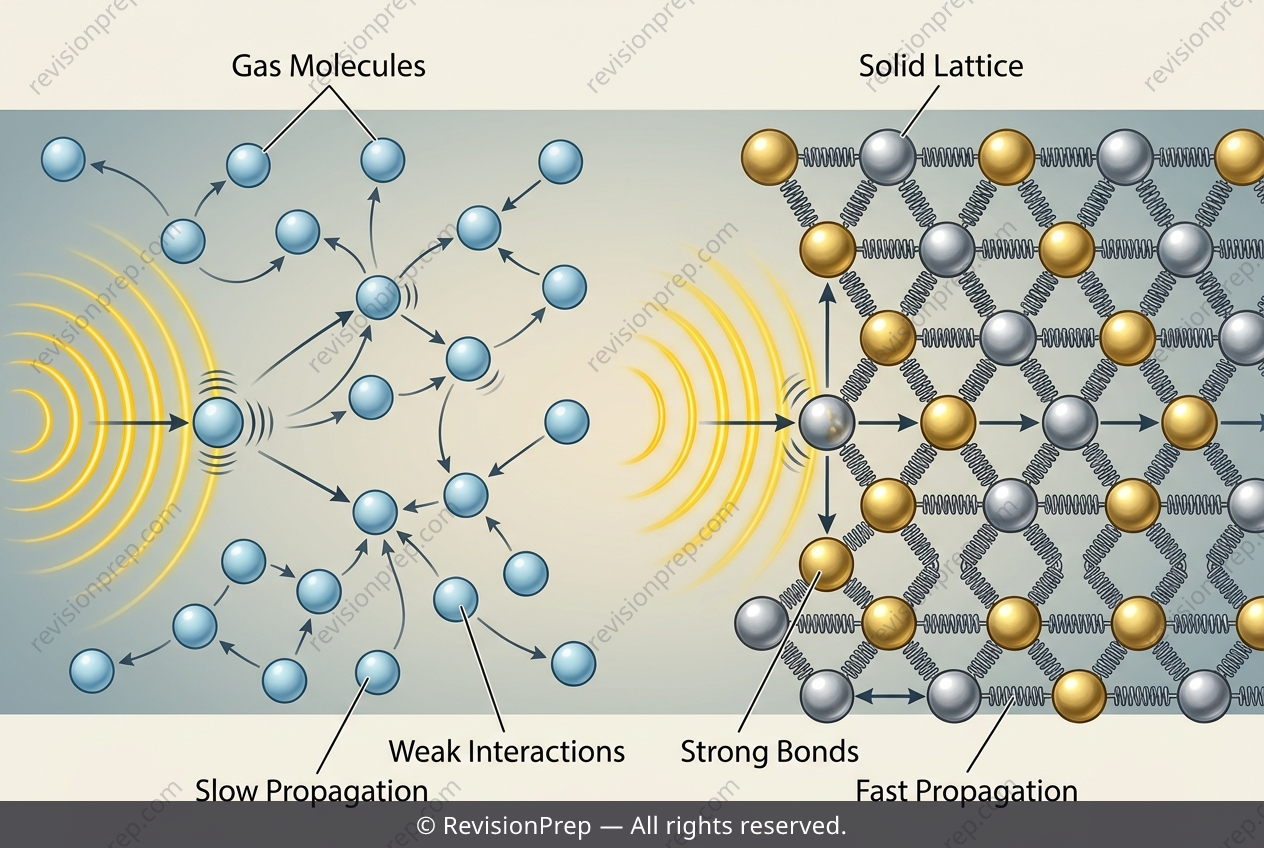
Sound waves are mechanical vibrations that need a medium to travel through, and the speed of that journey depends entirely on how the particles of that medium are arranged. In a solid like a metal railway track, particles are packed tightly together, so each vibration is passed from one particle to the next almost instantly. In a gas like air, particles are far more spread out, meaning the energy transfer takes longer—this is why sound travels roughly 15 times faster in steel than in air. The relationship v = fλ still holds, but the wave speed v is set by the medium’s elasticity and density, not by the source. This concept matters far beyond the classroom: it explains why pressing an ear to a track can reveal an approaching train long before you hear it through the air. But that same efficiency creates a false sense of security—the track is a live, dangerous zone, and the time gained is often not enough to escape a train on a neighbouring line. Understanding how sound propagates through different materials helps you appreciate both the physics and the real-world risks tied to that speed difference.
Start practising IB questions today
150,000+ IB-styled questions, criteria-mapped and instantly accessible.