
Chemistry: A Colour Change — Sign of Chemical Change
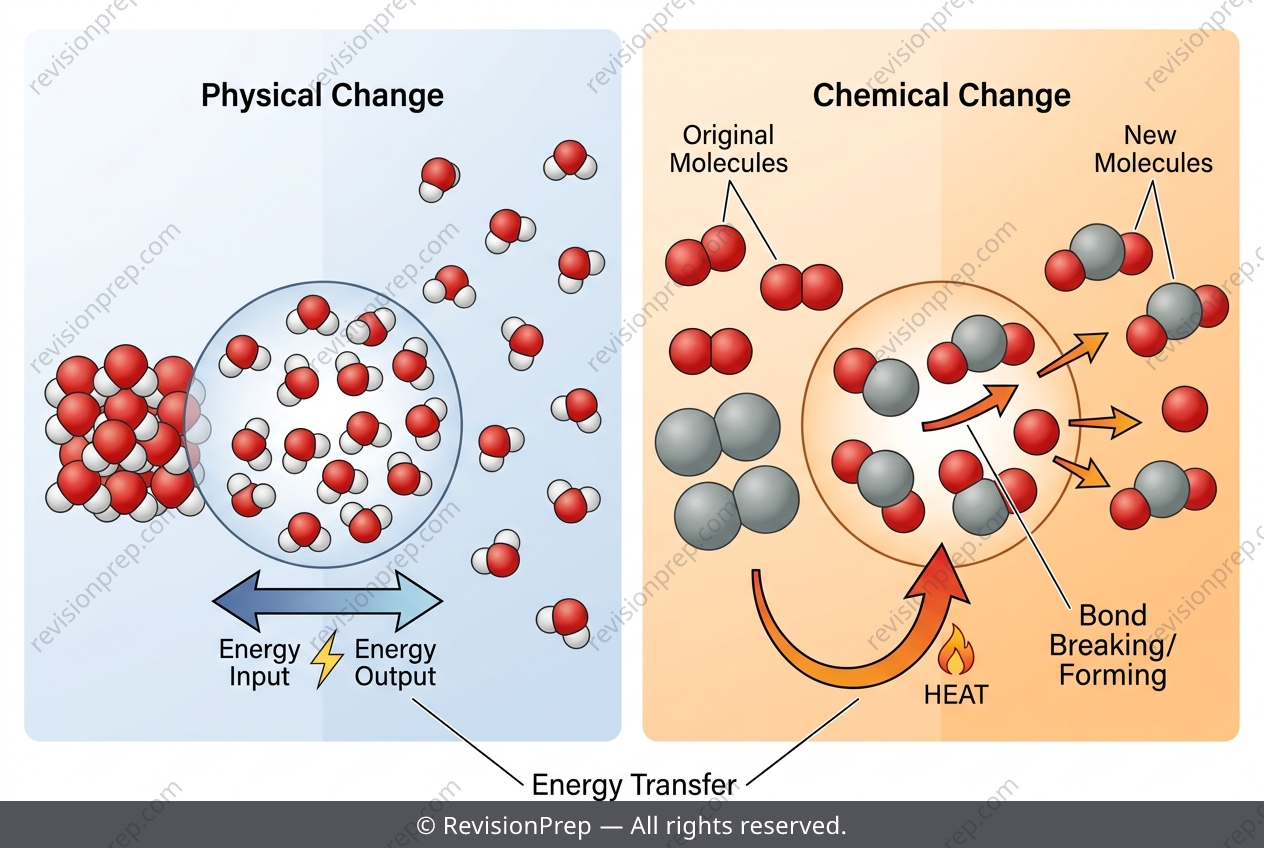
When a blue solid is heated and turns white, the colour change signals far more than a simple shift in temperature—it points to a fundamental transformation in the substance itself. This is the heart of distinguishing physical from chemical changes: physical changes (like melting or evaporation) alter state or shape but leave the chemical identity intact, while chemical changes break and reform bonds, producing entirely new substances with different properties. In the example above, the blue-to-white transition is a classic sign of a chemical change, because the original compound no longer exists after heating. Understanding this distinction matters because it explains why some changes are reversible and others are not. Cooling a melted solid can freeze it back, but cooling a chemically altered substance cannot rebuild the original—the bonds have already been rearranged, and new products have formed. The key mechanism is irreversibility: once chemical bonds are broken and new ones created, the starting material is gone. Recognising these signs (colour change, gas production, precipitate formation, energy release) helps you predict whether a reaction has truly occurred, not just a physical shift.
Start practising IB questions today
150,000+ IB-styled questions, criteria-mapped and instantly accessible.