
Chemistry: Surface Area and the Speed of Reaction
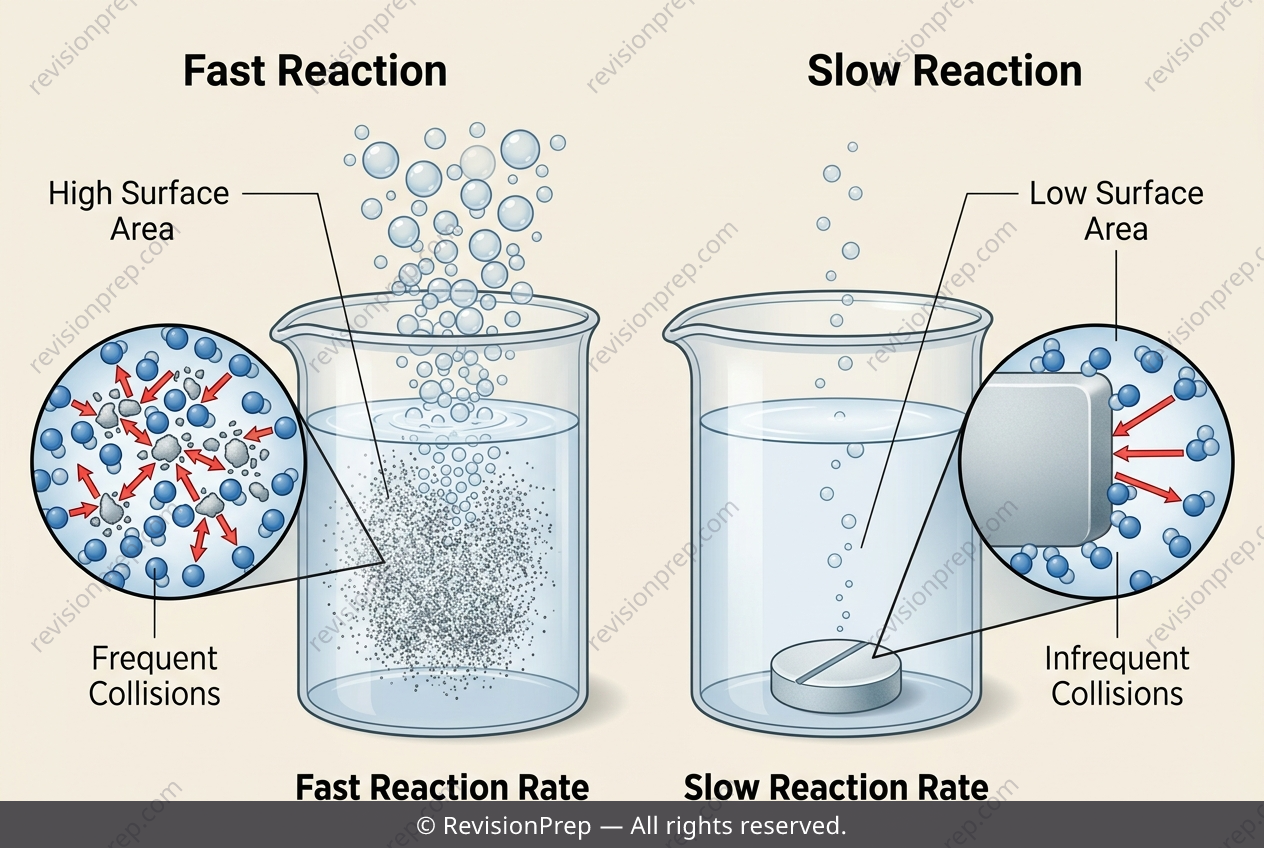
When two substances react, the speed at which products form is rarely constant—it depends on how often and how effectively reactant particles collide. This is the heart of reaction rate, a core idea in chemistry that explains everything from fizzing antacids to industrial ammonia production. In the classic comparison of baking soda powder with vinegar versus a whole antacid tablet in water, both systems release carbon dioxide gas, but they do so at strikingly different paces. The key variable separating them is surface area: the powdered baking soda exposes countless tiny particles to the vinegar, while the solid tablet offers only its outer face to the water. A larger surface area means more reactant particles are available at any given moment to collide with the other substance, so successful collisions happen more frequently per second. This directly translates into a faster rate of gas production, visible as a steeper curve on a volume-versus-time graph. Over time, as reactants are consumed, the rate slows and the curve levels off—showing that the reaction has stopped once one reactant runs out. Understanding this relationship between particle exposure, collision frequency, and observable gas output helps predict not just lab results, but real-world reaction speeds.
Start practising IB questions today
150,000+ IB-styled questions, criteria-mapped and instantly accessible.