
Chemistry: Balancing Dose in Water Purification
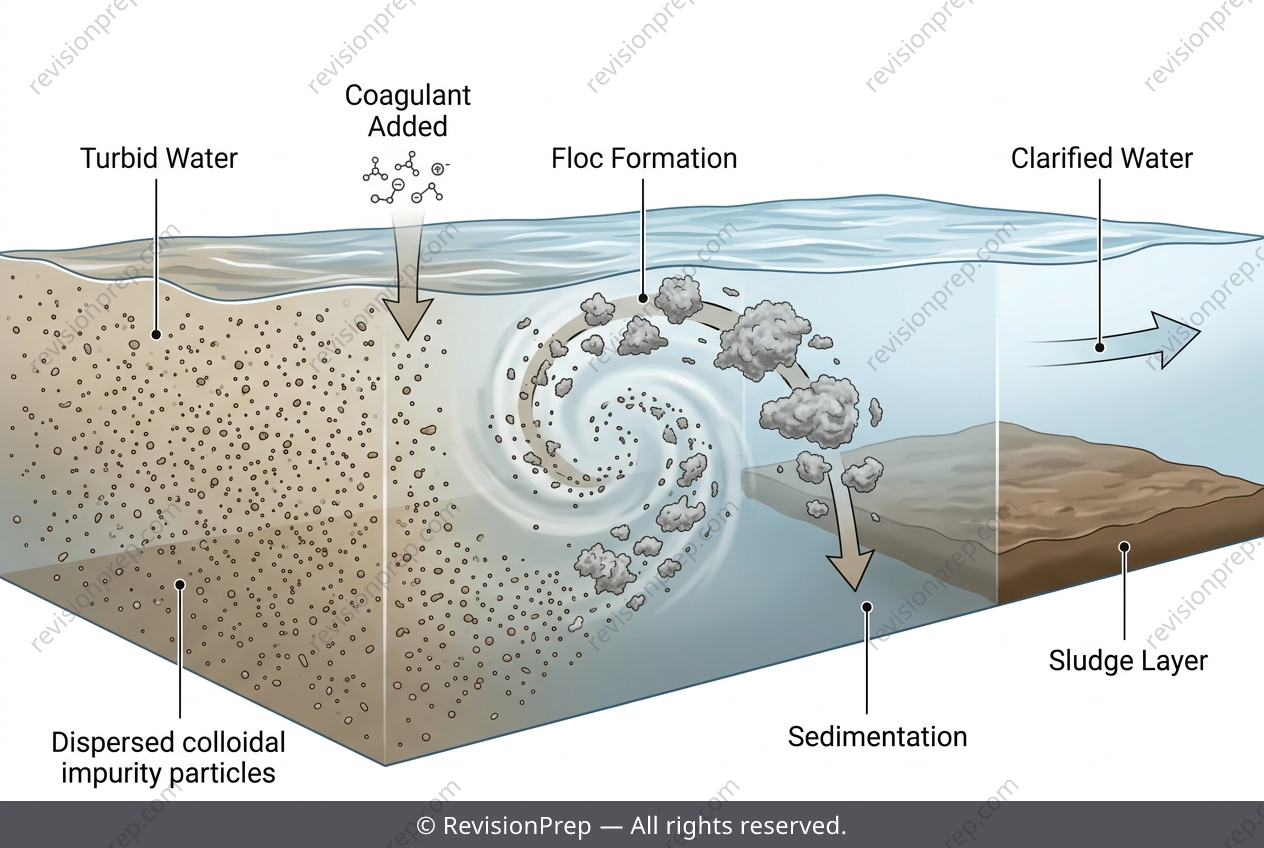
Chemical coagulation and sedimentation are cornerstone processes in water treatment, transforming murky, unsafe water into a clear, potable resource. At its heart, this is a physical-chemical reaction: adding a substance like aluminium sulfate (Al₂(SO₄)₃) to water triggers the formation of a precipitate—a solid that aggregates and sinks. This settling action is not merely aesthetic; it is a public health safeguard, as the sticky precipitate traps harmful impurities, including bacteria and suspended particles, dragging them out of the drinking supply. The mechanism hinges on balance. When the dose of aluminium sulfate is correct, the precipitate forms and settles cleanly, leaving purified water above. However, if too much is added, the equilibrium shifts: excess aluminium remains dissolved in the water rather than binding into the solid. This leftover chemical poses a direct health risk—aluminium can affect the nervous system—and forces additional, costly treatment steps to remove it. Understanding this relationship between reagent quantity, precipitate formation, and settling efficiency is essential for engineers and biologists alike, as it links a simple chemical reaction to large-scale public health outcomes and operational economics.
Start practising IB questions today
150,000+ IB-styled questions, criteria-mapped and instantly accessible.