
Chemistry: CH₄ + O₂ — Energy from Combustion
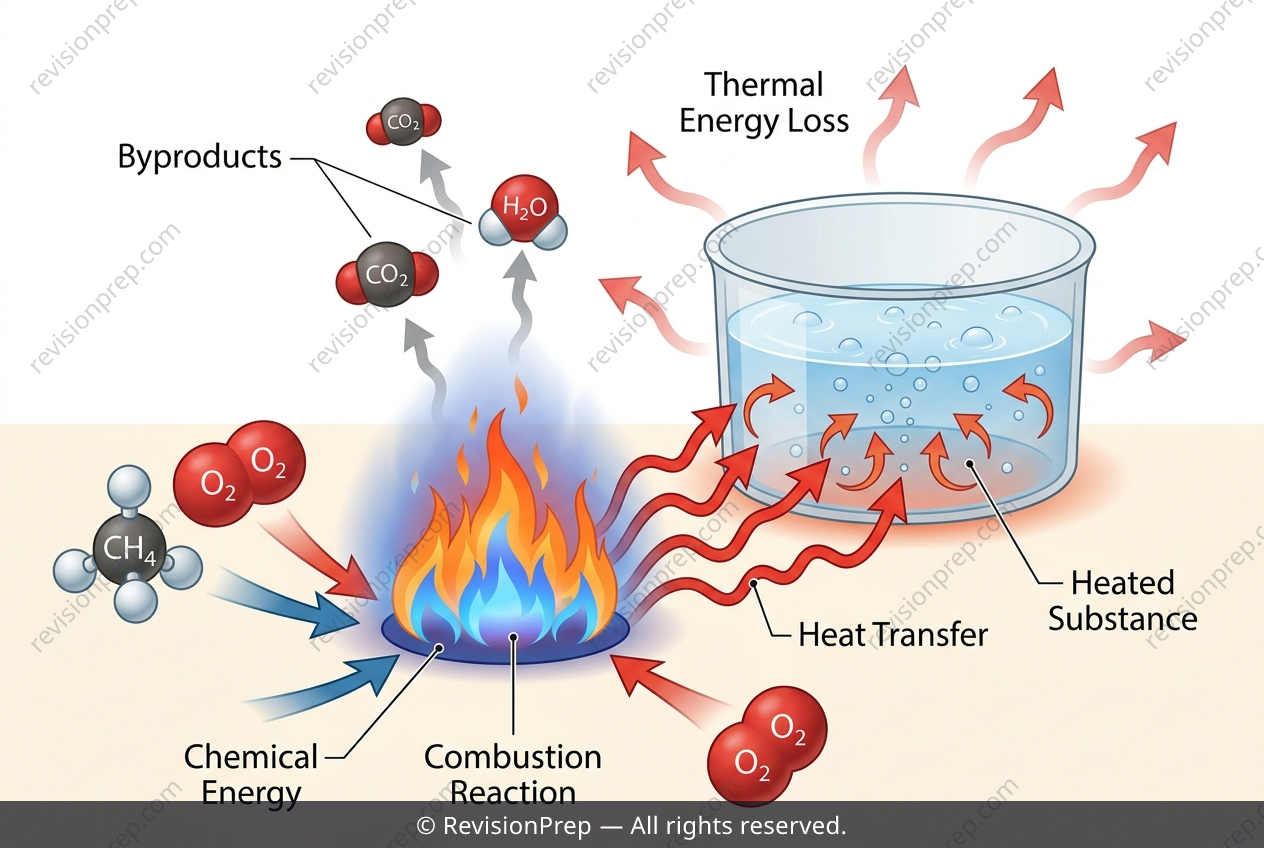
When a family boils water on a natural gas stove, the visible flame is the signature of a combustion reaction—a rapid chemical process that transforms stored chemical potential energy into thermal energy. In this scenario, the reaction involves methane (CH₄) reacting with oxygen (O₂) to produce carbon dioxide (CO₂) and water (H₂O), releasing heat in the process. This exothermic transformation is the driving force behind countless everyday technologies, from cooking to heating homes, and it illustrates a fundamental principle: energy is neither created nor destroyed, but simply changes form—from the bonds within fuel molecules to the kinetic energy of surrounding particles. The usefulness of combustion lies in its ability to transfer that released heat directly to a target, such as a pot of water, raising its temperature until it boils. However, this energy conversion is not without constraints. The reaction depends entirely on a continuous supply of both fuel and oxygen; if the gas line is interrupted, the heat source fails instantly. Additionally, combustion produces gaseous byproducts that require ventilation, and the process is inherently tied to a fixed infrastructure. Understanding these relationships—between fuel availability, heat transfer, and byproduct management—reveals why combustion, while powerful, is just one of many energy transformation pathways we rely on.
Start practising IB questions today
150,000+ IB-styled questions, criteria-mapped and instantly accessible.