
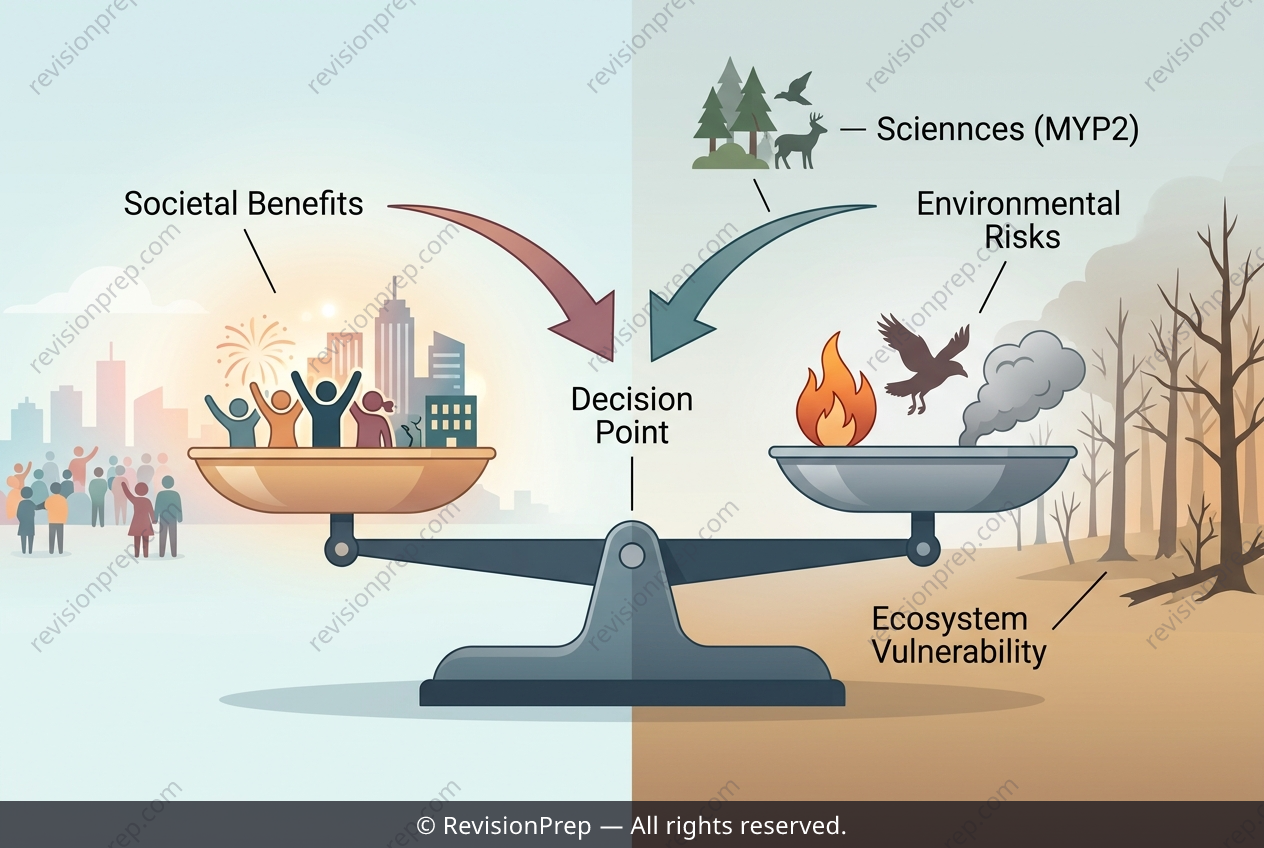
Chemistry: Fireworks — Spectacle and Hazard
Everyday chemical changes are all around us, but few are as dramatic—or as double-edged—as the combustion reactions that power a firework display. At its core, this is a rapid oxidation reaction, where gunpowder (a mixture of potassium nitrate, charcoal, and sulfur) releases energy as heat, light, sound, and gases. The same chemistry that creates a beautiful aerial burst also produces sparks, smoke, and loud pressure waves. Understanding this reaction is not just about the bang; it’s about weighing its full environmental footprint against its social value. This is where environmental risk-benefit analysis comes in. Every chemical process has trade-offs, and the context decides the balance. In a dry forest, the benefit of entertainment and cultural celebration must be weighed against the risk of ignition—a single spark can trigger a wildfire that destroys habitats. Meanwhile, the noise from the explosion is a physical disturbance, a pressure wave that can panic birds and mammals, causing them to abandon nests. The key relationship here is that the same reaction’s energy output (E = mc² is not directly relevant, but the heat and sound are) creates both the spectacle and the hazard. By comparing these outcomes, we learn that a chemical change is never just a reaction—it’s a decision about where and how we let it happen.
Start practising IB questions today
150,000+ IB-styled questions, criteria-mapped and instantly accessible.