
Chemistry: Galvanization's Two Lines of Defence
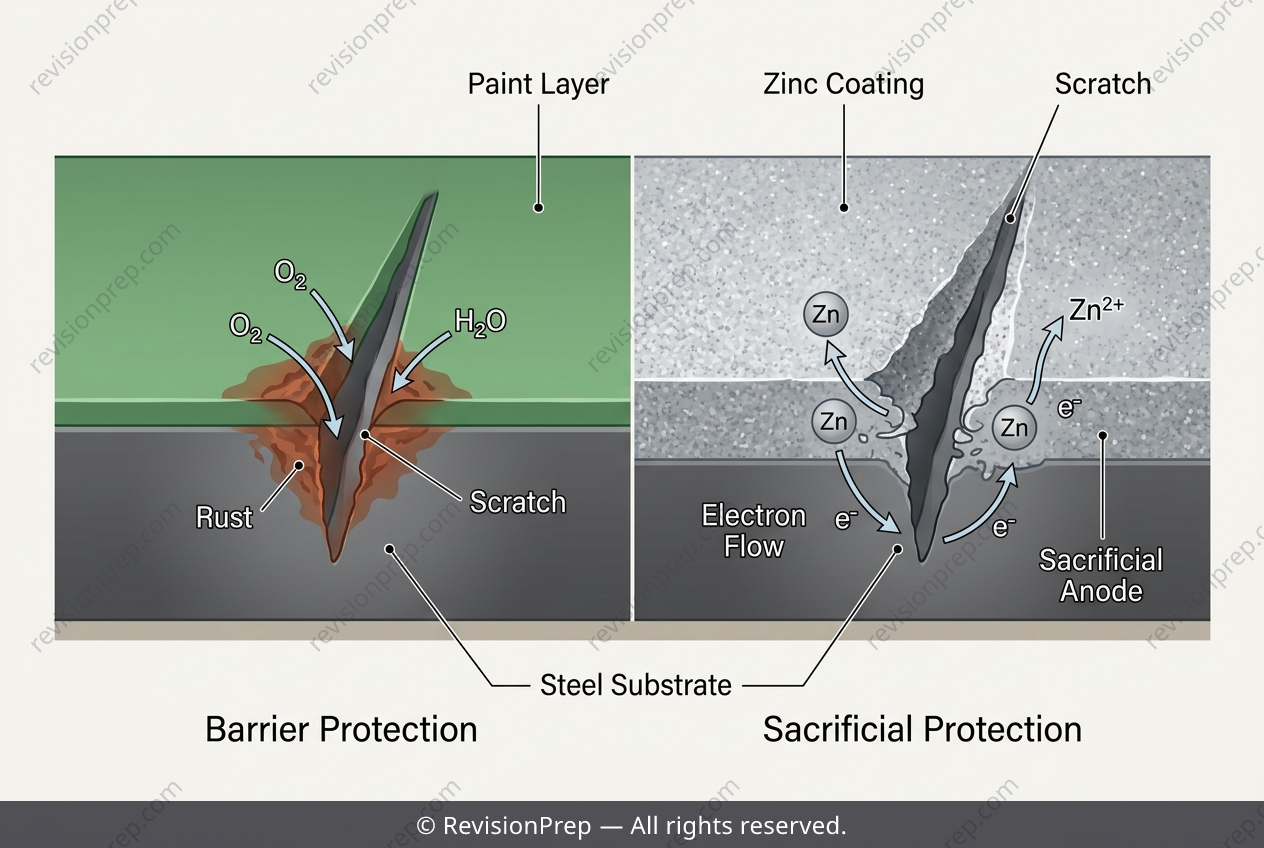
When iron meets oxygen and water, it rusts—a slow, destructive chemical reaction that is accelerated by the salt-laden air near a coastline. The core concept here is electrochemical corrosion prevention, and one of the most elegant real-world solutions is galvanization: coating a steel gate with a layer of zinc. This process works on two distinct levels. First, the zinc acts as a barrier, physically sealing the steel from moisture, oxygen, and chloride ions that would otherwise trigger oxidation. Second, and more cleverly, it provides sacrificial protection because zinc is more reactive than iron in the electrochemical series. When both metals are exposed to an electrolyte, zinc preferentially loses electrons (Zn → Zn²⁺ + 2e⁻), corroding in place of the steel beneath. The relationship between these two mechanisms is what makes galvanization so effective—and so vulnerable to damage. If the zinc layer is deeply scratched, the barrier is broken, and the exposed steel becomes a local anode, rusting rapidly in the humid coastal environment. Meanwhile, the surrounding zinc continues to sacrifice itself, but it thins over time as it corrodes, shrinking the protected zone. This means that while galvanization offers immediate dual defense, its long-term success depends on maintaining the integrity of the zinc coating—otherwise, the gate’s protection gradually fails, requiring re-coating to prevent widespread structural decay.
Start practising IB questions today
150,000+ IB-styled questions, criteria-mapped and instantly accessible.