
Chemistry: Glowing Splint Test — Reading Gas Clues
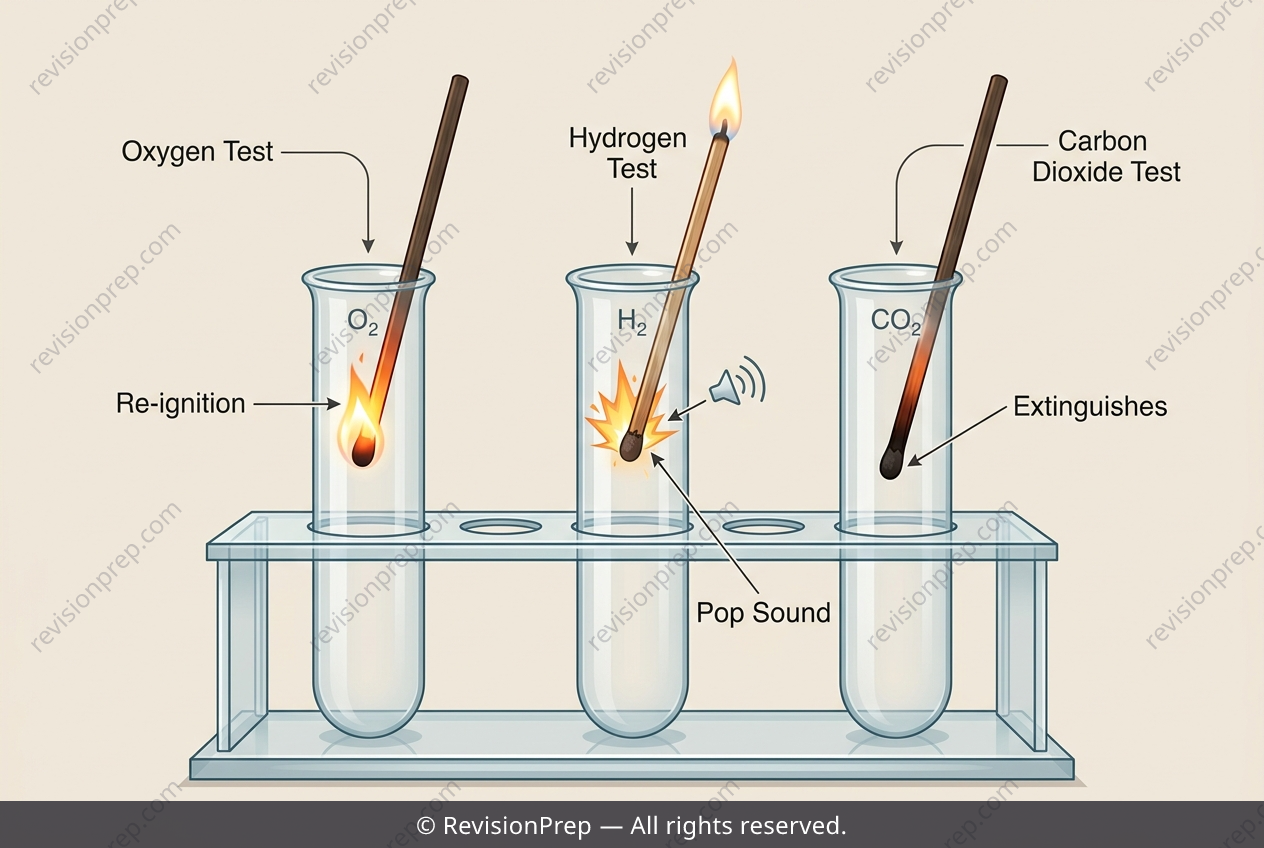
When a liquid fizzes and produces bubbles, something new is being formed—but identifying exactly what requires careful observation. In chemistry, the qualitative analysis of gases is a core skill: it involves using simple tests to determine which gas is present based on its physical and chemical properties. One of the most common clues is the behaviour of a glowing splint, which acts as a tiny probe for whether a gas supports combustion or not. The key relationship here is between the gas’s chemical nature and its effect on burning. A gas that extinguishes a glowing splint does so because it does not support combustion—meaning it cannot act as an oxidiser for the fire. Carbon dioxide (CO₂) is a classic example: it is denser than air, non-flammable, and physically smothers the flame by displacing oxygen. This simple observation links macroscopic evidence (the splint going out) to the microscopic identity of the gas. Understanding this connection allows students to move from “it fizzes” to a confident identification, forming the basis for many practical investigations in the lab.
Start practising IB questions today
150,000+ IB-styled questions, criteria-mapped and instantly accessible.