
Chemistry: How Acids Dissolve Pipe Blockages
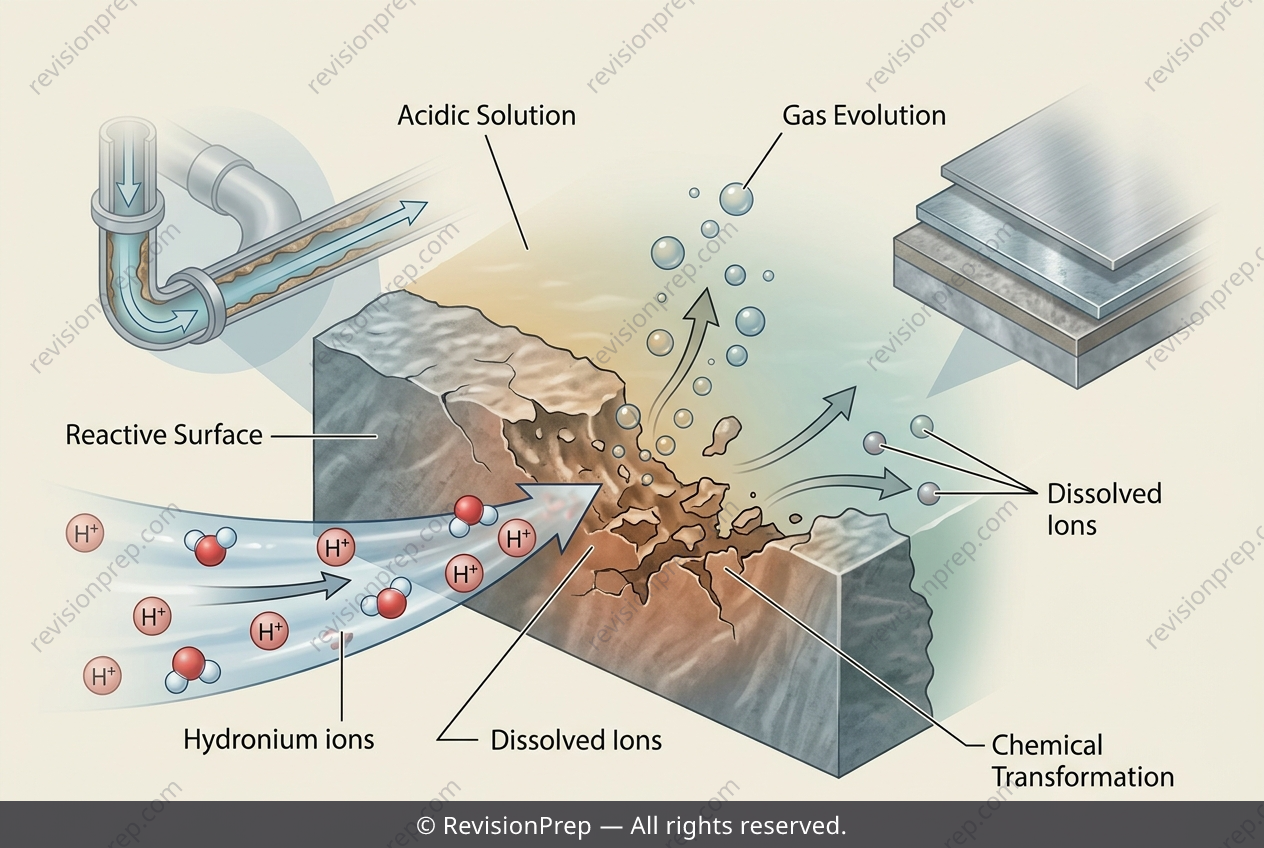
When water flows through metal pipes, it often leaves behind hard, chalky mineral deposits that gradually narrow the passage and restrict flow. These blockages are a classic example of where chemistry meets everyday infrastructure, and the solution lies in a simple but powerful concept: metal reactivity and acidic dissolution. At its core, this topic explores how different metals respond to acids, and why some reactions—like that between a dilute acid and a mineral deposit—can be harnessed to solve real-world problems. The key mechanism involves an acid, such as dilute hydrochloric acid (HCl), reacting with the alkaline or metallic compounds in the scale. This reaction breaks down the solid deposit into soluble products, effectively dissolving the blockage from the inside out. Understanding this relationship matters because it turns a costly, disruptive problem—replacing entire pipe systems—into a quick chemical fix. The benefit extends beyond convenience: it saves individuals and communities significant money on plumbing and infrastructure repairs, while keeping water flowing efficiently for homes, businesses, and public systems. In short, the reactivity of metals with acids is not just a lab exercise; it is a practical tool for maintaining the hidden networks that sustain modern life.
Start practising IB questions today
150,000+ IB-styled questions, criteria-mapped and instantly accessible.