
Chemistry: How Groups and Periods Organize Elements
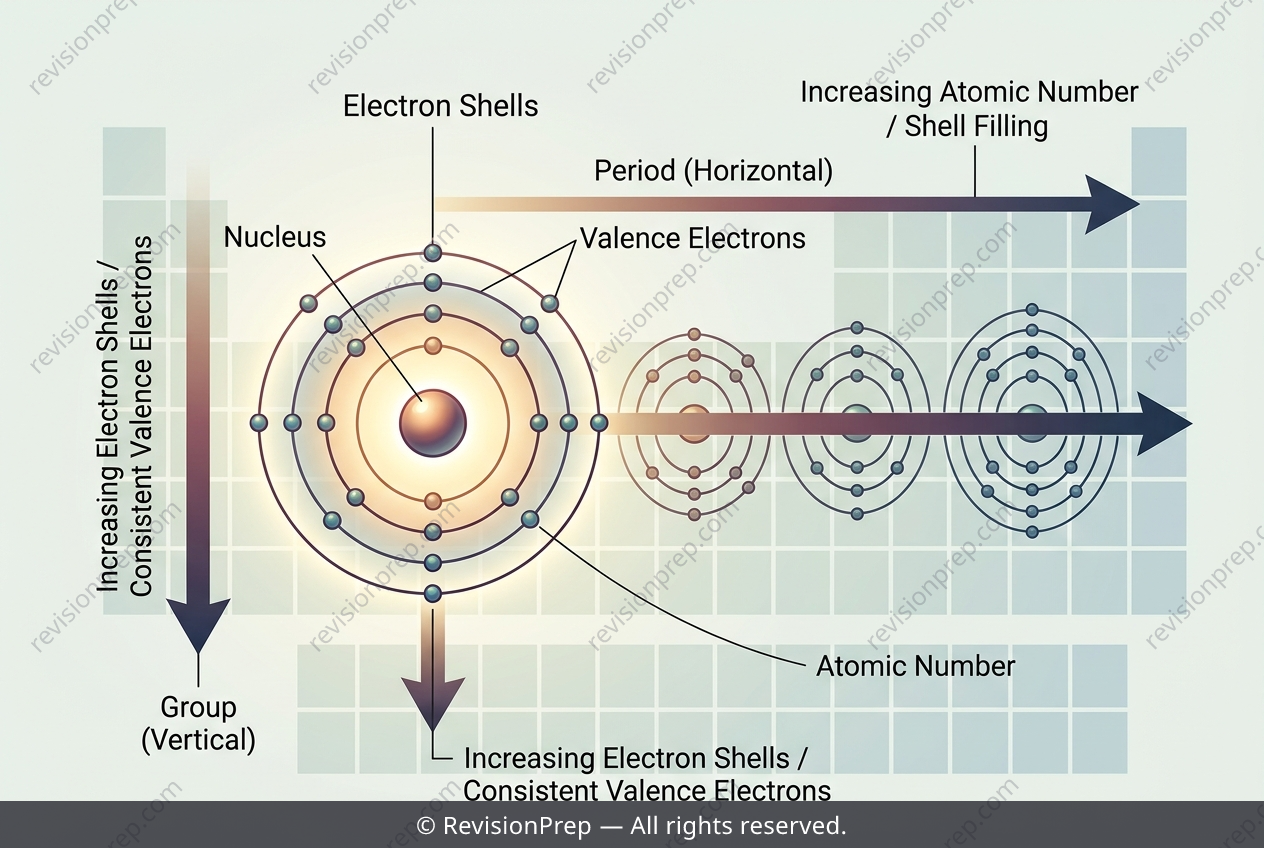
The periodic table is far more than a grid of symbols—it is a carefully organized map of the building blocks of matter. At its heart lies a simple but powerful structure: every element’s position is defined by two coordinates. The horizontal rows, known as periods, reflect the number of electron shells an atom possesses. As you move left to right across a period, protons increase one by one, and electrons fill the same outermost shell, leading to predictable shifts in atomic radius and reactivity. The vertical columns, called groups (or families), are where the true chemical personality emerges. Elements in the same group share the same number of valence electrons—the outermost electrons that drive bonding. This is why carbon, sitting in Group 14, behaves similarly to silicon, while its period (2) tells us it has two electron shells. Understanding this dual organization—period for shell count, group for valence electrons—allows you to predict an element’s properties, its likely ions, and even its reactivity without memorizing every fact. The table is not a list; it is a logic puzzle where position is destiny.
Start practising IB questions today
150,000+ IB-styled questions, criteria-mapped and instantly accessible.