
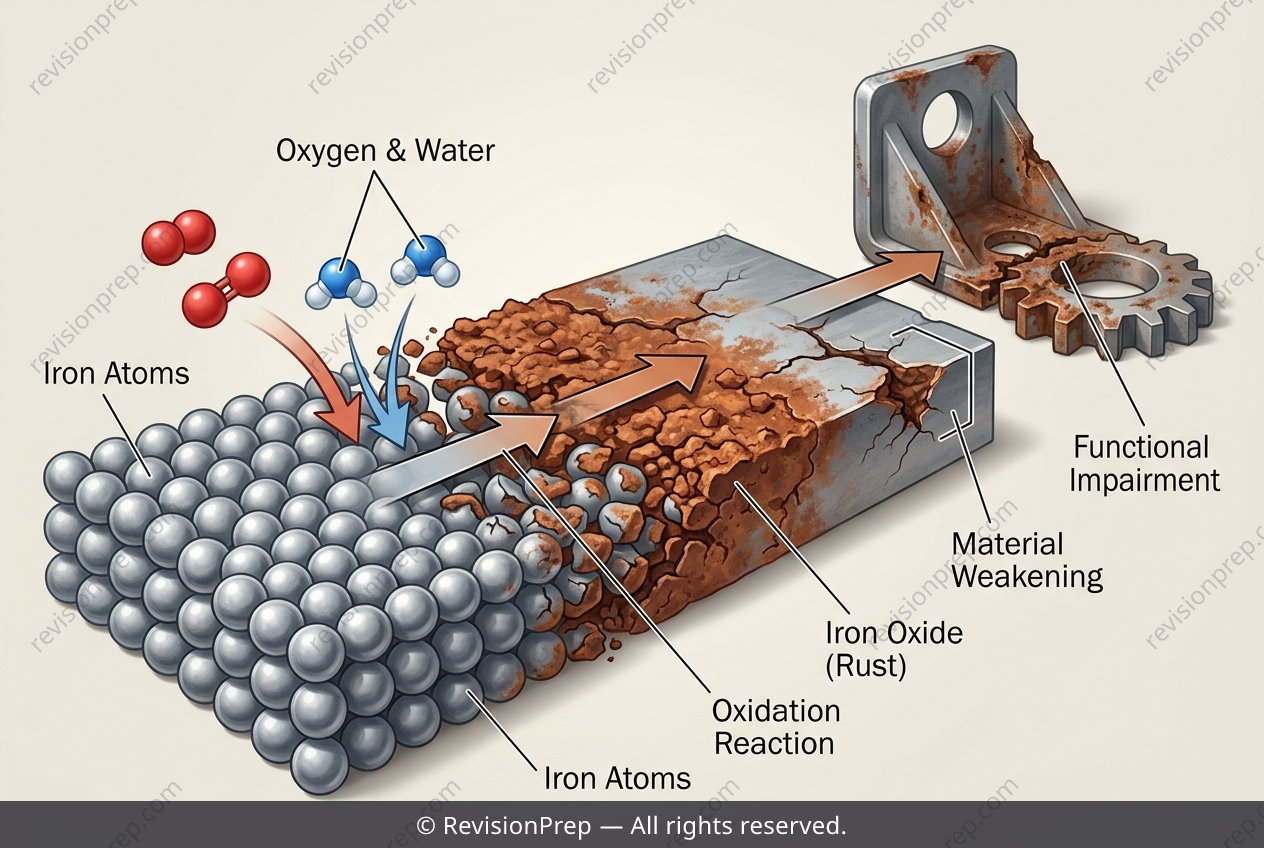
Chemistry: How Oxidation Slowly Destroys Iron
Rust is the familiar, crumbly reddish-brown substance that forms when iron reacts with oxygen and water — a process known as oxidation. Unlike the thin, protective layer that forms on aluminium, rust is porous and flakes away, continuously exposing fresh metal beneath. This means corrosion is not just a surface nuisance; it actively consumes the material, weakening its structure from the outside in. The overall reaction can be simplified as iron + oxygen + water → hydrated iron(III) oxide, but the real mechanism involves iron losing electrons (oxidation) while oxygen gains them (reduction), a paired process that drives the degradation. This matters because material degradation is not abstract — it directly affects everyday objects like a bicycle chain. When rust forms on the chain’s links and pins, it seizes the moving parts, making them stiff and difficult to pedal. Over time, the weakened metal can snap without warning, turning a routine ride into a safety hazard. Understanding this reaction helps you connect the visible damage (the flaky layer) to the invisible chemical change (electron transfer), and explains why prevention — like oiling or galvanising — works by blocking water and oxygen from reaching the iron surface.
Start practising IB questions today
150,000+ IB-styled questions, criteria-mapped and instantly accessible.