
Chemistry: How Reactive Metals Displace Others
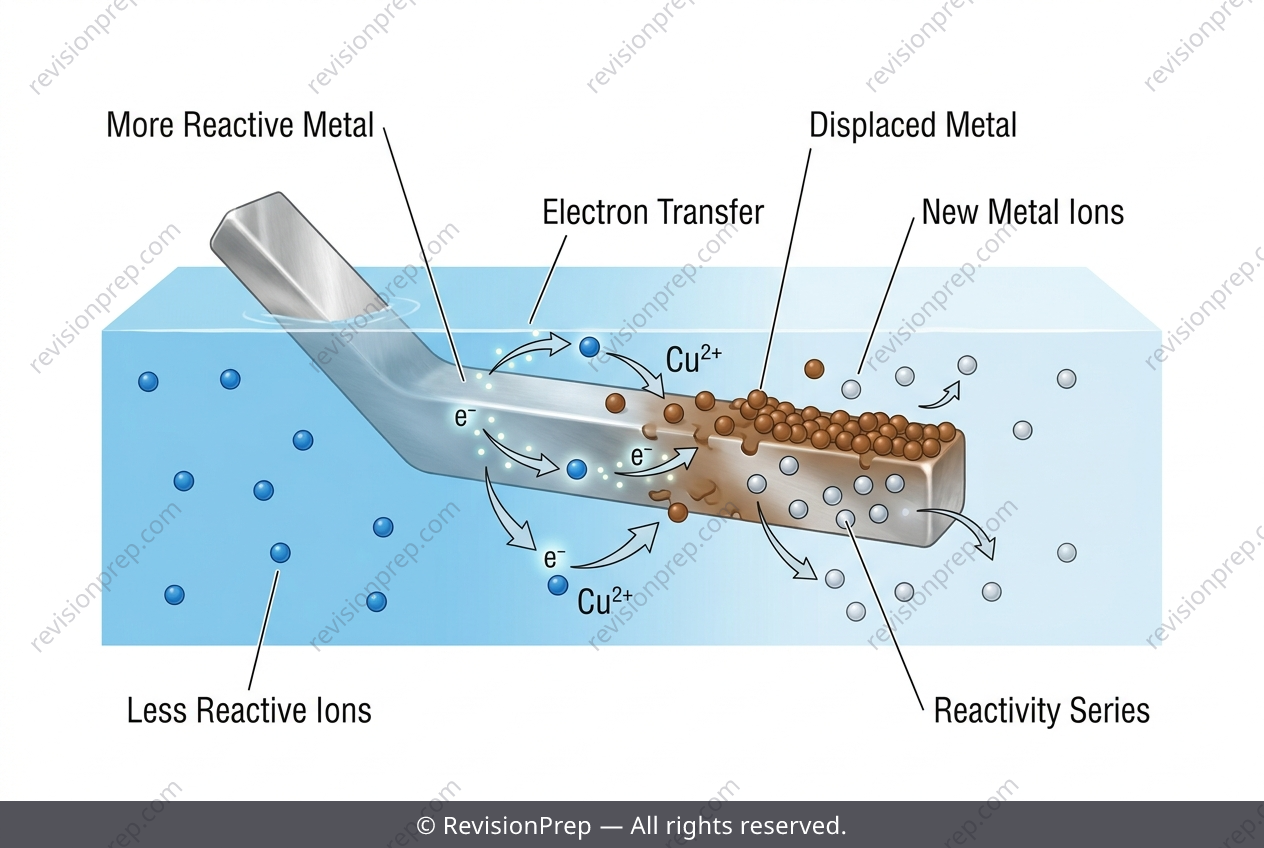
When one metal displaces another from its compound, we are witnessing the reactivity series in action. The core idea is simple: a more reactive metal will "push out" a less reactive metal from a solution of its salt. In the classic example of magnesium ribbon dropped into blue copper(II) sulfate, the reaction is driven by the fact that magnesium sits higher on the reactivity series than copper, meaning it loses electrons more readily. This single displacement reaction is more than just a colour change; it is a transfer of electrons. As magnesium atoms lose electrons to become Mg²⁺ ions, they force copper ions (Cu²⁺) in the solution to gain those electrons and revert to neutral copper atoms. The blue colour of the solution fades because the hydrated copper ions are being removed, while a brown solid—pure copper metal—deposits onto the ribbon. The products are colourless magnesium sulfate and solid copper, neatly summarised by the word equation: magnesium + copper(II) sulfate → magnesium sulfate + copper. Understanding this mechanism explains not only the visual clues but also the fundamental hierarchy of metal reactivity.
Start practising IB questions today
150,000+ IB-styled questions, criteria-mapped and instantly accessible.