
Chemistry: How Zinc Protects Iron by Corroding First
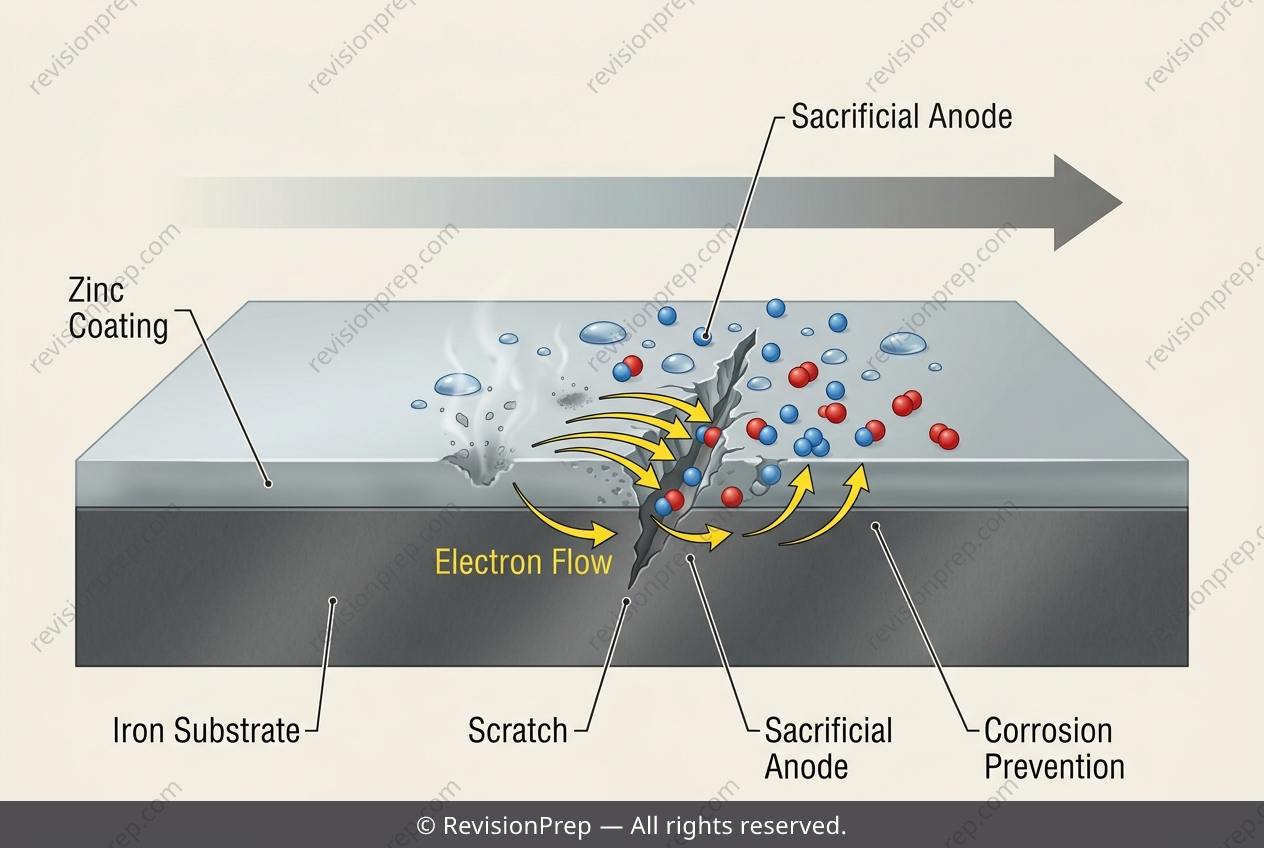
When iron rusts, it undergoes electrochemical corrosion—a process where metal atoms lose electrons to oxygen and water, forming hydrated iron(III) oxide. But not all metals corrode equally. The reactivity series ranks metals by their tendency to lose electrons, and this ranking determines which metal in a pair will sacrifice itself to protect the other. In galvanizing, iron is coated with zinc, and the key to its effectiveness lies not in the coating acting as a simple barrier, but in the relative positions of these two metals on that series. Zinc sits higher than iron in the reactivity series, meaning it loses electrons more readily. When the zinc coating is scratched, exposing the iron underneath, the zinc—not the iron—becomes the anode in a local electrochemical cell. Oxygen and water preferentially attack the more reactive zinc, which corrodes first, releasing electrons that flow to the iron and keep it in a reduced, unoxidised state. This is sacrificial protection: the zinc acts as a “sacrificial metal,” corroding in place of the iron, even at the scratch site. The more reactive metal always gives up its electrons first, so as long as zinc remains nearby, the iron stays protected—turning a simple coating into an active, self-sacrificing shield.
Start practising IB questions today
150,000+ IB-styled questions, criteria-mapped and instantly accessible.