
Chemistry: Ranking Metals by Reactivity with Acids
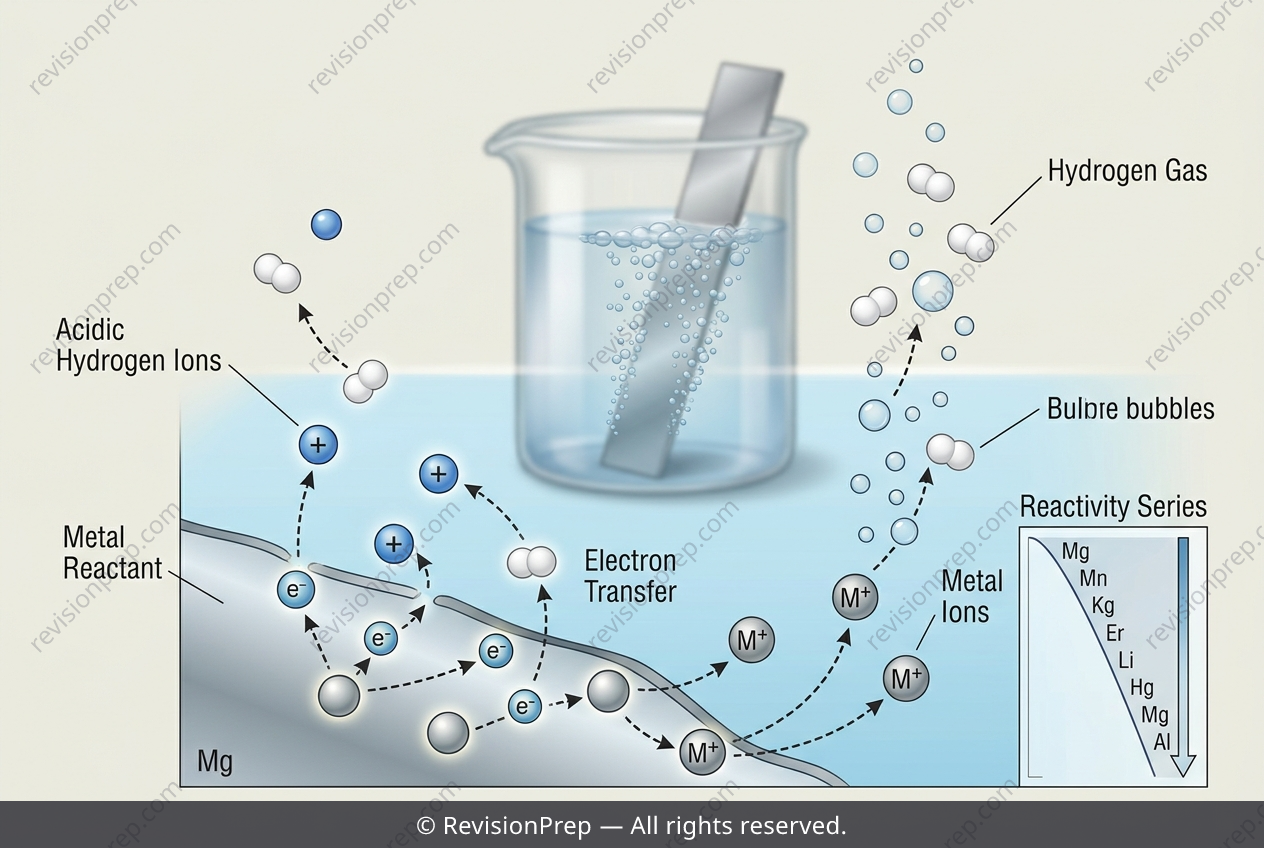
Metals and non-metals behave very differently when they meet acids, and that difference is governed by the chemical reactivity series. At its heart, this topic is about ranking elements by how readily they lose electrons and form positive ions. The more reactive a metal, the more vigorously it will displace hydrogen from an acid, and the faster it will react. This single idea—reactivity—explains everything from rusting to the extraction of metals from their ores, and it is the foundation for predicting whether a reaction will happen at all. In a single displacement reaction, a more reactive metal steps in and takes the place of a less reactive one in a compound. When magnesium ribbon is dropped into dilute hydrochloric acid, the reactants are the solid metal and the acid’s hydrogen ions. The reaction produces a salt (magnesium chloride) and releases hydrogen gas, which you see as fizzing or bubbles. The word equation—Magnesium + Hydrochloric acid → Magnesium chloride + Hydrogen—captures the entire exchange in one line. Understanding this mechanism lets you predict products, explain observations like effervescence, and see why some metals are stored in oil while others tarnish in seconds.
Start practising IB questions today
150,000+ IB-styled questions, criteria-mapped and instantly accessible.