
Chemistry: Reading Rust as a Chemical Signature
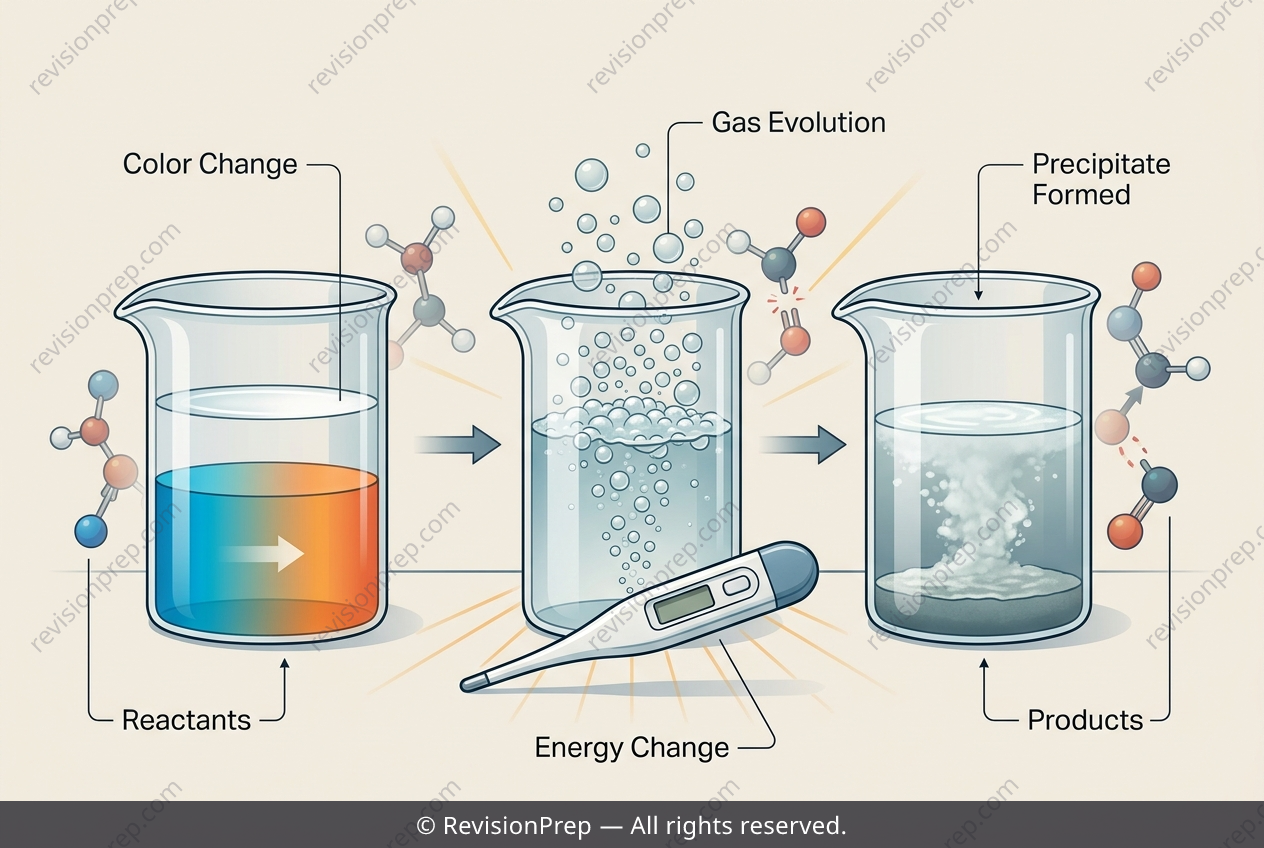
Chemistry is the study of matter and its transformations, and one of the most fundamental ways we detect a transformation is by observing a change in colour. While some colour changes are merely physical—like mixing paints—a new colour often signals that atoms have rearranged into entirely new substances. This is the core idea behind identifying chemical reactions: the appearance of a product with different properties from the reactants. Take the familiar example of rusting iron. Left outside in rain, a shiny grey-silver metal slowly turns a flaky, reddish-brown. This colour shift is not cosmetic; it is the visible signature of a chemical reaction where iron (Fe) combines with oxygen (O₂) from the air and water (H₂O) to form hydrated iron(III) oxide, commonly known as rust. The reaction requires both oxygen and moisture to proceed—exposure to dry air alone will not produce the same result. Understanding this indicator helps you link the macroscopic observation (the colour change) to the microscopic process (bond formation and electron transfer), which is exactly how chemists—and IB examiners—assess whether a true chemical change has occurred.
Start practising IB questions today
150,000+ IB-styled questions, criteria-mapped and instantly accessible.